After breakfast, we boarded our bus and took a scenic drive to Norway. On the way we stopped at Abisko National Park.
Located about 121 miles inside the Arctic Circle, Abisko National Park is surrounded on three sides by the Abisko Alps and on the north by the Tornetrask lake. Abisko is apparently one of the best places to see the northern lights, but of course that is only in wintertime.
We arrived at the Norway/Sweden border and Heidi gave us all a small glass of Linie Aquavit, which is a potato-based spirit that has Nordic greens and spices in it. Whoa!! It’s potent! We had lunch at a local restaurant in Narvik and dined on salmon which was was very good and the little potatoes that came with it were delicious.
The drive to our hotel in Harstad was beautiful. The snow capped mountains, the lakes, the forest – every minute postcard perfect.
On the way we passed wind farms. The construction of wind farms in Norway has been a major point of controversy. Apparently, Sami traditions and cultures have been seriously affected by the wind farms. Reindeer herding is a traditional way of life for the Sami people, and the wind farms are located in areas where they graze their reindeer. The turbines disrupt the reindeer’s natural movements and grazing patterns.
The conflict has been ongoing for years and is a hot item. Some people feel that the goal should always be for the renewable energy the turbines provide, while others strongly oppose the wind farms because the rights of the indigenous people are being violated. There’s no easy answer.
We checked into the hotel and Allan and I decided not to go on the orientation walk. After the walk, when the group returned, just about all of us went to the restaurant in the hotel for dinner. Allan and I had the fish and chips and probably the biggest glasses of beer we have ever had. I couldn’t finish it! 0.75 liters is a bit much. Even Allan couldn’t finish the entire glass. We really got snookered since we had no clue it was going to be that big AND that they would charge us $25 for each glass. Wowser!
Tomorrow we can sleep late since we don’t have to start the day until 10 am.
Another pic from the ICEHOTEL 365
More pics from ice hotel
Abisko National Park. We’re still in Sweden on our way to Norway.
Powerful waterfall because of the snow melting in the mountains
Beautiful area
The scenery is beautiful. The lake is half frozen in June!
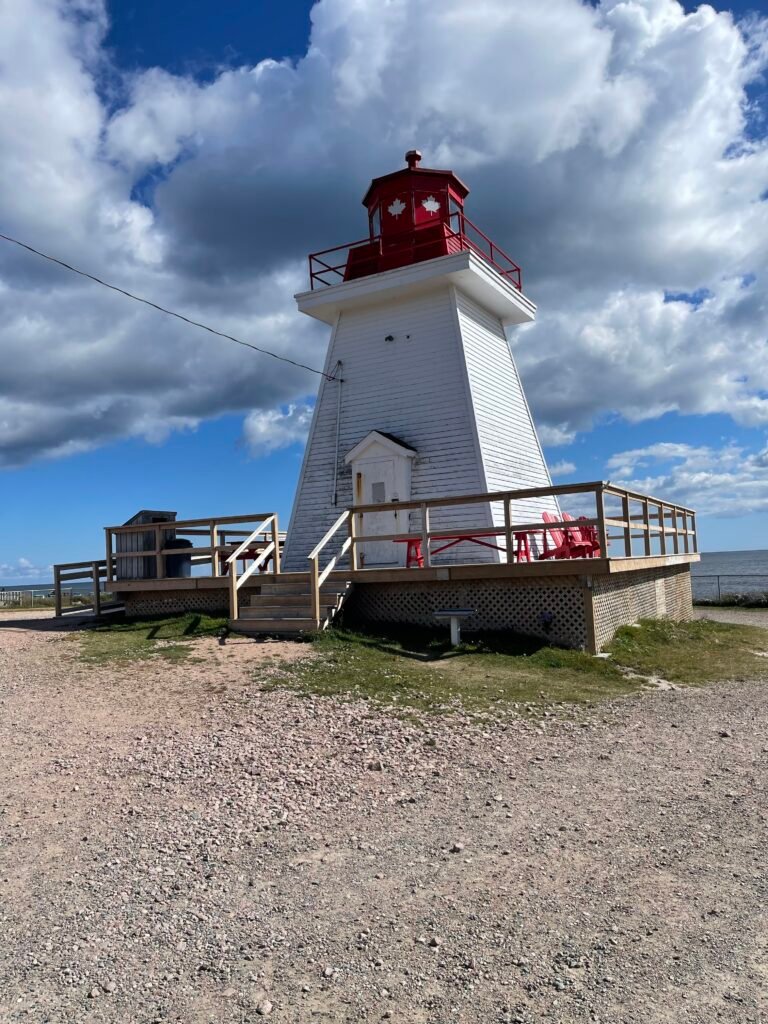
Sweden Norway border
We had a welcome to Norway drink at the border.
Norway
Lunch in Norway
WOW!! 0.75 liters. It was Brooklyn lager. I wanted a dark beer…but this really wasn’t.
After breakfast, we drove to the Luossavaara-Kiirunavaara AB (“LKAB” for short) iron ore mine. We actually descended 1,500 feet into the mine to the part that has been converted into a visitor’s center. Our tour guide gave us safety instructions before we descended and told us what to do in case of an emergency. There is a theater inside and she said that would be the place we would go to if there was some kind of danger outside the mine (I’m assuming like a terrorist threat). We could lock ourselves inside the theater and be safe. We donned our safety helmets and off we went while the tour guide explained how the mine operation works, etc.
It was a little disconcerting as we were standing talking with the mine guide, when we all felt air circulating around us and the guide said this is very unusual. Wait…what????? Apparently, we learned later, there had been a problem with the circulating system and the workers were dealing with it. Whew!
The active mining operations take place more than 4,500 feet underground, where every day enough ore is gathered to build up to six Eiffel Towers. We could hear and feel the blasting from down below on occasion. She said every night at 1:30 am, they blast another large area in the mine and people can feel the ground vibrating in their homes if they happen to be awake at that time.
As I mentioned in yesterday’s post, much of the mining takes place beneath Kiruna’s town center, and the hollowing of the earth will soon render the area uninhabitable. LKAB is spending a lot of money to relocate these people and rebuild (for those who want to stay in the area with a new home) their home almost exactly as the one being demolished. And…if the people happen to mention that they always wished they could have a sauna, or a much bigger bedroom, the company will do it for them. LKAB wants to do whatever they can to make everyone happy. The tour was very interesting and the mining operation is incredible.
We bid goodbye to our guide and boarded our bus to Jukkasjarvi, a town of just 600 Sami residents, where we had lunch inside a lavvu. First course was a delicious mushroom soup. The mushrooms they actually foraged for. The main course was Swedish meatballs made with moose meat and we had a side of mashed potatoes as well. Delicious!! We also had pitchers of lingonberry juice to enjoy.
One of the residents of the village spoke with us during our luncheon about the Sami culture. It was a very interesting talk and if you’d like to know more about the Sami, you can read about it here:
After lunch we visited the Jukkasjärvi church on the grounds, which was built in 1608. It is the oldest protected wooden church in Lapland. After visiting the church, we went to feed the reindeer.
The reindeer were very happy to see us and were actually very gentle as they took their food of moss from our hands. Their antlers, instead of being hard and white, were soft with a velvet coating. This is because the antlers are still growing. They are not pointed, but rather rounded at this stage, because the antler has not calcified nor finished developing. We were told not to touch the antlers at this stage since if you grab them too hard, they will start to bleed and the reindeer could bleed to death.
We left the village and then went to the ICEHOTEL in Jukkasjarvi. Staying for a night in an ice hotel has been on my bucket list since forever, so I was so happy to have the opportunity to actually tour one.
The ICEHOTEL opened in 1989, and was the world’s first and largest hotel totally built from ice and snow. For over three decades, the ice hotel has been reborn each year with new art, new rooms, and new experiences.
When winter arrives, the water in the nearby Torne River freezes and turns to ice. The ice is then harvested and tranformed into the art and architecture. When spring comes and the weather gets warmer, the entire hotel melts and the water returns to the river.
At the beginning of each year the hotel receives applications from artists with their ideas to create the hotel for the next winter. Folks from all over the world submit their applications. Out of around 150 proposals, about 15 are selected, with artists ranging from graphic designers and architects, to engineers. In November, the selected creators gather to make their concepts for the ice hotel a reality.
Today we visited ICEHOTEL 365, which is next to the one that is created every winter. ICEHOTEL 365 is the firstyear round hotel – opened in 2016.
We walked in and were given a heavy cloak to wear, and then we entered this permanent hotel where the temperature was about 24 degrees. We toured 17 (one was under construction) of the 18 art and deluxe suites, as well as the ice bar which serves only cold beverages. (No duh!) The suites were gorgeous, with ice sculptures all throughout and each room had a specific theme. During the day, people can come as we did to tour the hotel, but come 6 pm, the place is closed to visitors, and becomes an actual hotel and the rooms we toured would be used for the night.
The deluxe suites have a bathroom within the suite. Otherwise, if you reserve a regular room, you have to leave your bedroom and travel down the hall to the common bathroom. Brrrrr! You are given thermal sleeping bags to snuggle in and you sleep on an ice bed that is covered in reindeer skins. If you want a drink from the bar, the glasses are made of ice.
After a good night’s sleep, you can enjoy a morning sauna and a refreshing shower, either in your private relaxation area (for a deluxe suite), or in the shared facilities for a regular room. Warm lingonberry juice is served in the morning.
Allan checked the price for this coming Christmas night, just to see what the cost would be for the deluxe suite. $1,450!!!
It was a fantastic opportunity to find out what an ice hotel truly is and I still can’t get over the amazing ice sculptures and rooms created totally from ice. The amazing thing is, the water from the river that freezes to make ice to sculpt the rooms and sculptures, is crystal clear. Just beautiful!
We came back to our hotel and went up to the top (12th) floor for a pre-dinner drink, and watched the street below as kids arrived all dressed in beautiful gowns and suits, (as well as traditional Sami garb), to celebrate prom night. They were all going into the museum across the street from our hotel, where a banquet was being held. The kids even walked on a red carpet into the museum, with onlookers lining the way on either side taking photos. It was like the Oscars.
We had a buffet dinner at the hotel and then it was to bed for an early departure tomorrow. What a fantastic day it was that was filled with unusual and unique experiences from start to finish.
Posts in the ground to monitor below ground seismic activity from the mine.
Our bus going deep into the mine
Standing in the scooper that puts the iron ore into the box cars
The wheels are huge
Firepit at the Sami village. We had lunch here.
Swedish meatballs
Church
Inside the church
They are eating moss.
Please be gentle.
The Ice Hotel
The hotel is kept at 24 degrees
The sculptures were amazing
Inside one of the deluxe suites. It was made to look like a subway station.
So gorgeous. Love the blue lights.
Such intricate artwork.
Another large suite
The ICEHOTEL, that was built for this past winter… melting.
Kids dressed in traditional Sami garb for prom night.
The kids walking the red carpet into the museum for prom night.
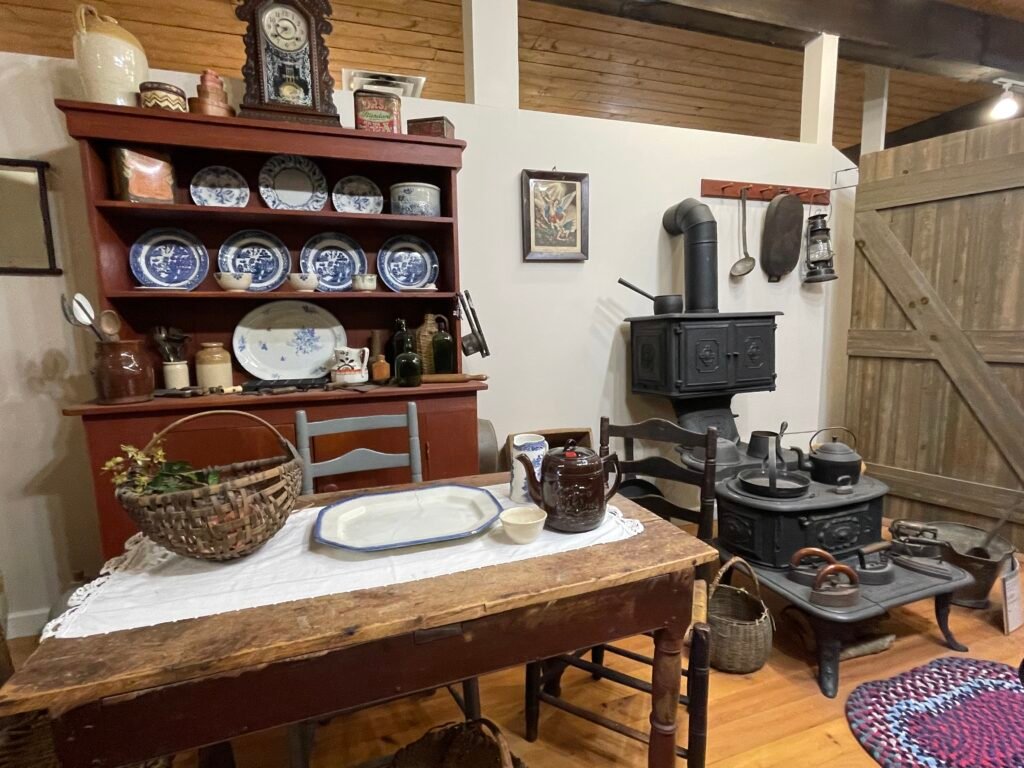
We woke up and had breakfast and then it was off to tour the Open Air museum in Tärendö which featured a typical Lapland homestead. We learned about the culture, traditions, garments, different devices, nomadic lifestyle, and history of the reindeer herding Sámi people. I really enjoyed looking at the old kitchen implements and many of them, I really didn’t know what they were used for. Something that looked like tongs to move fireplace logs was actually a waffle maker. There was a cast iron triangle shaped box that had a lid over the deep cavity with holes punched into the sides. Stones were put inside the cavity with a little water and then all was heated on the fire and… voilà…a steam iron was created. It was very interesting and the original home was built in the 1700’s and moved board by board to this location. Then we drove to Kiruna and had a delicious lunch of pork, potatoes, and broccoli at a local restaurant.
We boarded our bus again and drove to our hotel in Kiruna Scandic. We saw reindeer along the way. The Sami people own their own reindeer herds and each reindeer is marked with the owners special marking on their ears. It is impolite to ask a Sami how many reindeer are in their herd. It would be the same as asking someone how much money they have.
We arrived in Kiruna and our bus drove us all around the town. Unbelievably, the town is in the process of being physically moved, to allow for the continued expansion of the world’s largest underground iron ore mine. As the mine deepens and expands, it causes parts of the town to become unsafe to inhabit. To continue mining, and to preserve the town’s economy, Kiruna is being relocated about 2 miles away. For the residents who live in historical homes, their homes will physically be moved to another location and will be given compensation. For those who live in homes that do not have an historical value, they will be offered compensation and they can have their home demolished and rebuilt in a safer area. Others who just want to move away on their own will be given compensation for their home and they can just leave.
There is a beautiful church that is in the process of being moved. Thick beams are placed under the church as it is jacked up, and then it will be put on a huge flatbed truck and moved to its new location. The process should be completed by August.
We drove through the area where homes had been destroyed and new homes built and we also drove through the area that will be demolished. Most of these folks have lived in the area for years and it is very hard for them to have to relocate.
Our hotel is brand new and is in the new area and after checking in, we went on an orientation walk. Then it was back to the hotel to get ready for the home-hosted dinner.
We were placed in a taxi and driven to our host and hostess’s home. Joel and Lisa were very nice and we found out that Lisa owns a shop in town that sells beautiful and eclectic goods, and Joel is an engineer and has been instrumental in planning for the relocation of the homes because of the mining situation.
We were surprised when our dinner was… wait for it…TACOS!! That was the last meal any of us expected to eat in Sweden. They put out soft and hard tacos with chopped beef, tomatoes, lettuce, bell peppers, apples, corn, salsa, sour cream, a vegetable marinade, guacamole, and cheeses. It was fun to prepare the tacos since we all could make our own. They served wine and beer and chocolate candies for dessert.
We took the taxi back to the hotel and we all went up to the 12th floor to have a drink at the bar that overlooks the town.
It was a beautifully sunny day and rather warm. Too bad we didn’t have this weather yesterday with the pups!
The homestead. The building was built in the 1700’s and dismantled beam by beam and moved to this location. People donated the artifacts.
I woke up in the middle of the night and peeked out from our curtains and sure enough, the sun was still shining and continued to shine all night long.
We are in Tarendo, a village just above the Arctic Circle – a very remote setting in the forest. For the folks who live here, the closest food store is about an hour away and in winter, a trek to get to. Our accommodation is the Arctic River Lodge, where you can relax by the fireside or participate in the activities the lodge offers. Being it is spring, the winter activities that require snow obviously are not being offered, but hiking, canoeing, etc., are available, although Heidi said that the river is rapid and if you are new to canoeing, best not to try it. The lodge also has a sauna. Next to the lodge is a husky kennel with 96 dogs.
A Day in the Life is unique to OAT, and many adventures and hands-on experiences are always offered and fun! Today our Day in the Life was learning about the huskies and getting the opportunity to feed them, scoop the poop in their cages, and walk them. Sounds like fun???? (Especially the poop scooping.). NOT!
Today was a rainy day so the planned activity of working in the dog kennel was not optimal. I for one, really did not want to go into the cages with the dogs to scoop the poop since the dogs were jumping up and down and jumping on people. I didn’t want to be covered in mud. Allan was brave and did do a good job with the pooper-scooper and then we both fed the animals. They get a wet mixture of cow stomach with a little chicken, and also a cupful of kibble. They carefully monitor the weight of the dogs and if the dogs seem to be getting a little chubby, the feed is cut back.
I believe the dogs give birth twice a year. The very first litter of puppies from years ago when the kennel first opened, were all given names beginning with the letter A. The second group of puppies, perhaps 6 months later were given names beginning with the letter B. In the kennel to date, they are already naming puppies starting with the letter I and in about three weeks time, new puppies will be born with names beginning with the letter J. The males and females are on opposite sides of the large kennel area.
When the weather is very cold, the dogs wear a jacket to protect them from the harsh winds etc. when they are outside. They also wear booties on their paws. Since the snow can melt and turn to ice and then melt again, the booties protect the dog’s paws from the breaking ice which would be like glass slivers. The booties and the jackets are sized to fit the dogs. The jackets and booties have a blue stripe on them for the males and red for the females. Collars are either red or blue.
The collars are not worn during the spring shedding season since the hair would shed all over except for under the collar and would look like a ruffle around the dog’s neck when the collar is removed, so it’s better not to have the collars on.
There are some dogs that are the leaders of the Husky team and others are followers. Female dogs can actually be stronger than the male dogs, but they are smaller in stature. The lead dogs know the commands for turning left, right, etc. so they lead the pack and the other dogs know to follow along. Training of the lead dogs begins at around 8 months of age and they train by pulling on something heavy and by wearing a harness. When a dog gets to be around 8 years of age, the dog starts to train down and is slowly acclimated to retirement. Most of the time, the dogs let the owners know they are getting too tired to continue being a sled dog. The puppies love to be around the dogs that are getting on in age and the older dogs seem to sense that their elder status is beneficial to the little ones.
The dogs are affectionate and for the most part, they all get along. An occasional fight will break out, but nothing serious.
An Alaskan Husky isn’t a pure bred dog, but is bred instead to be highly efficient sled dog. They can be a mixture of hound, sled dog, and northern breed. Personality is more important than looks.
It started to pour, so Allan and I opted out of walking the dogs down to the river. Even if it wasn’t raining, I might have done the walk, but not with a harness attached to me with a dog at the end. These dogs are powerful and can really pull. I prefer to keep standing upright and not be pulled face down into the mud.
It was soon time for lunch and we walked over to the outdoor lavvu, a temporary dwelling used by the Sami people. It has a design similar to a teepee but is less vertical and more stable in high winds. This lavvu allows the Sami people to follow their reindeer herds. We had lunch of reindeer, cooked in a muurykka, which is almost like a wok, but much flatter, which is then placed over a gas grill platform. I believe tunnbrödsrulle (also known as a tumlerulle) is what we had once the reindeer meat was cooked, since we placed it on a wrap and filled it with lettuce, onion, a sauce, tomato, and cucumber. Heidi did confirm this. It was delicious! We finished the meal with homemade cinnamon buns.
Since the weather was still rainy, Heidi canceled our walk and instead we watched an excellent movie called Stolen. The movie is based on a true story: Nine-year-old Elsa, a Sami girl, witnesses her beloved reindeer being poached and is sworn to secrecy by the poacher. Ten years later, she vows revenge.
We had pre-dinner drinks and then had a delicious salmon, mashed potato, asparagus, and string bean dinner. The salmon was delicious.
After dinner we all took a nature walk for about an hour with a guide and they pointed out mushrooms, lichen, bird calls (the cuckoo), and animal scat. One of the men in our tour sent this to the group: “Reindeer urine itself is not hallucinogenic, but it can contain hallucinogenic compounds if the reindeer has consumed certain mushrooms, like Amanita muscaria (fly agaric). These mushrooms contain psychoactive substances such as muscimol, which can pass through the reindeer’s system and remain active in its urine. Historically, some cultures have consumed this urine to experience the hallucinogenic effects without ingesting the toxic mushroom directly.” Who knew!
Activity Note: As we cross the Swedish border today, please be aware of the time change (1 hour back).
After breakfast, we boarded our bus to take us to the airport for our flight to Rovaniemi in northern Finland. The plane was very new and very comfortable and we were served blueberry juice for a snack. In Finland, “blueberries” are referred to as bilberries and they grow wild in forests and bogs. They are used in many different ways.
Rovaniemi, is the official hometown of Santa Claus and he has made Lapland in Northern Finland his home for centuries. His workshop is in the North Pole, but he lives here when he’s not supervising the North Pole workshop.
We had a delicious buffet lunch and then some of us went over to talk with Santa. Santa asked me where I lived and I told him – and then I said, “But Santa…you knew that already, right?” He said “Of course!” (I was a little suspicious that this Santa might be filling in for the real Santa today, because I know the REAL Santa would have known right away where I live.)
We continued to the border of Finland and Sweden and our guide Heidi had a little “say goodbye to Finland” ceremony and we toasted with a drink of gin and grapefruit juice.
We drove to Tärendö, a village located in northern Sweden and where the Arctic River Ranch is – our home for the next two days. On the way we drove through a beautiful corridor of pine and birch trees and saw some reindeer as well.
Red lingonberries are very prevalent in the forest as well as blueberries. Mushrooms can be searched for, but you have to be careful because some are very poisonous. Not only reindeer roam the forest, but moose and bear do as well. The waters are home to many varieties of fish such as pike, bass, and char.
People snowmobile here in the winter as well as ski and cross country ski. Dogsledding is popular as well as hiking and canoeing.
Interestingly, the world’s second largest bifurcation is located in Tärendö. A bifurcation can be described as “a river taking water from one river and bringing it to another”. The normal way would be for a river to take its water from a lake or perhaps a wetland. The largest one in the world is located in South America.
We checked into the ranch and enjoyed a pre-dinner drink and then went to dinner. They served a delicious steak with potatoes and vegetables as well as panne cotta for dessert. The dinner was outstanding! Our room is on the small side, but actually on par with most Scandinavian hotels. We don’t plan on spending much time in the bedroom anyway, as there is so much to see and do at the ranch.
It is much colder here as we are at the Arctic circle and tomorrow, our luck will run out with the sunny days, as tomorrow there is a 100% chance of precipitation.
And by the way…the sun will not set tonight as we are in the land of the midnight sun.
After breakfast, we boarded our bus and arrived at Finland’s second-oldest town, Porvoo. The area of Porvoo has been inhabited since the Stone Age and was colonized by the Swedes in the 13th and 14th centuries. We walked the cobblestones and saw the colorful homes and warehouses that line the streets. The color of the homes had to do with the wealth of a family. Red paint meant the family was poor, while pink or yellow paint signified the family were a bit more wealthy. A white house meant the family was very wealthy. This is because red was the cheapest paint to buy and white was the most expensive.
The homes were very quaint and we walked the town and saw the toy store, a chocolate shop, and a cafe, where we stopped in to get a cup of coffee and a Runeberg torte. I tasted the torte, but it wasn’t something I cared for although Allan enjoyed it. The torte is flavored with almonds and rum and has jam and icing on top.
After visiting Porvoo, we drove to Norrkulla Gard Farm, which is in the countryside. The Lundstrom family has owned the farm since 1912. The rooms have the original wallpaper as well as the original fireplaces which are quite beautiful. The Lundstrom family is of Swedish descent and has lived in Finland for over four generations.
The family made a delicious lamb stew for us with homemade bread and then we were invited to tour the home. After the tour of the home, we were served tea and coffee and homemade cookies and then we toured the farm and saw the horses and the sheep. It was a beautiful and sunny day and we had a wonderful time.
I asked one of the ladies who prepared our meal if she ever heard of pulla bread. She was puzzled at first but then she said…Ah yes…but we just call it pulla. Okay. Not sure why saying pulla bread is more confusing then just saying pulla, but anyway…I was glad that at last, someone had heard of it.
We drove back to the hotel and at 5 pm, a few of us met for a pre-dinner drink on the 7th floor of the hotel overlooking the city, and then it was off to dinner at the Finnish restaurant Savotta. Allan had an appetizer of bear which we shared and it was very good. Allan has a moose burger and I had Karelian stew, a traditional meat stew with pork, beef, lamb, pickles, and vegetables. It was very tasty.
Tomorrow we leave Finland and arrive in Sweden.
Porvoo
Porvoo Cathedral
Walking on the Finnish cobblestones is not easy. You can’t tell by the photo, but the stones are actually rounded on top and not flat, making walking tricky.
After breakfast we had a Welcome Meeting to introduce ourselves and to tell a little about ourselves to Heidi, our Experience Leader, as well as to the two new travelers that flew in yesterday. Heidi told us what to expect during the next few weeks as we travel through Finland, Sweden, and Norway and she answered any questions we might have had.
She told us a few things about the Finnish people. They do not like to make small talk, and when you are in a bus or a tram, it’s considered rude to sit next to someone if there is a vacant seat available elsewhere. Sometimes, Finnish people will stand on a tram rather than sit next to another person.
After the meeting, a local guide met us and we did a walking tour of Helsinki.
Helsinki is the capital of Finland and Finnish and Swedish are the official languages. Helsinki was ranked the 4th-friendliest city in Europe. An interesting fact – Helsinki residents drink more coffee per capita than in many other countries. Coffee is always offered if you visit someone and it is considered part of the Finnish culture of social interaction.
We visited an amazing library…the central library of Helsinki called Oodi. Specially designed robots transport books to the third floor that has 185,000 sq ft designated for books. The building uses a passive solar building design and uses almost no energy. There is a double-helix staircase to the second floor, and what a second floor it is!!
From the library website: “The second floor is dedicated to work, learning by doing, interaction and sharing time with others, and has studios, game rooms, urban workshops, work and meeting rooms, and group work facilities. 3D-printers, laser cutter, uv-printer, large image printer, vinyl cutter, electronic workstations, heat press, sewing machines, badge makers, a Recording studio, Synthesizer studio and drums / percussion (studio 5), DJ and karaoke studio (studio 6), Acoustic instruments studio, Photograph and video studio (studio 7), Group rooms and working spaces, Immersive space Kuutio, and a Group kitchen (Learning space 4)”. WOW!!!!
We saw people sewing at the sewing machines, people waiting for their 3D masterpiece to be completed, folks were in the recording studio, beautiful photographs were being printed on heavy vinyl, kids in glass game rooms playing video games, and on and on. Amazing!
The third floor has a children’s section, a playground, a cafe, 100,000 books, sheet music, games, films, and magazines. The floor is filled with light and is so cheery. We could have spent hours there and if I were a citizen of Helsinki, I would have.
We toured The Sibelius Academy, the organizer of the International Jean Sibelius Violin Competition that takes place every five years. The academy was founded in 1882 by Martin Wegekius and later renamed to honor former student and Finland’s most renown composer, Jean Sibelius.
Our local guide was very interesting and gave a great background of Helsinki, but soon it was time to say goodbye and we all walked over to the ferry pier to see the sights. Heidi gave us all a little fish called vendace, (muikku in Finnish). This is a popular dish in Finland. Muikku are small silvery fish that are coated in rye flour and then pan-fried until crispy. It was very tasty.
We found a cafeteria for lunch, and they had a bread area. I asked if they sold pulla bread, the Finnish coffee bread with cardamom that I make each Easter. The lady had no idea what I was talking about and Heidi had never heard of it either. Heidi said something similar is sold in Sweden so I guess I’ll try and see if I can get a taste there.
Some of the folks went on the ferry to visit the fortress, but Allan and I opted for the Helsinki museum which was very interesting to visit.
On the way back to the hotel, Allan tried a reindeer meat hotdog with fried onions and pickles, which he said was pretty good.
We had our Welcome Dinner… delicious salad and then the entree of salmon and potatoes. The fish here is so fresh and delicious. Tomorrow will be another busy day.
The Oodi Library
3rd floor of the library
Muikku. You eat the whole fish…head, tail and everything in-between.
Enjoying a reindeer hotdog
Trash!! What we leave behind! An exhibit at the Helsinki museum
After breakfast, we met with a local expert to listen to his talk about Estonia.
Estonia has a population of about 1.3 million and interestingly, Estonia is comprised of the mainland AND over 3,000 islands.
Most of the people who live here are Estonians, but there are also about 20% Russian, 5% Ukrainian and another 5% of other nationalities. Estonias natural resources are oil shale, timber, peat, clay, and gravel.
There is a President of the country, but he is really just a figurehead. The Prime Minister is the person who runs the country by leading the government and directing its activities. The Prime Minister also handles foreign affairs and commands the armed forces, approves laws, and nominates cabinet members.
Every child must go to school for a mandatory 9 years. The study program at upper secondary school is arranged into mandatory and voluntary courses. Studies last for 3 years. Those who wish to continue their education may choose to go to the University of Tartu. The University of Tartu is one of the top public universities in Estonia. It is ranked #358 in World University Rankings.
In Estonia, compulsory military service for males lasts 8 or 11 months depending on the time of year of conscription. Females can join as well, but it is not mandatory. Families support the compulsory military requirement for males, especially given what is happening in the Ukraine. They feel the country needs to be prepared. Estonia is happy that the US is there if the need should ever arise that Estonia would need military backup, and therefore in the meantime, whatever the US asks for…the military is happy to comply.
There is an X-Road card that is in use in Estonia. From the Internet…”X-Road is open-source software that provides unified and secure data exchange between organizations in a collaborative ecosystem.” In other words… 100% of everything in your life is done on-line through this card. There are two pins that you must use to access your data so that scammers can’t get control of your finances, etc. The card has your medical information, banking info, and you can make purchases as well. And here’s the unbelievable part: You can get married using this card, get divorced, buy a home, pay your taxes, start a business, and so much more…all in the span of maybe 1/2 hour.
I asked…given the cleverness of hackers…what happens if the system is compromised? Our speaker said since two pins are needed to access the system, it would be difficult to hack. If you lose the card, it’s not a problem since without the pins, no one can access your data. Additionally, there is something called a block chain. I don’t pretend to understand that concept, but he said it makes it impossible to hack. Apparently the IT specialists that work on this, have frequent drills – the hacker and the protector – and one group tries every way to Sunday to hack the system and the protector does everything to block them. I guess it works since X road has been working very well. It will be a few years I think till the US has this technology given the number of people we have. Estonia has a smaller population and the system can be implemented more easily.
Someone asked… so what happens if you want to sue someone. Can that be done over the internet? The process can be started, but eventually lawyers have to become involved, but the trial can take place over the internet, I assume with something like zoom.
Someone asked about the homeless population. The homeless population is seen more in the outskirts of Tallinn and there are places where the homeless can go for a hot meal, a shower, and an overnight bed. It seems to be basically the same system we have in the US. There are mental health facilities and if a person is deemed incompetent, a doctor or social worker can have that person committed to a mental institution for help.
If someone wants to own a gun in Estonia, they have to go through a lot of paperwork in order to obtain it. You just can’t go in and purchase one. A mental health test is done, you have to prove you have a locked gun cabinet in your premises, and you have to satisfy many other requirements.
It was a very interesting presentation and we learned a lot about Estonia.
Allan and I walked over to the local food store and purchased lunch, since at around 11:30, we would be taking our minibus to Tallinn’s ferry terminal, and boarding the ferry to take us to Helsinki, and eating our lunch on the ferry.
We boarded the ferry with no problems, and sat down to enjoy the 2 plus hours ride. We sat in an area where there was a grand piano, and two young musicians who were riding the ferry, took turns playing music the entire ride. They were wonderful…playing classical music as well as a song from the movie “The Sting” and the impromptu concert made the journey very enjoyable.
We arrived in Helsinki and our minibus deposited us at our hotel… Klaus K…which is centrally located. We bid goodbye to Eero and greeted our new guide Heidi, as well as two new travelers that had not participated in the pre-trip. We went to our hotel room, got settled and then off we went with Heidi on an orientation tour of the area.
Back at the hotel, a few of us went for a pre-dinner drink at the bar and then met the rest of the group for dinner. We had delicious sashimi salmon for an appetizer and pork belly and potatoes for the main course. Delicious. Everyone enjoyed crème brûlée, but I passed on the dessert.
The bed was very comfortable and we got a good night’s sleep. Our shower is perfect…nice and spacious. The breakfast buffet was well stocked and Allan tried what we thought was a potato. It was actually a Karelian pie, a favorite in Finland. Eero said since so many Finns visit here in Tallinn, the hotel serves these pies. They are made out of rice porridge and baked in a rye crust. Eero said if you have good cholesterol, you spread Munavõi over the top. Munavõi is an egg butter mixture made of butter and chopped hard boiled eggs. I’ll definitely be trying a pie tomorrow…including the egg butter spread.
We did a three plus hour walking tour through the Old Town, through the winding alleys and over the cobblestone streets, enjoying peeking in the cafes, boutique shops, and seeing the beautifully preserved 14th-15th century buildings.
Tallinn, sits on the Bay of Finland, directly across from Helsinki and both Russian and Scandinavian culture and architecture are evidenced throughout the city.
Many of the old buildings have been fortified and Eero said that you can always see exactly where the new restoration has been done. It is done on purpose so people can see the ancient original building as well as where the restoration work was completed.
Our first stop on the tour was Viru Gate. This gate was part of the city wall’s defense system, built in the 14th century and the best preserved.
We passed through the Town Square, which has been there since the 13th century. You can see a spire with a weather vine on top that depicts a soldier known as “Old Thomas”. According to legend, Thomas was a young lad who was excellent at firing crossbows. He won all of the contests that the wealthy citizens had arranged for their springtime entertainment, but since Thomas was a mere peasant boy, he was not allowed to win any prize. Instead, he was awarded the job of town guard for life and therefore Thomas is an important symbol of Tallinn.
We walked down Catherine’s Alley, once known as Monk’s Alley, and found ourselves under the windows of the Dominican monastery. As luck would have it, one of the Brothers poked his head out of the upper window and Eero started talking with him. The Brother, Alain Arnould from Belgium, invited us in to see the chapel. We all entered and he spoke with us about how years ago the Dominican church had a few hundred people, but since the collapse of the Soviet stronghold, they now have swelled to over 7,000.
The Dominican brothers settled in the medieval monastery and organized a chapel which was dedicated to St. Catherine of Sienna. The brothers wear white robes and Brother Alain told us that the white cassock (that the popes of the Catholic Church wear) likely became the standard papal dress in the 13th century due to the Dominican influence and that tradition holds today.
The Dominican mission in Tallinn is active. Brother Alain lives in the monastery with another Dominican brother and there is a group of lay people who also share their Dominican spirituality and worship in the chapel. The monastery was last restored in 1995.
We went by the largest church in medieval Northern Europe, St Catherine’s Church, which has become a venue for concerts and plays. The former church had been used as a granary, as well as a car repair shop, and a warehouse for the film industry because of the high ceilings, but now it is used for education and for bringing culture back to the city.
We visited St Olaf’s Church, believed to have been built in the 12th century. The first known written records referring to the church date back to 1267. It was extensively rebuilt during the 14th century. It was originally a Roman Catholic Church, but during the reformation it became Lutheran. During the Soviet occupation the church was handed over to the Baptists, who continue to meet there to this day. Interestingly, from 1944 until 1991, the Soviet KGB used St. Olaf’s Church’s spire as a radio tower and surveillance point.
Speaking of the KGB, we passed Pagari 1, originally constructed as an apartment house, but it became infamous throughout Soviet-occupied Estonia during the half-century of Soviet rule. Prisoners were incarcerated in the basement and tortured and eventually murdered. The prisoner rooms are still there and you can tour the building and learn how the prisoners communicated with each other through the prison walls. The building stands as a memorial to those prisoners.
Our next stop was the Ukrainian Cultural Centre and Greek Catholic Church garden. The center itself was built by the members of the Ukrainian community and is a place open to all people regardless their nationality and religion. We saw on display, a camouflage blanket that the Ukrainians made to send to the Ukraine to help the soldiers who are fighting the Russians.
We enjoyed a pre-dinner drink at a speakeasy with Diana and Peter and then we met the rest of the group for the Farewell Dinner. We had duck that was delicious.
Tomorrow we take the ferry to Helsinki.
Viru Gate
A good example of the original ancient building and the new buttress fortifications, so people are aware of what is new restoration and what was here for centuries.
Dominican brother Alain
Brother Alain speaking with us in the chapel.
The chapel
Behind the monastery.
St Catherine’s Alley
St Catherine’s Church
Explanation of the Western Portals of the church.
A tucked away alley after it was restored. See the picture below to see what it looked like not too long ago.
Before the spot was restored.
Tallinn Town Hall pharmacy is the oldest pharmacy in Europe that has continually operated on the same premises. It was first mentioned in town records in 1422.
Church of the Holy Spirit clock
Outside the Russian Embassy.
This building housed the KGB. The prison cells were in the basement where you can see the bricked up windows.
Accommodations: Tallink City Hotel We had breakfast and then boarded our minibus to travel to Tallinn, Estonia. On the way, we stopped in Parnu, a popular summer resort town among Estonians, although many Finnish folks come to enjoy the spa and the beach as well. Our guide said it is very expensive to stay there. He said it’s cheaper for him to take a holiday in Italy or Greece instead of going to Parnu.
The first bathing establishment in Parnu opened its doors at the beach in 1838, where warm baths were offered during the summer and a sauna (pronounced “sow-nah,”) experience during the winter. The spa now offers massages, mud treatments, paraffin treatments, and many other amenities to relax you and give you pleasure. Parnu was chosen as the “best health and wellness tourism destination in Estonia”.
It was another beautiful day (we can’t believe how lucky we’ve been with the weather), and we walked the beach and enjoyed the sun.
We had soup for lunch after the beach and then went back on the minibus to travel the rest of the way to Tallinn.
As we traveled along, our guide Eero told us about the panel buildings that we saw along the way that were from the Soviet era. These were plain and functional buildings that housed people according to the number in the family. If you had a large family, your apartment was bigger than those who were either just married or single. He said many couples got married just to get bigger apartments and after the Soviet collapse, the divorce rate was high. The buildings looked like concrete boxes and reminded Allan and me of the apartments that we saw when we were in Star City in Russia near Moscow.
Some of these buildings we saw are now historical buildings and need work. Many are not insulated against the cold winters. Some need to be painted and some need new windows. The dilemma is…if the people who own these buildings can’t afford to pay for restorations, should the government help them by giving them or loaning them money? The problem is, if the government does this to preserve the history of the buildings and the renovations are completed, the buildings would then become valuable and could be sold by the owner at a very good price. People are saying that it wouldn’t be fair for those building owners to get money from the government to make restorations and then sell the buildings for a huge profit. But the other side is, if the renovations aren’t done for these historical buildings, they will deteriorate and might have to be torn down. A dilemma indeed.
We passed many pine trees and birch trees along the way. The ground is sandy since the area was once under the water, so many plants and trees can’t grow there. Someone asked if the tall and numerous pine trees ever blow down, since the soil is sandy. The answer is, they have roots that spread out and can find and latch onto the stone bed, so the chances of these trees being blown over is very low.
People cut the leaf laden twigs from the birch trees and use them as whisks for their saunas. Sauna whisks are used to enhance the sauna experience by increasing circulation, exfoliating the skin, and adding a pleasant aroma to the sauna. The whisks are soaked in warm water for maybe 30 minutes. Then when you come out of the heat of the sauna and your skin is warm, the whisk is gently tapped or brushed all over you.
The sauna experience is a way of life as well as part of the circle of life. Some women birth their children in saunas. Some folks, before they die, have asked that their body be taken to the sauna to be bathed before they are buried. The circle of life for sure.
Our guide told us that many Estonians liked President Reagan because he was against communism and tried to end the Cold War. He said he loved watching Reagan on TV and listening to his anecdotes. One in particular he liked was when Reagan told the story of a man in Russia who wanted to buy a car. He got the necessary permits and went to the car dealer and presented them. The car dealer looked them over and said, yes…everything is in order. Come back in ten years from today for your car. The man asked if he should come in the morning or afternoon. The car dealer replied that he didn’t know, but what difference would it make since it was ten years away. To which the man replied that it did matter because he already had a plumber coming in the morning that day. Too funny!
We arrived in Tallinn and walked around the upper city and we were able to see the beautiful panoramic views with the red roofs and churches with gleaming towers. It is a beautiful city.
We saw the medieval walls that surround the city, that have been preserved throughout the years. The first wall around Tallinn was constructed in 1265. It was 16’ tall and about 4’9” thick at the base. The walls have been enlarged and strengthened since that time. Some parts of the wall actually go through buildings where people live. No one wants to destroy the wall so the buildings were built around them. This is one of the reasons that Tallinn’s old town became a World Heritage site.
Our last stop of the day was to see the Song Festival Grounds. The Tallinn Song Festival, known as Laulupidu, began in 1869 and had been a symbol of Estonian national pride and played a key role in the “Singing Revolution” of 1988. The Singing Revolution, was a series of protests sung by thousands of people, for independence from the Soviet Union. The original festival was considered responsible for fostering an Estonian national awakening. The festival is now held every five years, and is one of the largest choral events in the world, sometimes comprising more than 30,000 singers performing to an audience of more than 100,000. You can google the festival to read about how the choirs are chosen.
The place where the festival takes place is at a large open-air bandstand that faces a grassy area where the people who have purchased tickets to hear the concert can sit. The key function of the open air stage is to keep the tradition of the Song Festival, (which is included in the UNESCO cultural heritage list) alive.
In addition to the choirs that perform, famous artists like Madonna, 50 cents, and Lady Gaga have performed at the bandstand to thousands of people.
We then boarded our minibus which took us to our beautiful hotel. There is a large bar in the lobby with plenty of seating to enjoy a cocktail or after dinner drink. Our room is large with a walk-in shower. There was a sign in the bathroom that told us who our room attendant was, but that she only will clean the room every three days. If we want more service or extra towels, we can request it. We usually put a sign on our hotel room door that we don’t need room service anyway, since we always reuse towels because it is more ecological to do so. I don’t think I’ve ever been in a hotel that actually does not provide the service until after three days or when you request it. The Estonians are definitely eco-friendly. And…it’s nice to be in countries where we can drink the water directly from the tap.
Eero told the group that there was a restaurant, Olde Hansa, that featured medieval fare. Allan and I looked at the menu and we decided it would be a fun thing to partake in. Another couple in our group, Diana and Peter, decided to join us, and Eero walked us over to what would turn out to be a very enjoyable evening at Olde Hansa. You can read about the restaurant and offerings here: https://www.oldehansa.ee/
We decided to order the Grand Chef Feast (which you can read what was served at the site above since it is too much to list here) and what a feast it was!! Allan and I had an herbal dark beer which was amazing, and each course of the feast was absolutely delicious. All of the dishes on the menu, including many wild game delicacies, are cooked using 15th century recipes and methods. Dessert was a type of pudding made from rose petals.
The evening passed by so quickly as Diana, Peter and Allan and I got to know each other, and before we knew it, it was almost ten o’clock. We couldn’t believe the time as we walked back to the hotel, because the sun was still shining!
It was a great first day in Tallinn!
At the beach in Parnu.
Delicious soup for lunch.
Walking around Parnu.
Arriving in Tallinn and walking the cobblestone streets.
Tallinn
You can see part of the wall of Tallinn next to the round building.
The wall that goes around the old town.
It is a beautiful town with so many interesting spots to see everywhere you look.
Established in the 13th century, St Mary’s Church is the oldest church in Tallinn and the only building which survived the 17th-century fire.
The Kiek in de Kök artillery tower. Occupants of the tower used to be able to peek down into the kitchens of nearby homes, hence the name “Kiek in de Kok” meaning “Peep into the Kitchen”. The tower was built in 1475 for fortification, and in the right side of the photo below the tree branch, you can see old cannon balls that are embedded into the walls of the tower that date all the way back to the 16th century.
Performers at the bandstand
About Gustav Ernesaks
The bandstand
This sign greeted us as we entered the Olde Hansa Restaurant
Emmanuel Willie
As we were escorted to our table, we had to pause to have warm water poured over our hands before we could dine.
The beginning of our feast. It was very dark in the restaurant and very difficult to take pictures of all the food that kept coming out for our medieval feast.