Anne of Green Gables, Raspberry Point Oysters, Cavendish Beach

Accommodation: Rodd Charlottetown

The leaves are just beginning to change here on PEI, and as we boarded the bus for the day’s activities, we were able to see some of the reds and golds beginning to peek through.

Winters can be harsh on PEI with temps going down to 11 degrees and snow. Fortunately, hurricane season produces few hurricanes on PEI, but in 2022, hurricane Fiona swept through the PEI coast and left a lot of damage in her wake, not only eroding the coastline, but also toppling down trees in her path. We saw the damage as we drove by. The government arranged for large rocks to be brought in and placed along some of the coastline, to bolster the coast in the hopes they will stop more erosion from occurring.

A local guide joined us on the bus when we left the hotel and remained with us for the day. We first drove through Charlottetown, and saw the colleges, the historic buildings, and the shops. The town is quaint and the houses are colorful and interesting to see.

After touring the town, our first stop was to the Red Shores raceway where harness racing takes place. They were exercising the horses while we were there and we enjoyed watching them go by.

Our local guide talked about cultivating mussels and she showed us a sock that is made with a cotton poly material that fisherman use to place in the water to cultivate the mussels. A seeding practice first takes place to start the mussels growing on the sock. The socks are hung from floating rafts and then after a few weeks, the socks are brought up periodically to be cleaned of overgrowth and to remove some of the poorer looking mussels to allow the good ones room to grow.

We then visited The Anne of Green Gables Museum which is housed on the homestead property of a family called the Campbells, and is dedicated to the life and works of the author of the book Anne of Green Gables, Lucy Maud Montgomery.

The museum has amassed many period pieces that Lucy writes about in her book, and it has recreated on the grounds, Anne’s Lake of Shining Waters, her Lover’s Lane, and her Haunted Path. There is a collection of the author’s belongings at the museum as well. I thoroughly enjoyed the museum and if you haven’t seen the series Anne with an E, or read the book, I highly recommend them both.

After touring the museum, we headed to the Raspberry Point Oysters company to watch oysters being graded and sorted. An employee of the company gave a very interesting talk about oyster farming, and how this PEI company sends oysters far and wide for folks to enjoy.

I love oysters, but given the warming of waters thanks to global warming, and the increase of the bacteria Vibrio vulnificus, which can make humans sick or even be fatal, I opted not to sample any. The bacteria has not been confirmed in the general population of the Maritime provinces, although it has been isolated from shellfish in PEI. The bacteria is spreading north, so why take a chance.

We then walked along the boardwalk of Cavendish Beach. It was a sunny day and the salt air smelled so good.

We had lunch at a local restaurant. I had potato pie which was outstanding, and Allan had potato crab cakes which he said were also very good.

PEI is known for its delicious potatoes. The climate and the rich red soil, which is full of nutrients, combine to make PEI a leading potato producer in Canada.

Allan and I had dinner at a Vietnamese restaurant and then treated ourselves to ice cream cones at Cows. According to the internet, “Cows was named “Canada’s best ice cream” in a survey of readers of Reader’s Digest and named one of the world’s top 10 places to get ice cream by Tauck World Discovery. We have to agree! Delicious!!!

Raceway

Sock used for mussels to grow on until harvest

At the pier

Another lovely day

Visited the Anne of Green Gables museum

This is not where the author actually lived, but is rather a recreation of the period and the home from when she was a little girl.

You can just picture this bedroom as the room where the character Anne would have lived with her aunt and uncle in the book.

Beautiful garden

Raspberry Point oyster farm

Oysters being graded

At the beach

Potato pie

Allan had crab cakes

St Dunstan’s Cathedral Basilica, a Roman Catholic landmark with Gothic Revival architecture. The cathedral is filled with hundreds of angels, proclaiming the Catholic belief that angels exist and serve as protectors from God and that every believer in the Catholic faith has a guardian angel protecting them.

Pictou, and Prince Edward Island

Accommodation: Rodd Charlottetown

I forgot to mention yesterday – our guide told us that Adam Sandler once played golf on the Cabot Cliffs greens where we were yesterday on Cabots Trail. After his round, he greeted golfers and when he went back to the clubhouse, he arranged for everyone playing golf that day, to have their rounds compliments of him. Cabot Cliffs green fees during peak season run about $390 per player. And, another interesting bit of Hollywood gossip, Ben Affleck apparently comes to Cabots Trail and goes to a retreat there periodically. It is a beautiful area.

After breakfast (we wish we could have stayed longer in our chalet), we embarked on a journey – first to the town of Pictou, and then to Prince Edward Island (PEI). PEI, amazingly, is part of the Appalachian region, which is one of seven physio-graphic regions in Canada. Who knew??

On our bus ride to Pictou, our first stop before the ferry over to PEI, our guide Greg told us that the medical system in Canada is much to be desired. If you need elective surgery, the wait could be over a year. And if you want to sign up with a primary care doctor, you’d better get on a waiting list sooner than later as the wait is seven years!!! Our guide has been waiting for five!

Some facts about PEI: PEI is the smallest of all Canadian provinces, both in population and land size. The main island is spread across 2,170 square miles and has a little over 146,000 residents. Tourism is its biggest industry and lobster season is, fortunately for us, May to June and August to October. 15% of the electricity used on the island is generated by wind power. Fishing is important to the PEI economy, and agriculturally, the little province produces most of Canada’s potatoes, hence its nicknane “Spud Island.

We had lunch at Pictou and then walked around the town. In 1773 a ship named Hector landed in Pictou with 189 settlers mostly from Loch Bloom, Scotland. A man named Pagan along with another man named Witherspoon, offered settlers willing to immigrate to Pictou, free passage, a year of provisions, and a farm. The journey was an arduous one and the boat was not very sea worthy to begin with. It took 11 weeks to make the journey, with dysentery and small pox claiming some of the 189 lives. Unfortunately, the promised “year of free provisions” never materialized and upon arriving in Pictou, the settlers had to hurry and build housing as well as begin to find a way to get food so they didn’t starve.

During the late 1980s into the 1990s, folks in the area decided to commemorate the Hector‘s contribution to Nova Scotia’s Scottish history, and raised money to begin building a replica of the ship. The ship building took place along the pier so the locals could watch its progress as it was being built. The builders found blueprints of the original ship as well as pictures to aid in building the replica. We were able to see the replica of the ship on our walk around the town.

Unfortunately, since it was the end of the summer season, most of the stores and shops in Pictou were closed, which was very disappointing.

After our visit in Pictou, we boarded the ferry that took us over to PEI, arriving late afternoon in Charlottetown, the provincial capital of PEI.

We checked into the Rodd Hotel, entering into a beautiful lobby with marble floors. The hotel was built in 1931 and has been refurbished over the years, but has maintained its old world charm.

Allan and I had dinner at a local restaurant and then it was back to the hotel for a nightcap, sitting on the rooftop terrace watching the afterglow of the setting sun.

Replica of the Hester

Up on the rooftop

Setting sun

Louisbourg National Historic Site

Accommodation: The Silver Dart Lodge

This morning after breakfast we boarded our bus and departed for the Fortress of Louisbourg National Historic Site.

The fortress is named for Louis XIV of France, and it was one of the most extensive European fortifications in North America. The fort is now operated by Parks Canada as a living museum.

Our guide, dressed in costume, told us a bit about the fort and its history. During the reconstruction of the fortress, more than one million artifacts were uncovered by archaeologists. Some of the homes that were left in ruins by different sieges over the years remain, and there is no plan to restore them at this point.

After his talk, we were invited to walk around the fortress and learn about the battles as well as meet the characters from that bygone era.

We walked from building to building, and in many of the buildings, we listened to stories narrated by folks dressed in authentic costume. We strolled through the gardens, the buildings and houses, and admired the beautiful Governor’s apartments.

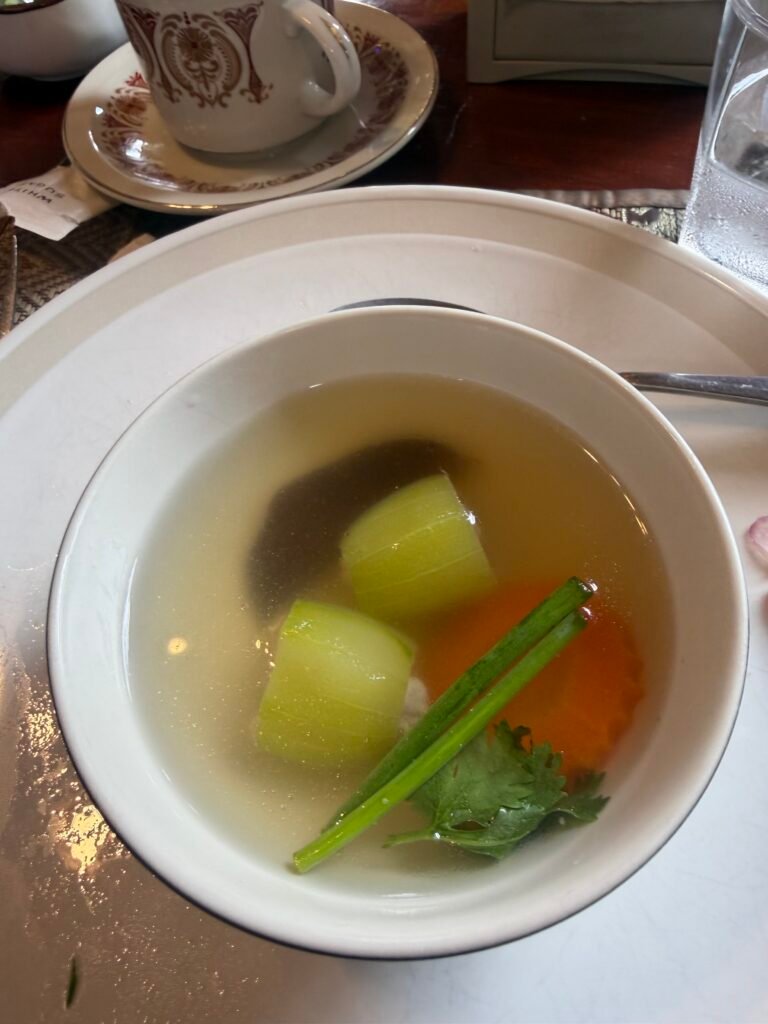
We enjoyed a lunch – a customary meal cooked according to century old recipes. Allan and I had the turkey pie, which wasn’t that great, but the soup they served as an appetizer was delicious.

We entered De la Perelle Property – an exhibit of the Sisters of Louisbourg. The nuns there were members of a religious order who operated the town’s school. Girls went there for their education. They did not reside there, however. The girls from wealthy family’s paid a fee for the schooling while poorer families paid what they could afford. Boys from less wealthy families learned how to help their fathers by learning how to manage the family’s livelihood, while boys from wealthy families went to boarding school in France for seven years, and most opted not to return home.

It was a very enjoyable experience and we arrived back to our chalet in the late afternoon. We had dinner with our new friends… Lots of laughs and good natured ribbing as we got to know each other better. It was a wonderful day and the weather was perfect!

Tomorrow is an early day as we leave for Prince Edward Island.

Once again – a beautiful sunrise to start the day.

Remnants of a home at the fortress

The military musicians serenaded us during lunch

The military chapel – Fortress of Louisbourg

Typical kitchen where the cooks prepared meals for those wealthy enough to have cooks and maids

Bedroom

Governor’s bedroom at the fortress

Fortress of Louisbourg

The Cabot Trail, St. Peter’s Church, Les Trois Pignons

After a nice buffet breakfast, we boarded the bus and explored the Cabot Trail. This is a scenic highway with breathtaking coastal and mountain views. It meanders through the Cape Breton Highlands National Park and is considered one of the most beautiful scenic highway in Nova Scotia. Along the way, we stopped at a few of the overlooks to take in the seaside splendor.

We passed through seaside villages and enjoyed seeing the quaint homes tucked into either the mountain or dotted along the shore. The trail is named for John Cabot, the Italian-born seafarer (who sailed for Great Britain), and who arrived at Cape Breton Island in 1497.

Our first stop along the trail was a visit to St. Peter’s Church. This majestic Catholic church is a major landmark along the trail and was erected under the guidance of Father Pierre Fiset in the early 1890s. It features beautiful frescoes and a very large, ornate altar. The stained glass windows to me, however, seemed out of place with the rest of the elaborate frescoes, as they were more modern looking than I thought should have been featured in the church.

The church was built in 1893, and a silver spire shoots into the sky, that is visible from miles away. Interestingly, the sandstone was quarried in nearby Chéticamp Island and was hauled across the frozen harbor.

After visiting the church, we drove to Les Trois Pignons, which houses the Museum of the Hooked Rug and Home Life, an Acadian, cultural, genealogical and visitor information center. The gallery features original antiques, of which 90% were amassed by Marguerite Gallant, who is remembered as a woman “brave enough to go her own way, to dress as she wished, and to live life to the fullest”.

The museum also features the works of Elizabeth LeFort. Elizabeth was a Canadian tapestry artist, known for replicating photographs, including portraits, in hooked rugs. Other artists’ works are also displayed in the museum. The works are beautiful and it was amazing to see this technique and appreciate the work that goes into each work of art.

We had a box lunch in the park and then continued on our drive back to our chalet, seeing more of the seaside. Our guide during the tour, Trish, was entertaining and told us a lot of history about the area as well as about her own life.

Rain threatened and then broke through while we were on the bus, but stopped each time we disembarked so we were lucky.

Allan and I decided to stay at the lodge for dinner, enjoying a salmon dinner, and then it was back to our chalet for the night.

Sunrise this morning

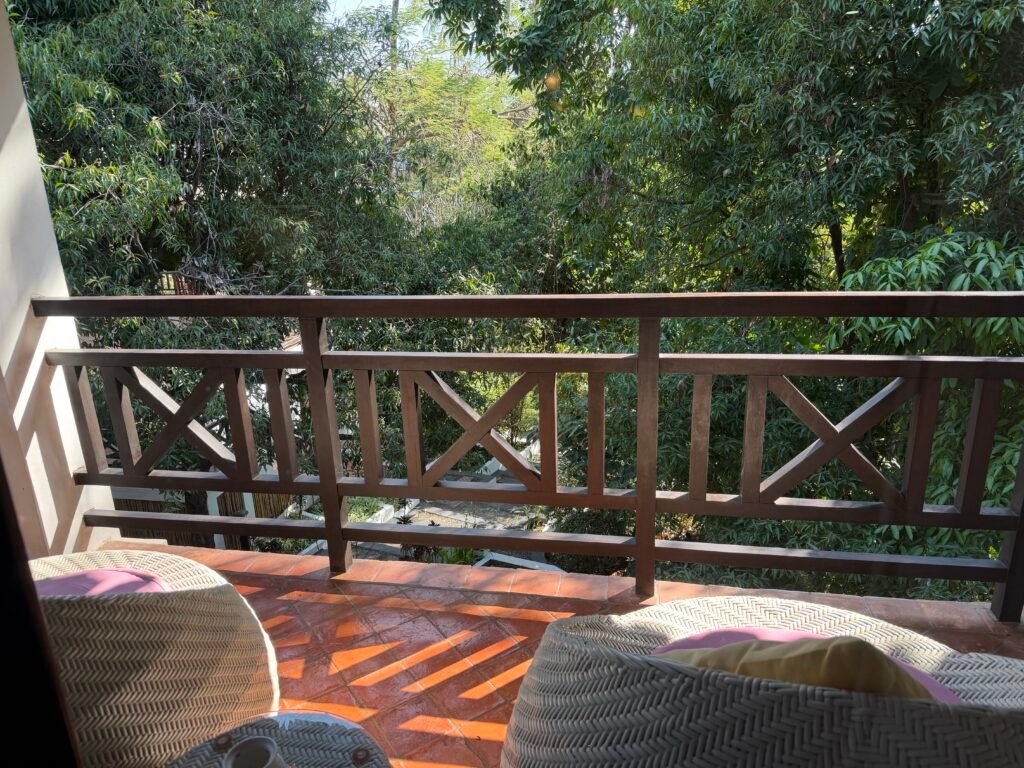
View from our room

St. Peter’s Church.

St Peter’s Church

Father Pierre Fiset tomb in the church

Neil Harbor lighthouse

Some of the artifacts amassed by Marguerite Gallant

Below are some of the hooked rugs on display.

US presidents through John F. Kennedy

Beautiful seaside scenery

Sunset just beginning over the water as we enjoyed dinner.

Baddeck

Accommodation: The Silver Dart Lodge

We started our day traveling to Baddeck. Baddeck is a village in Cape Breton Island in northeastern Nova Scotia. According to Wikipedia, “The area was first occupied by Mi’kmaq people and later settled by United Empire Loyalists and Scottish Gaels in the late 18th and early 19th centuries. The area prospered in the 19th and early 20th centuries as a service and shipping center for surrounding mining, trapping, fishing, forestry, and farming activities. Today the economy depends on services, cultural activities, and tourism.”

Along the way to Baddeck, we stopped to visit the Millbrook Cultural & Heritage Center, a museum dedicated to the region’s indigenous Mi’kmaq people.

The Mi’kmaq are an indigenous group of people native primarily to Nova Scotia, New Brunswick, Prince Edward Island, and Newfoundland. They also have settled in Quebec and in the northeastern region of Maine.

In southwestern Nova Scotia, there is archaeological evidence that traces land and resources attributed to the Mi’kmaq to at least 4,000 years ago. Our Mi’kmaq guide was very interesting as she told us all about her life and it was an enjoyable presentation

We had a lovely lunch at a local restaurant, and the folks on a Tauck tour were also there enjoying the scenery and cuisine with us. Then it was on to visit the Alexander Graham Bell museum. What an amazing man he was. As children, we were taught that Bell invented the telephone… But we were never told of his other numerous inventions or that his real passion and love was teaching deaf children.

Bell was born in Scotland. His grandfather, and brother had all been associated with work on speech pathology, (at the time called elocution). Bell’s mother was deaf, which profoundly influenced his life’s work…amazingly, not his invention of the telephone…but rather, teaching the deaf.

Bell courted and eventually married a deaf young girl named Mabel Hubbard, who became deaf at the age of five, after having scarlet fever. Her father had hired Alexander to assist with her articulation, as he was known as the best tutor for the deaf in Boston, where he lived at the time. She was 15 and he was 25. It wasn’t love at first sight. It was said she quipped about Bell…“He was tall and dark with jet-black hair and eyes, but dressed badly and carelessly. I could never marry such a man!” She even wrote in her journal, “I both did and did not like him.”

But Mabel eventually did fall in love with Alexander and they married and she was at his side as he pursued his life’s work as inventor, scientist, and engineer, and who of course, is credited with patenting the first practical telephone. The range of Bell’s inventive genius is represented only in part by the patents granted in his name alone and the 12 he shared with his collaborators. 

These include 14 for the telephone and telegraph, four for the photo phone, 1 for the phonograph, five for aerial vehicles, four for hydroplanes, and two for selenium cells. His inventions even included a jacket to assist breathing…really the first iron lung.

Bell is also credited with developing one of the early versions of a metal detector. After the shooting of President James Garfield, when the medical staff could not locate the bullet lodged in Garfield’s body, Alexander developed a kind of metal detector to find the bullet. According to some accounts, the metal detector worked flawlessly in tests but did not find  the bullet, partly because the metal bed frame on which the President was lying disrupted the instrument. The bullet was never found and Garfield ultimately died.

Our guide told us that Mabel and Alexander had a beautiful life together and were very much in love. Mabel was at his side as he pursued his experiments in different fields in Baddeck, Canada, where they lived and worked for 35 years in a large home called Beinn Bhreagh, which was perched on a peninsula jutting into Bras d’Or Lake. Everyday the couple would walk hand and hand down the mountain and back up again to their home…a nighttime journey at 5 pm, that became a ritual. When Alexander died, he was buried on top of the mountain where their home was. Mabel kept her hand on the coffin as it climbed the mountain at exactly 5 pm, in memory of all the times they walked hand and hand together. He died on August 2, 1923, a few days after his 75th birthday. When his funeral finished around 6:30 pm, as a mark of respect, every telephone exchange in the United States and Canada closed for a minute of silence. His wife Mabel died five months later of a broken heart.

I highly recommend reading more about this amazing man. When he was asked what he most wanted to be remembered for, he didn’t say inventing the telephone, but rather… being a teacher of deaf children, which was his true passion.

And in the pictures below, read about IRENE…Image Reconstruct, Erase Noise, Etc. another amazing thing that took place many years after Bell’s death.

After touring the museum, we went to our accommodations for the next three nights…The Silver Dart Lodge. Allan and I are in a lovely little chalet overlooking a lake. So romantic. We went to dinner at the lodge and had a great time laughing and talking with new friends. It was a fabulous day!

At the Millbrook Cultural Center

Millbrook cultural center

Beautiful scenery and the Kidston lighthouse, on Bras d’Or lake. The original lighthouse was built in 1875 and the present one was built in 1912. The two lighthouses stood side by side for some time. The lighthouse can only be accessed by boat; a ferry going there operates during the summer months.

Enlargement of Alexander’s experiment drawings

Artifacts and furniture of Alexander Graham Bell

More about IRENE technology

Our view from our chalet

Our chalet

Our second day in Halifax

Accommodation: Four Points Halifax Hotel

Halifax is a beautiful city and our hotel is right in its heart… with many sites nearby, places to eat, and only steps away from the Atlantic ocean.

We were in Halifax in 2023 on a Viking cruise, but we didn’t have the opportunity to walk around the city. At that time, we opted to take an onshore excursion, that featured the sites we saw on our bus tour today.

The Fairlawn cemetery, our first stop, is the final resting place of over 100 victims of the Titanic disaster. What I didn’t know from our previous visit, is that the graves are arranged in the shape of a ship, tapering towards the “bow” and wider at the “stern”.

The coroner, who was tasked with the job of trying to identify the victims that were pulled from the icy waters, had an almost hopeless undertaking. Most of the victims did not have any identification on them. In order to attempt identification, he numbered the bodies as they came to the morgue, and then wrote down eye color, hair color, and tried to guess at ethnicity. Sometimes though, he made assumptions. A person with red hair was assumed to be Irish, but of course, that wasn’t always the case.
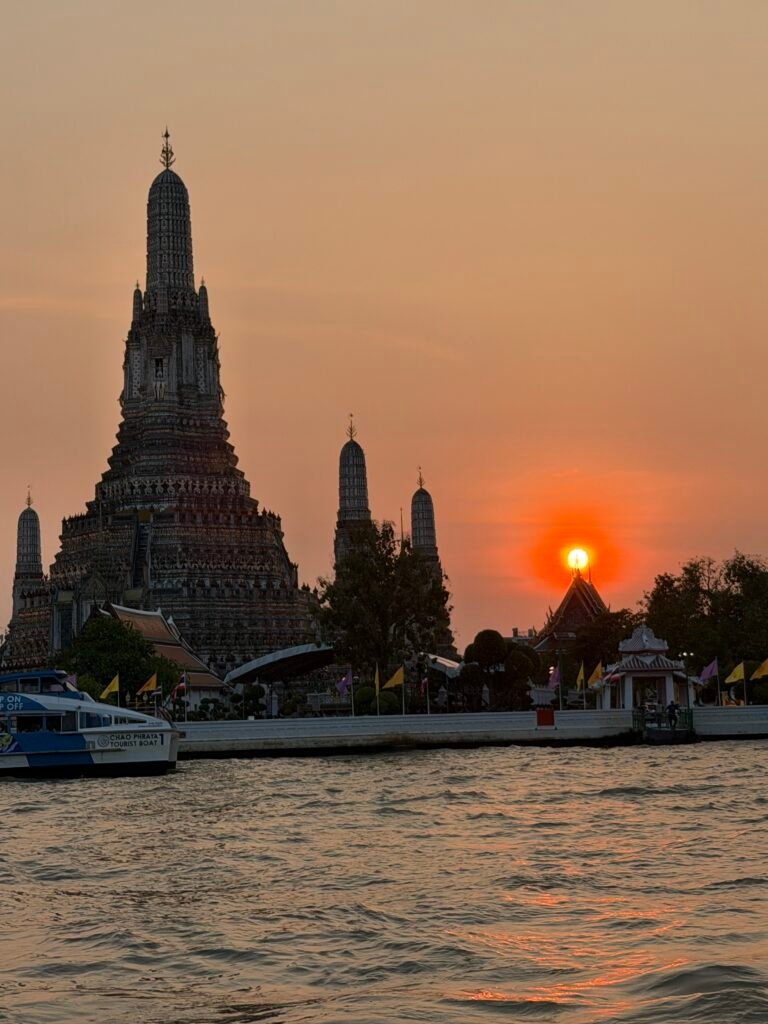
There are also graves from the 1917 Halifax explosion, the largest manmade explosion in history before the atomic bomb. It was caused by the collision of the French explosives-laden ship SS Mont-Blanc and the Norwegian ship SS Imo in Halifax Harbour, resulting in about 2,000 deaths, thousands injured, and widespread destruction of the city’s north end.

We boarded our bus again and enjoyed seeing the beautiful neighborhoods, as we passed through them on the way to the Citadel, a former British and Canadian military site.
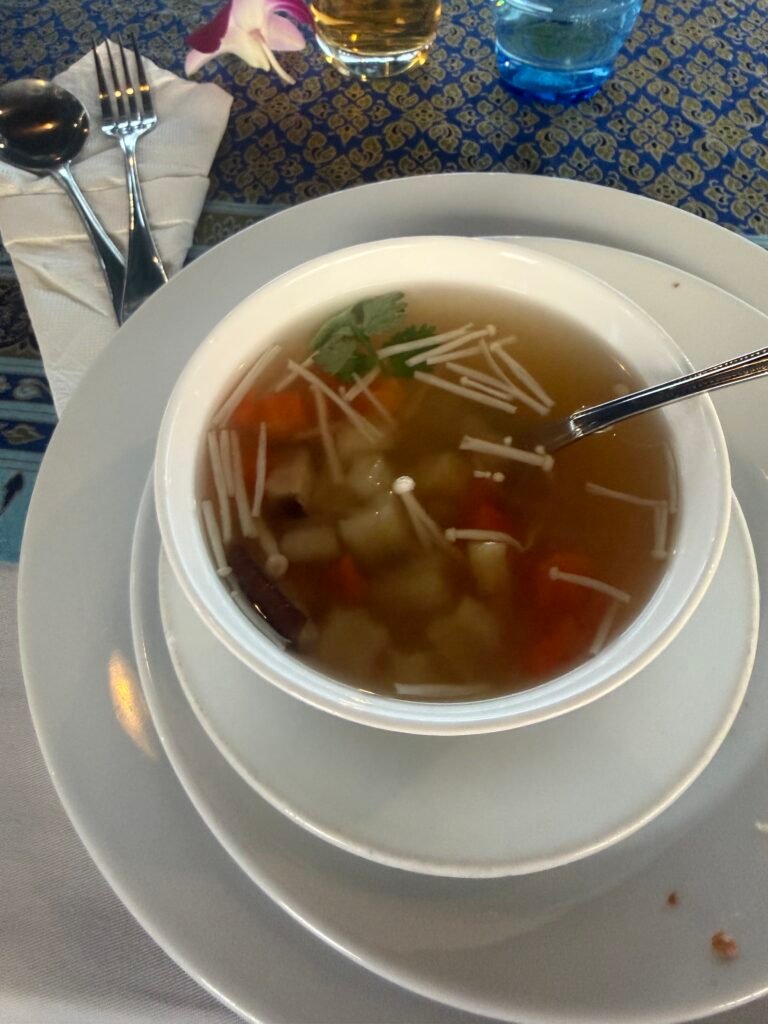
At the Citadel, the Royal Artillery at noon each day, fires a cannon. We arrived just in time to hear the cannon fire, and even though we knew it was happening, we all jumped out of our skin. Wow… It was loud!!!
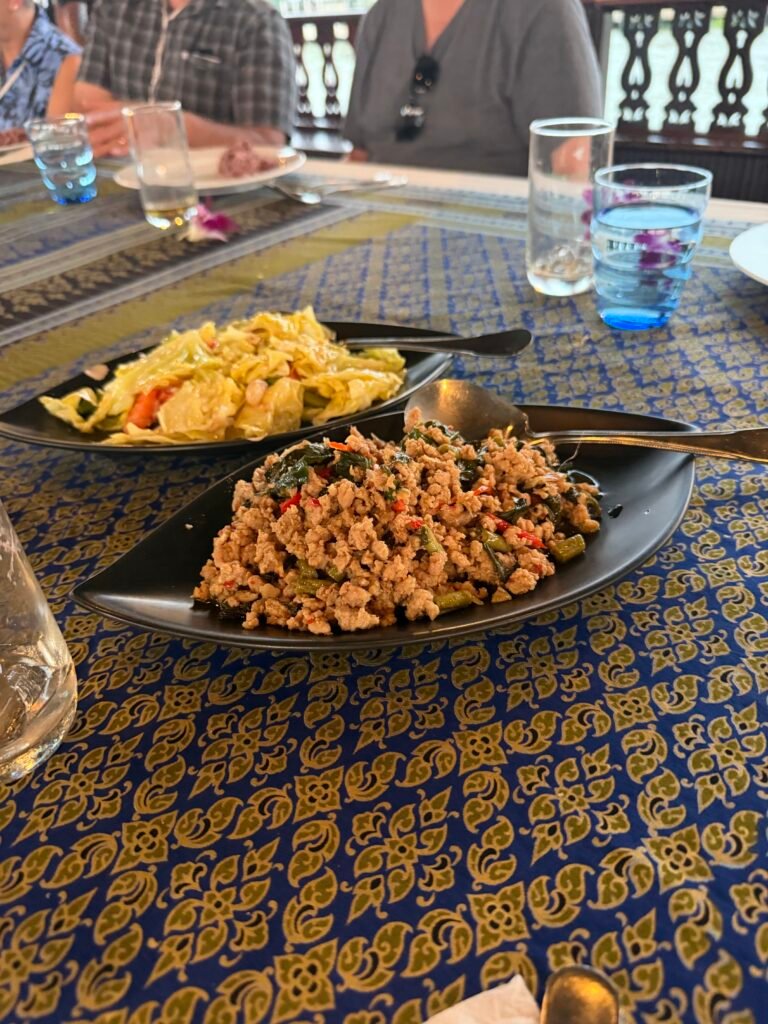
We enjoyed lunch at a local restaurant, dining on haddock which was delicious. We enjoyed talking with some of the folks on the tour and we had a lovely time.
After the tour, Allan and I walked the boardwalk and then went to the Alexander Keith brewery. Alexander immigrated from Scotland to Nova Scotia in 1817 and founded the brewery in 1820. He served as Mayor of Halifax from 1843–1844 and again from 1852–1853.
Unfortunately, all the tours for the brewery for today were sold out, but the man gave us two tickets to enjoy free beers at a restaurant around the corner from the brewery. The beers were very good… Nice and dark.

Allan and I went to dinner at a local restaurant and had the lobster dinner and then it was off to bed.

If you would like to know more about Halifax and what we saw today, please go to my 2023 Canada, Greenland, and Iceland blog post as I go into much more detail about the sites we saw today.

Halifax

Accommodations: Four Points Halifax

Our plane ride was great… We were only 7 minutes late landing, and given we sat on the tarmack before takeoff for over 30 minutes, that was pretty good.

We Ubered to the hotel and met our guide Greg. Then we checked into our hotel room, which is very spacious, and met some of the group for an orientation walk

We’ve been to Halifax before, so we were familiar with the layout of the city. It is a lovely city and it was a beautiful day, and we are right by the water and the boardwalk, which we will walk tomorrow afternoon.

After the orientation, Allan and I went for dinner at the Wooden Monkey. Farm fresh offerings and our food was very tasty. Allan had the meatballs and pasta and I had Nova Scotia salmon.

After dinner we walked back to the hotel and we were amazed to see the natives wearing shorts sans jackets! It was chilly tonight and I was happy I had my raincoat on to block the wind.

Some of the folks we’ve met so far on the trip seen very nice and it looks like it will be a good group.

Till tomorrow, eh?

June 16 – Explore Roskilde

Accommodations: Scandic palace hotel

After breakfast we traveled by train and bus to Roskilde, the one-time capital city of Denmark.

We visited the Roskilde Cathedral, the first Gothic-style cathedral to be built of brick. More than 40 kings and queens have been buried in the cathedral over the past 1,000 years, which is the most royal cathedral burials in the world. Roskilde Cathedral has been a UNESCO World Heritage Site since 1995.

The cathedral is beautiful, with unique royal chapels along the sides of the main cathedral, each containing the remains of royal families. Each chapel is unique and each reflect the changing architecture across 800 years, from the Viking kings, to Gothic architecture, across the Reformation, and up until the finished funeral monument for Denmark’s current queen, Queen Margrethe 2.

We had lunch in a quaint restaurant and the food and wine – outstanding!

We then visited the Roskilde’s Viking Ship Museum, dedicated to studying and preserving the boat-building and seafaring techniques of Denmark’s ancient and medieval people.

Around the year 1070, five Viking ships were deliberately sunk in Roskilde fjord, in order to block the most important fairway and to protect Roskilde from an enemy attack from the sea. The five ships were found and excavated in 1962 and are on display at the museum.

We took the bus and train back to our hotel and then went to the Farewell Dinner, as tomorrow we all leave for home. It was a wonderful adventure and we loved seeing the gorgeous scenery, eating the food, and marveling at the sites. Till next time…Ha det.

Roskilde

Beautiful garden for the bees

The Roskilde cathedral

One of the chapels

And another chapel

And yet another chapel

And another chapel

Healing waters. We all washed our hands in the water.

Lunch at Pipers Hus restaurant

One of the original Viking ships

Farewell Dinner appetizer

Steak dinner

June 15 – Explore Christiania – Tivoli Gardens – Glyptotek Museum – Open Air Ballet – Open Air Classical Concert

Accommodations: Scandic Palace Hotel 

This morning after breakfast, we took the bus to explore Freetown Christiania. Christiania was founded in 1971, when a group of people – hippies, artists, and activists – cut a hole in the fence to an abandoned military barracks, and declared the area a free town, independent of Danish government laws and regulations. While it has since accepted some adherence to Danish law, it is still semi-autonomous today, and is a haven for artists, musicians, and those seeking an alternative lifestyle. 

We met with a local resident of the town, who said to Heidi, not realizing she had on a hot mike, “I’m kinda nursing a two day hangover!” That was what we heard in our ear pieces. Too funny!

There are about 900 people in Freetown, and most of the people have built their own primitive housing. The houses do have electricity and water and the residents do pay taxes to the Danish government. There is a doctor in residence, but most of the people prefer to be treated with alternative methods first, before seeking medical care. They do get vaccines.

The people can buy things they need in the shops and there are organic restaurants, art galleries, and gardens. I have never seen so many gorgeous shades of roses that are growing all over the place. Cameras are prohibited in certain areas to protect the alternative nature of the community.

Christiania is run by its residents, who collectively make decisions through a consensus-based democratic process.

Since its opening, Christiania has been famous for its open cannabis trade, which took place on Pusher Street in the community. When local residents removed the Pusher Street stalls, it was estimated that the cannabis sale dropped by about 75%. As of June 2023, there were numerous cannabis sellers on Pusher Street openly selling their wares from makeshift stalls with spray painted signs advertising the strain of cannabis for sale. In August 2023, residents had had enough and they blocked the entrances to Pusher Street with concrete barriers and bars, but it is still sold on the quiet. Cannabis is illegal in Denmark, so if the police catch you buying it, you will be arrested.

In 2012, the Danish government offered to sell most of the land that Christiania was on to the residents at below the market rate, and offered guaranteed loans. In exchange, the Christianians promised to upgrade and maintain water, sewage, and electrical services, and preserve rights of way and “rural” areas.

It was a very unique and kind of crazy learning experience. I think Rick Steves, the travel guru, sums it up when he writes:

“A few years ago I received an email from some readers who’d visited. They said: ‘We’re not prudes, but Christiania was creepy. Don’t take kids here or go after dark.’ A free city is not pretty; I agree. But watching parents raise their children with Christiania values, I came to believe more strongly than ever in this social experiment. Giving alternative-type people a place to be alternative is a kind of alternative beauty that deserves a place.”
Amen!

After chatting with our guide, we all boarded the bus to go to Tivoli Gardens, the second-oldest amusement park in the world, that opened in 1843. We enjoyed lunch there, but Allan and I weren’t interested in going on any of the 30 rides they have, so instead we went to the Glyptotek museum. We toured the Degas exhibit, the Egyptian exhibits, as well as the numerous works by Norwegian-Danish sculptor Stephan Sinding that were on display.

After the museum, we went back to Tivoli Gardens to see the ballet performance of Hans Christian Andersen’s fairy tale Clumsy Hans, in the open air theater. It was very good. Then we went to another open air theater to see conductor Phillip Faber and hear his orchestra play classical selections, alongside soprano Louise McClelland. We were treated to music by Mozart, Vivaldi, and Strauss and Ms. McClelland sang Summertime and finished with O Mio Bambino Caro, one of my all time favorite arias.

And then…Allan and I finished the day with McDonald’s. It was really delicious, but we didn’t have ketchup for our fries, because we didn’t realize… they charge extra for it and we had already paid for our meal.

Our guide in Christiania

One of the buildings

The residents build their homes and on-site is a warehouse with recycled material from previous homes, that the people can purchase and use to build with.

One of the homes we were allowed to photograph

Waiting for cannabis to be legal

Sign as you leave Christiania.

The Glyptotek museum

Ballerina sculptures by Degas

The ballet Clumsy Hans

The concert

It was wonderful!