
Destination: Hanoi – Accommodations: Sunway Hotel
This morning we left to visit the village where May Linh was born. She was a member of the Red Dao village, but now, she lives with her husband in his village, which is about a four hour drive from her village. When she married a man outside of her village, the Red Dao villagers wouldn’t speak with her when she returned home to visit family. But now, they have accepted her decision and are friendly towards her once again.
Our first stop on the way was to the market in Sapa. What a happening place. People are getting ready for the Tet celebration and the market was very crowded. You would be able to buy anything in the way of food – Vegetables, fish, meats, noodles, and spices. Some of the meats, I had no clue what they were, but people were buying everything in sight.
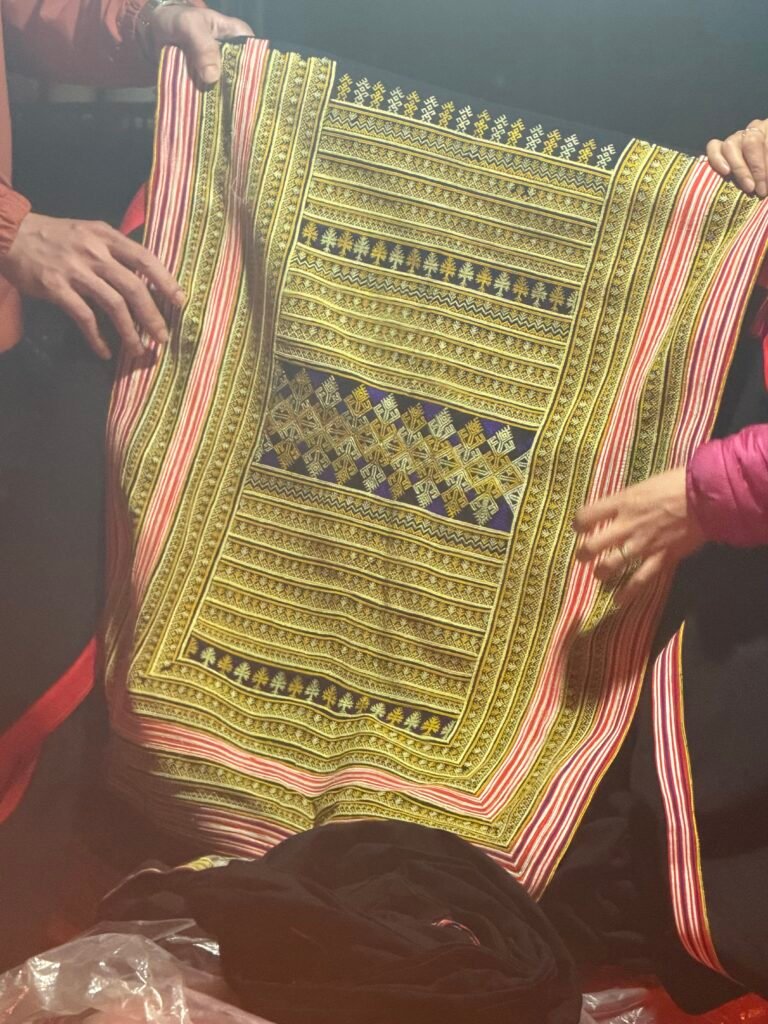
Then we went to the upper level and saw some of the beautiful hand sewn and embroidered cloth from May Linh’s village. I bought a beautiful wall hanging done on hemp, entirely hand embroidered. Just lovely.
From there we visited May Linh’s childhood home. We met her grandfather and he offered everyone a cup of tea. We sat around the fire in the main living area which was very cozy and it took the chill off of us since it was damp and cold outside.
May Linh told us that when she lived at home, she was going to marry a boy in the village. When girls are “engaged”, they spend a year or more making wedding outfits by hand. All the bead work and stitching is done by hand and the girl has to be as meticulous as possible since it is a sign of her worth.
She had to make outfits for her husband to be, her father, the groom’s father, her grandfather, and she has to make seven layers of clothing for herself. It took her longer than a year to sew them all. She brought the outfits out to show us and some of us tried them on. The stitching was beautiful as was the bead work. She said it took her longer to make the clothing because she struggled to make the stitches perfect.
She ultimately did not marry the boy, but she did use her wedding attire that she made for herself when she married her now husband. Her husband did not want to wear what she sewed for the old boyfriend since it wasn’t originally for him.
She was the rebel in the family she said. She was not allowed to learn how to read and write in her language. Only boys were allowed. She didn’t go to school at first, and when she was fourteen or so she sold handmade items on the street. One day, a couple on a motorbike came into the village and told her that if she went with them, they would take her to China and she could make a lot of money to send back to her family. She almost went with them… but her grandmother came after them with a huge knife and took May Linh back home and didn’t let her out of the house for weeks. The couple were human traffickers so she was very lucky to escape. Some of the girls she knew at the time were not so lucky. Two girls left with the couple and were never heard from again.
Usually, once the girls are taken away they were put in cages and let out only to sleep with men. When they got too old, they were sold to farmers and had to do farming work as well as be available for men. Human trafficking is still a big problem in Vietnam. According to a site I saw in the Internet, “Human trafficking has reached a rampant level in Vietnam, primarily targeting women, children, and ethnic minorities. Every year, a large number of Vietnamese citizens are trafficked to other countries, often those who come from “poor, vulnerable, or broken families” and lack a proper understanding of the crime of human trafficking.” Unfortunately, the women and children in the villages of Sapa fit this description – “poor and vulnerable” – and it remains a problem. The government does send government workers around in cars with megaphones, broadcasting throughout Sapa, telling the people about the dangers of trafficking and not to go with anyone who promises a better life somewhere else.
May Linh now has an education, but she still can’t read or write in her native language. Her husband is at university studying tourism. She works often for OAT as well as other travel companies during the tourist season and when she’s not working for them during the off season, she plants rice and corn for the family. She lives with her two daughters and her husband as well as her in-laws. Her daughters do go to school and she hopes they will continue and go to university. Her family didn’t bother with her for years because she married a man from outside of her village, but now they have all reconciled.
We bid her goodbye and then went on our bus for the long ride back to Hanoi. We stopped for lunch at the same place we had eaten at on the way to Sapa, and Allan and I enjoyed a burger and fries. Nice to taste after all the Asian food we’ve eaten these past weeks. But here’s a tip: You can’t eat burgers with chopsticks! 😂
We arrived back at the hotel around 7 and most of us met and had dinner together and drinks. We chatted for awhile and bid each other safe travels because most of us will be leaving late tomorrow evening.
I don’t have to set the alarm tonight, because nothing is planned for tomorrow. It will be nice to sleep in.
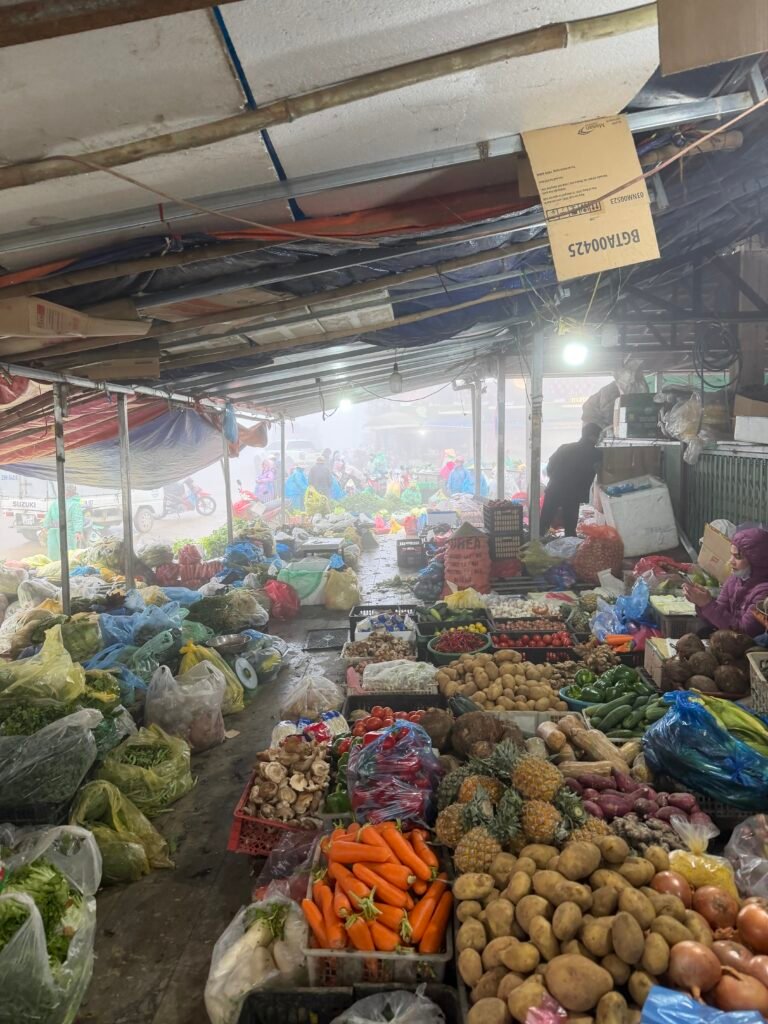
At the market
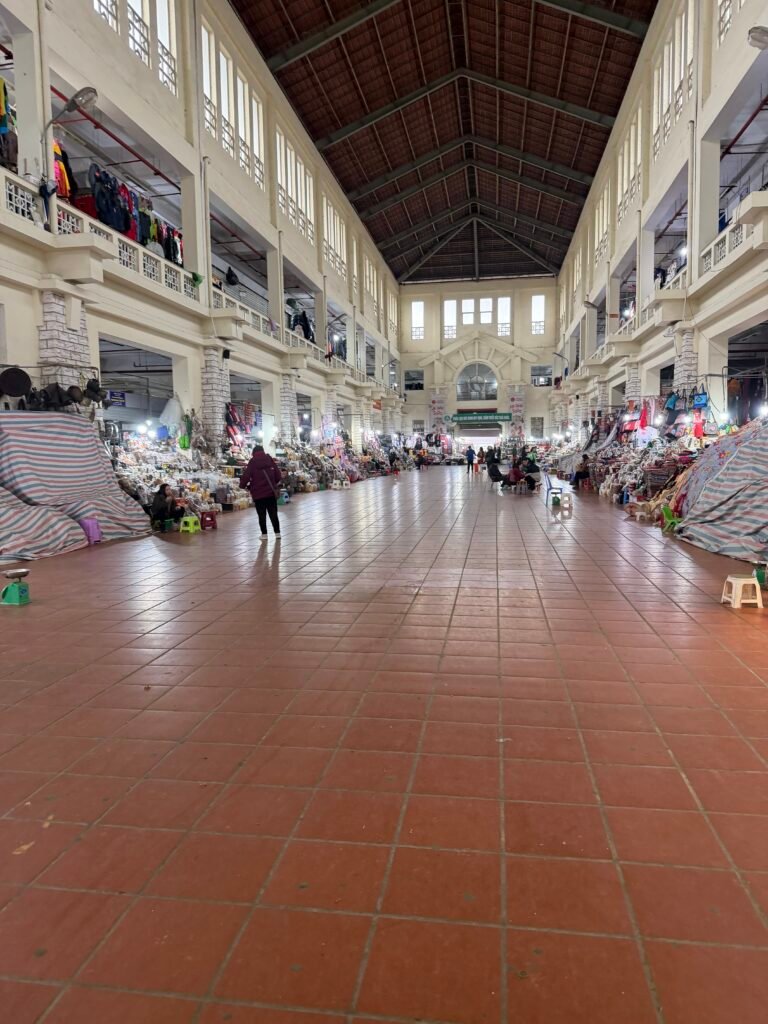
The indoor market is huge!

Look at the size of those carrots!!!
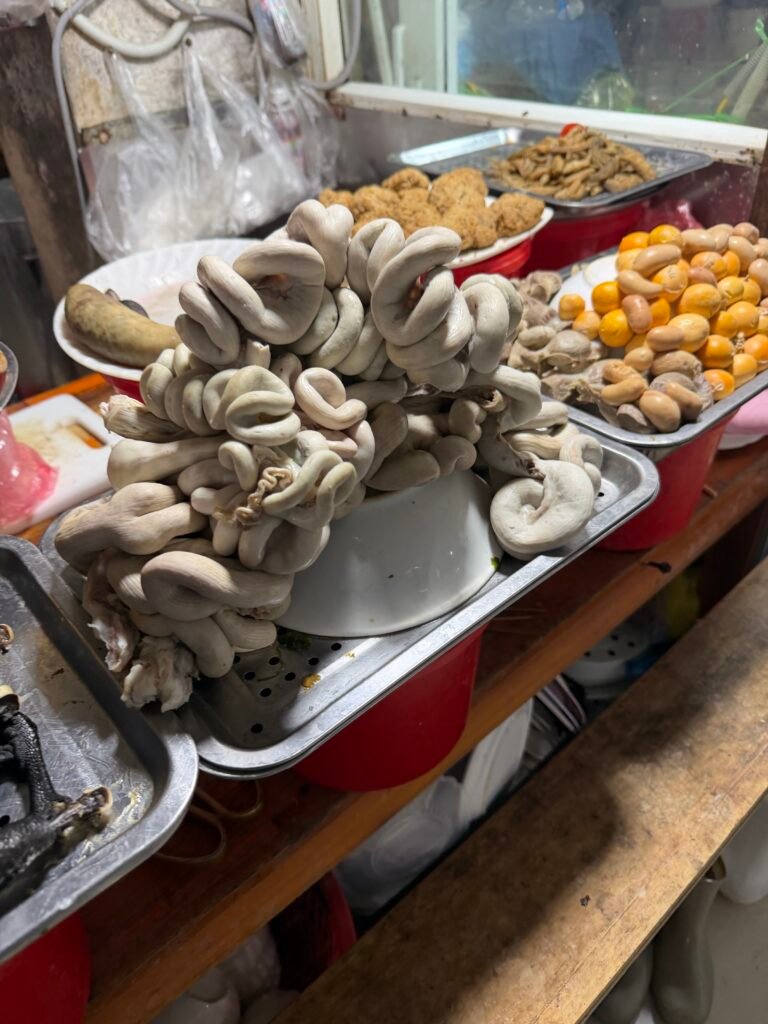
Who knows what these are….😳
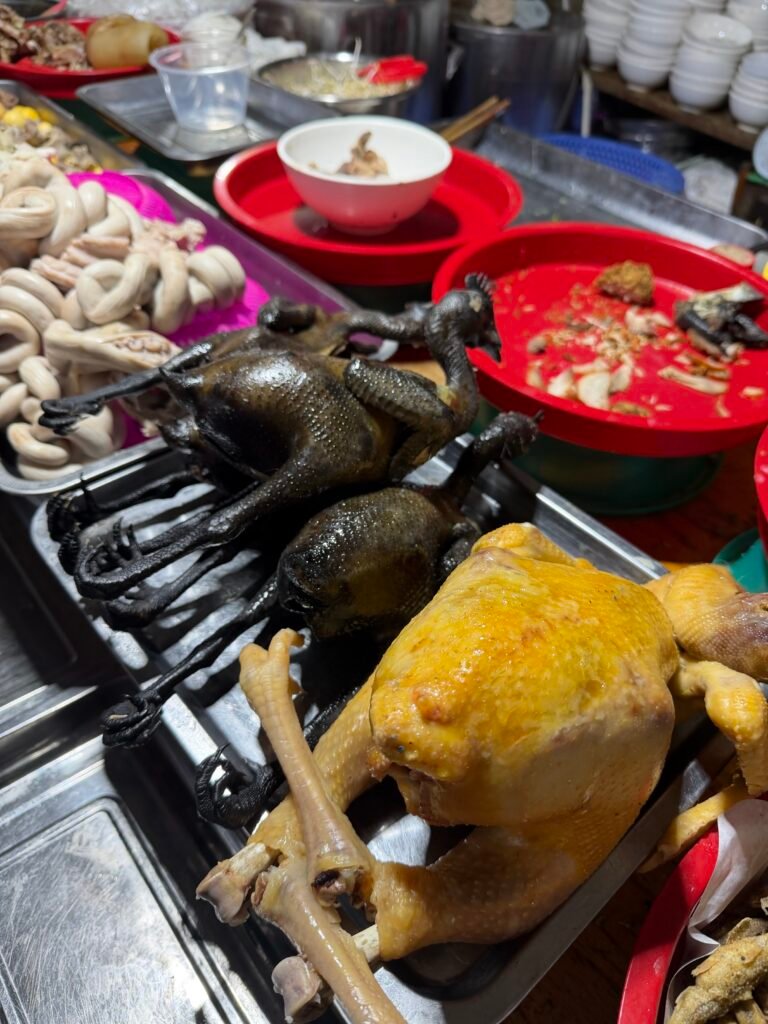
Black chicken. The black chicken has black skin, bones, meat, and feathers, resulting from a genetic condition called fibromelanosis. The meat is firmer than regular chicken. It is considered a “healing food,” traditionally believed to restore health, strength, and energy. It is served to women during birth and afterwards to restore strength. It apparently is very chewy.
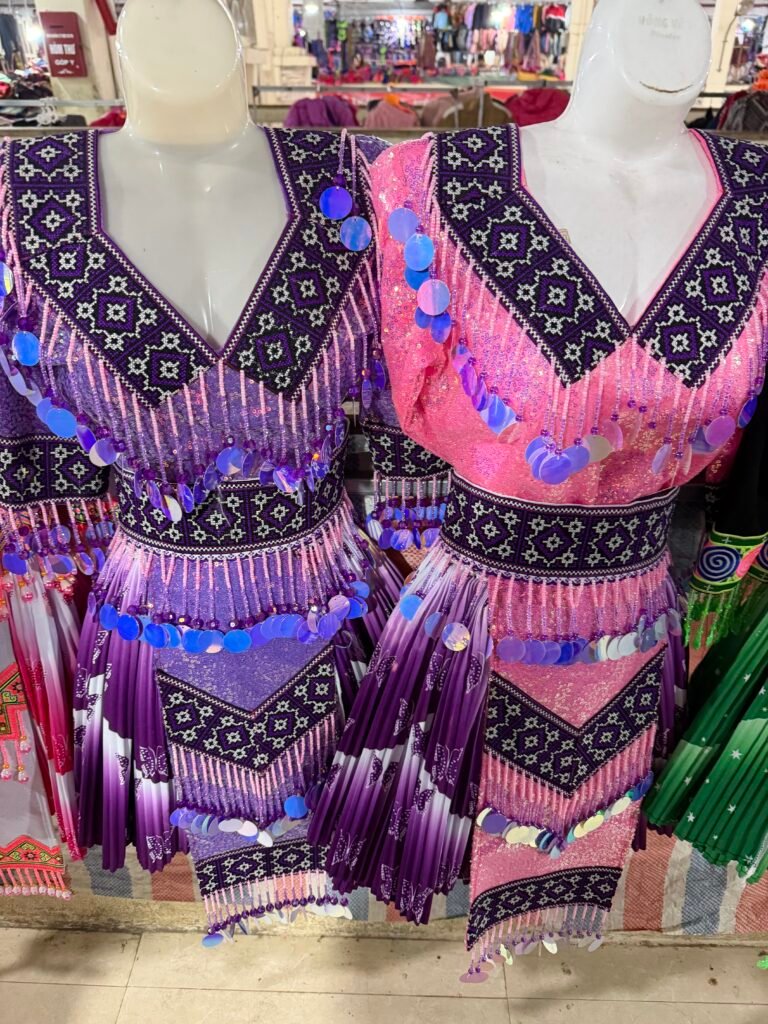
Beautiful dresses
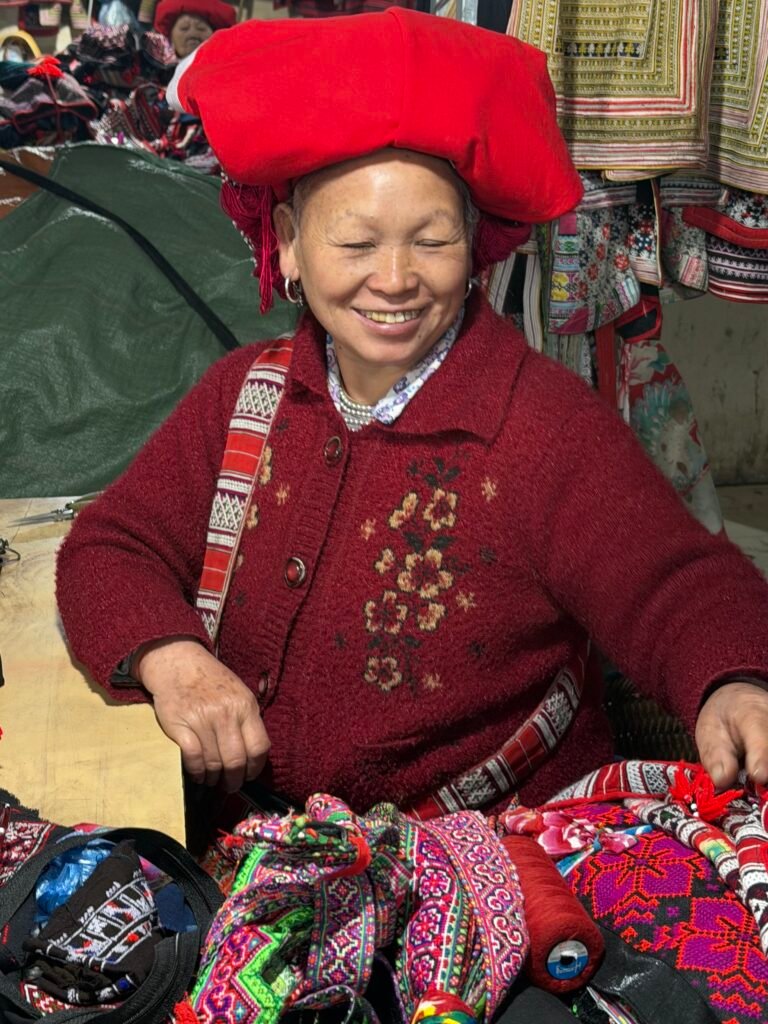
A member of May Linh’s village. They are the Red Dao sect. They shave their eyebrows and they pull out the forehead part of their hair line. The custom of shaving eyebrows and the front hairline is traditionally considered a sign of beauty and maturity for Red Dao women and shows their married status. May Linh did not have to do that practice since she married a man from another village. The Red Dao are also famous for wearing a bright, often red, turban or scarf, frequently decorated with silver coins and tassels.
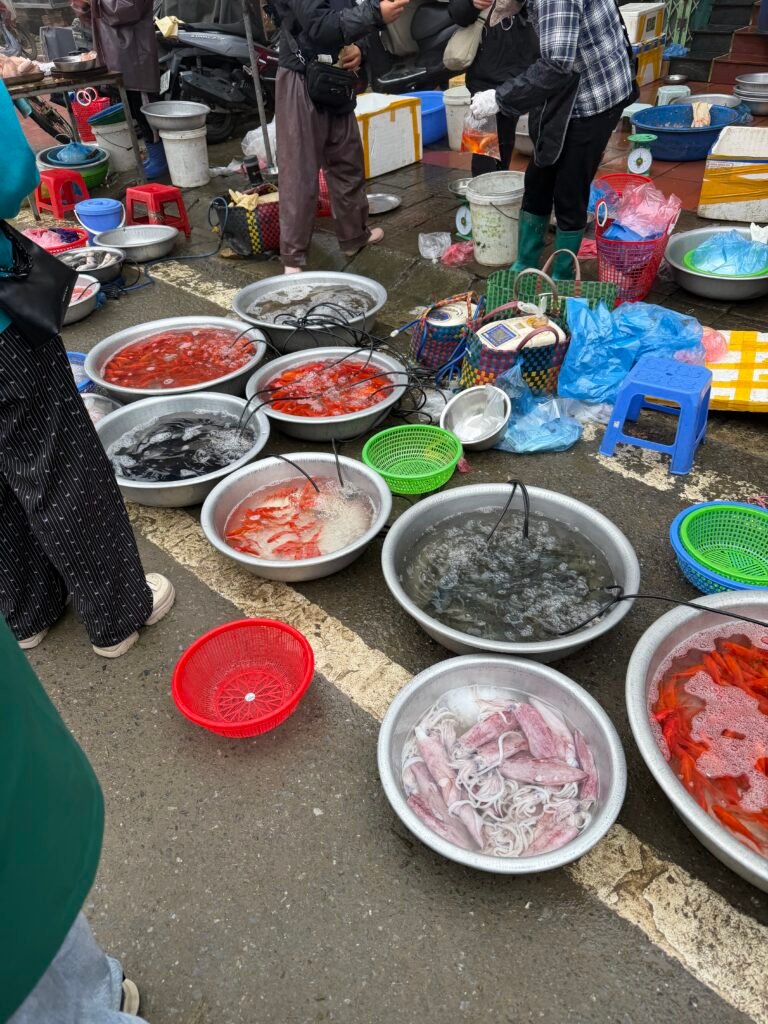
Fish for sale at the market. Families purchase live goldfish to serve as transportation for the Three Kitchen Gods (Tao Quan) to travel to heaven. The gods use these fish to report on the good and bad actions of each family to the Jade Emperor. After the ceremony, the fish are released into lakes or rivers, often along with ashes from burnt offerings, to ensure a favorable report for the family.
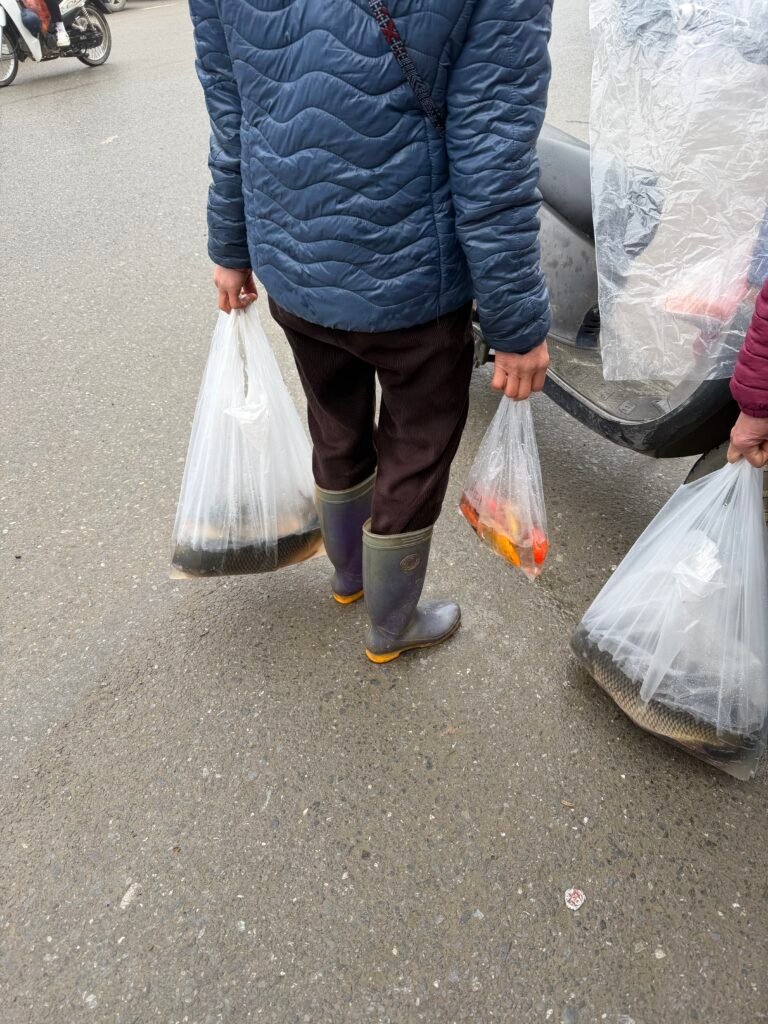
Taking the live fish home
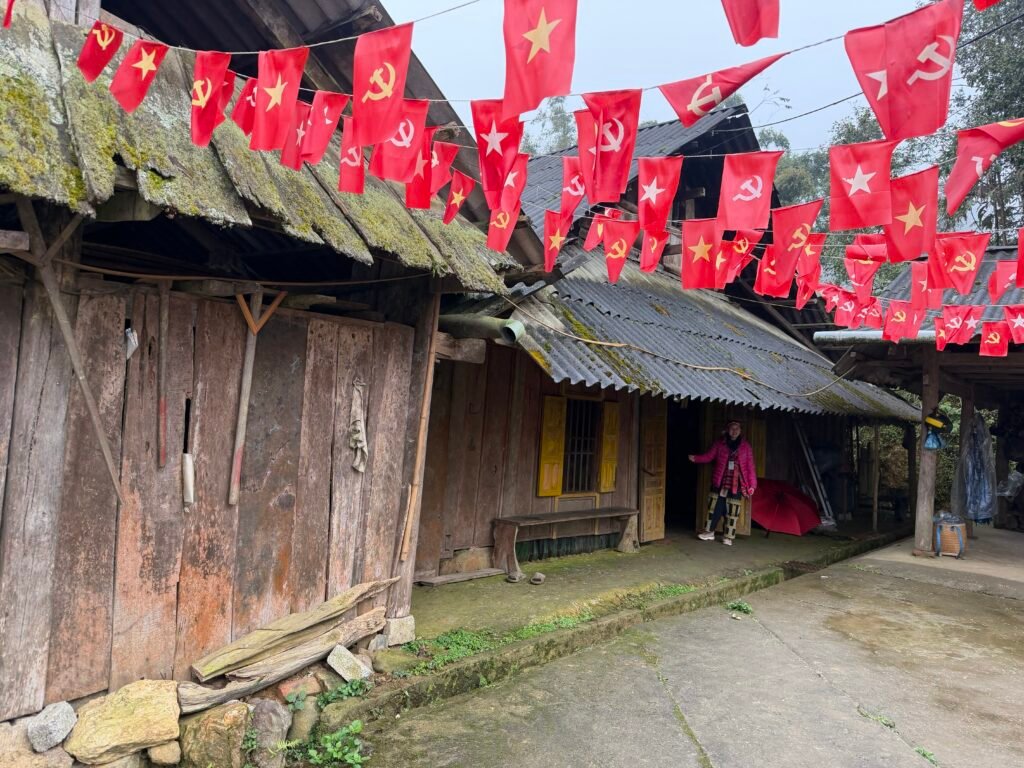
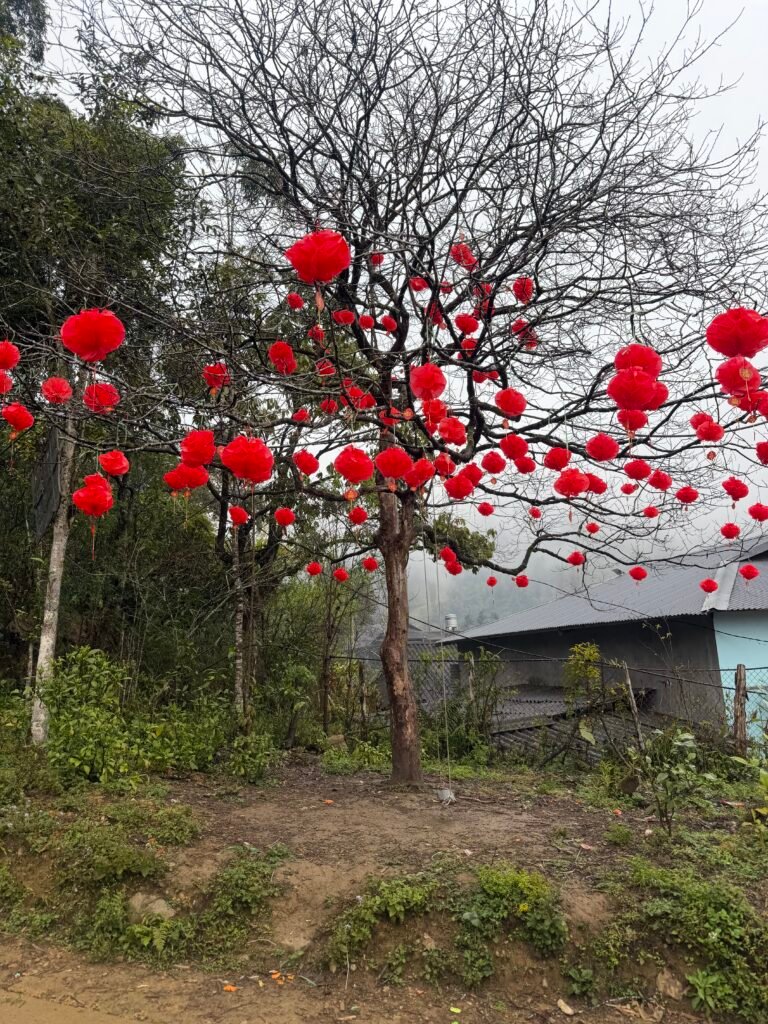
May Linh’s childhood home. Photo below…the tree at her childhood home is decorated for the Tet celebration.
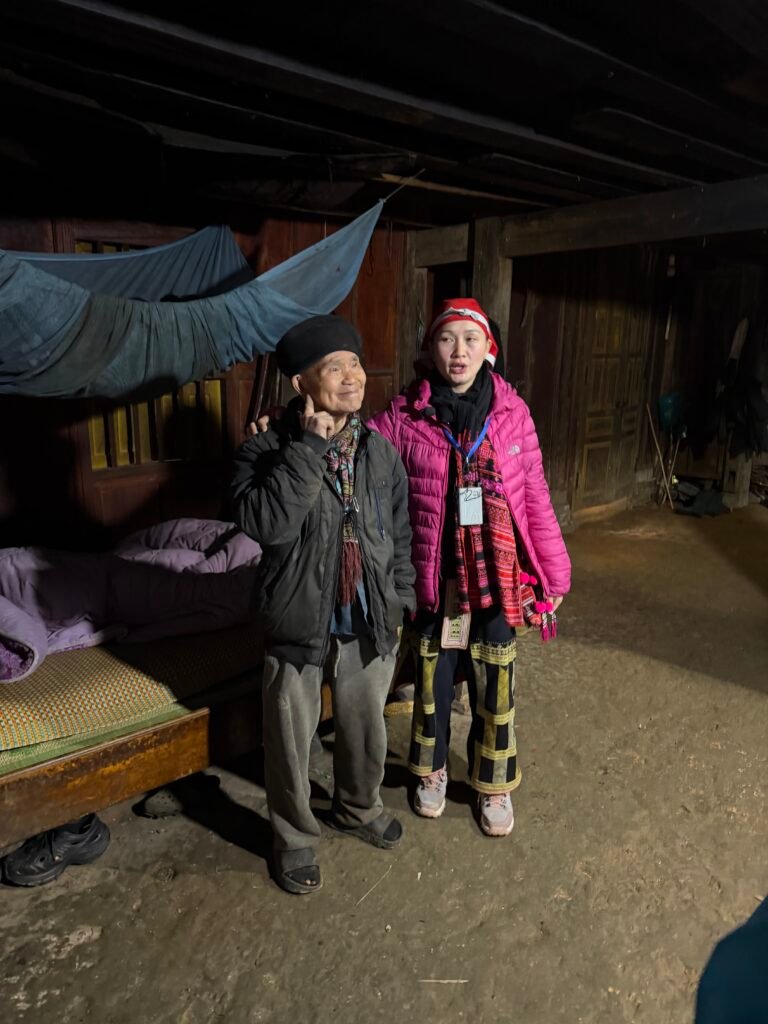
Her grandpa. When we arrived, he was bundled in blankets on the bed to ward off the cold.
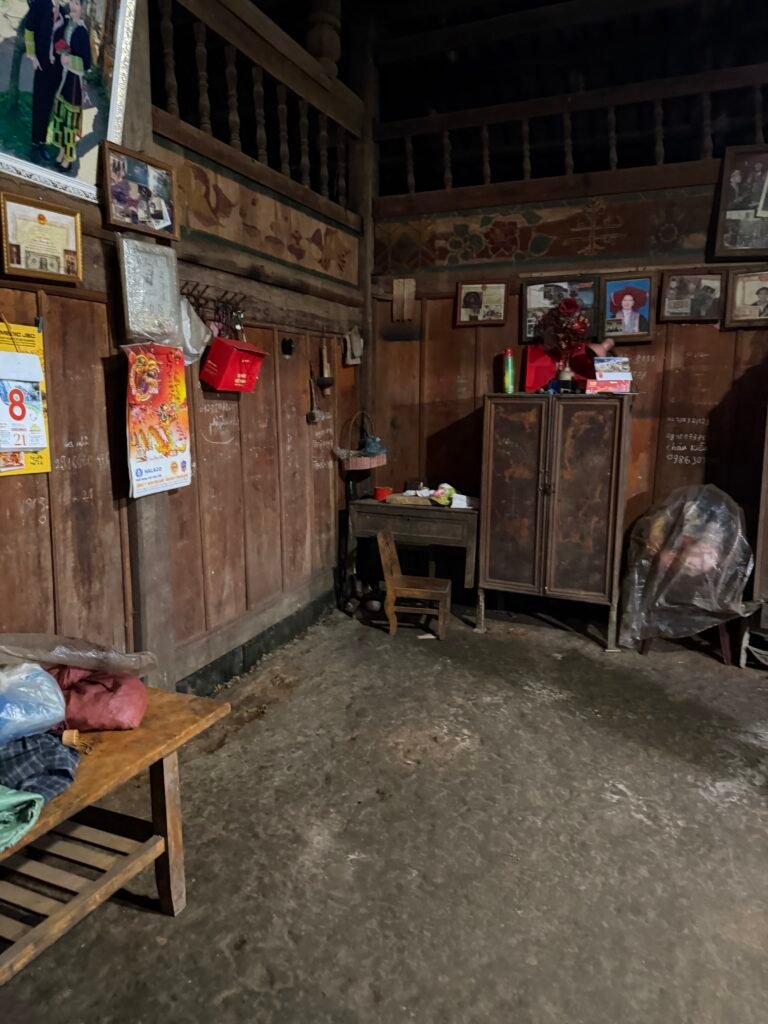
A room in the home
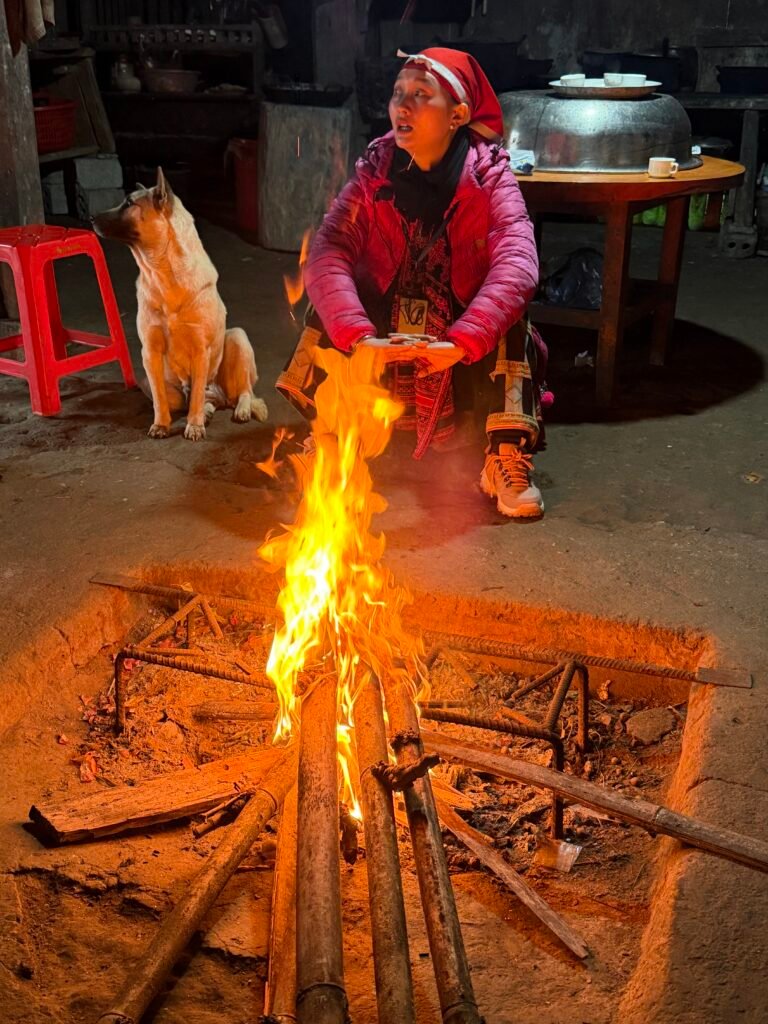
Sitting in front of the fire to get warm.
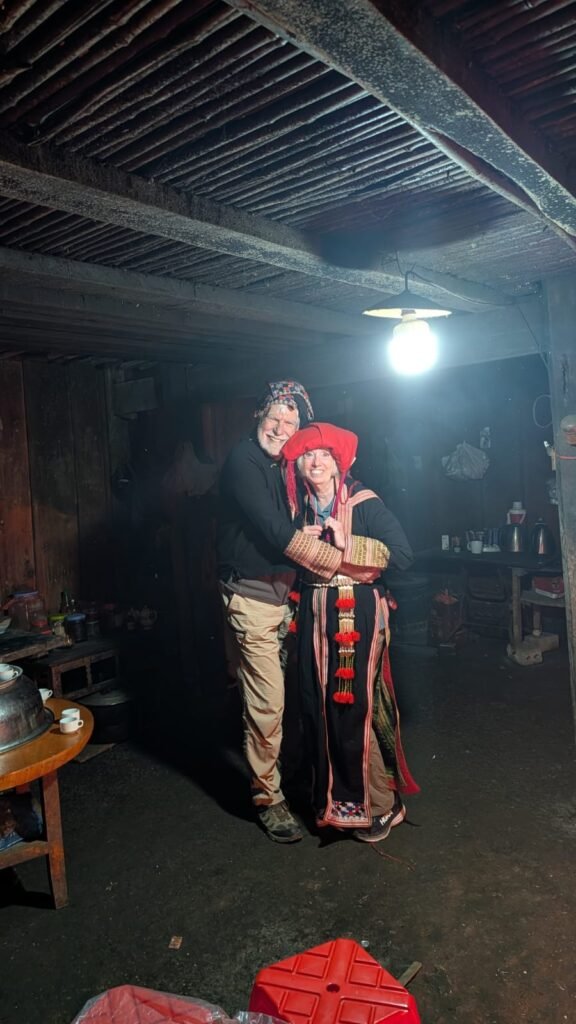
We tried on the wedding outfit that she had sewed years ago when she was 15. Beautiful work. Allan and I held each other but actually, when the wedding ceremony is happening , the couple cannot touch each other or make eye contact until the ceremony is over. We’re such rebels! 😂
Photo below shows the workmanship
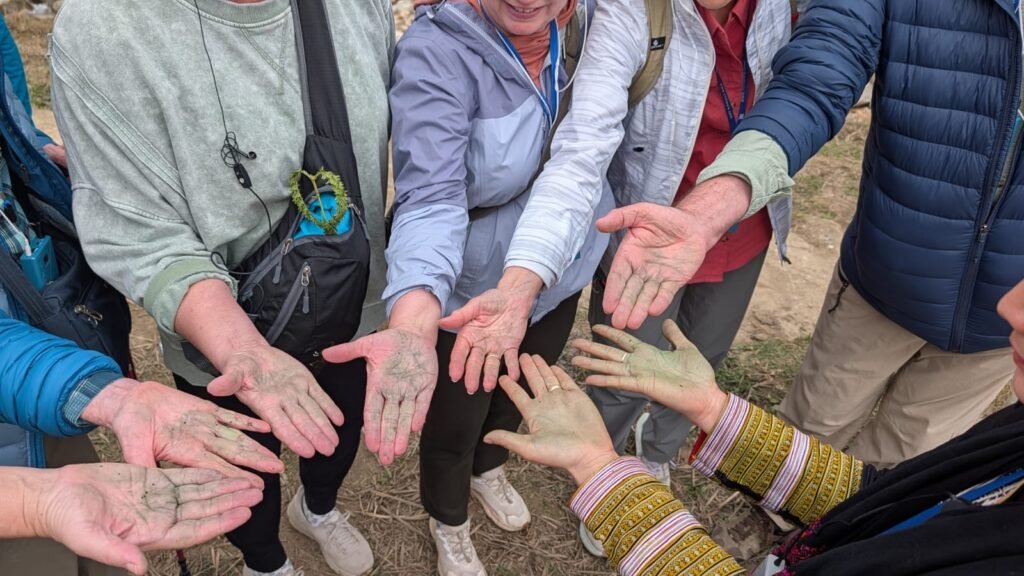
Our hands from the indigo leaves yesterday. The color took a day to wear off.
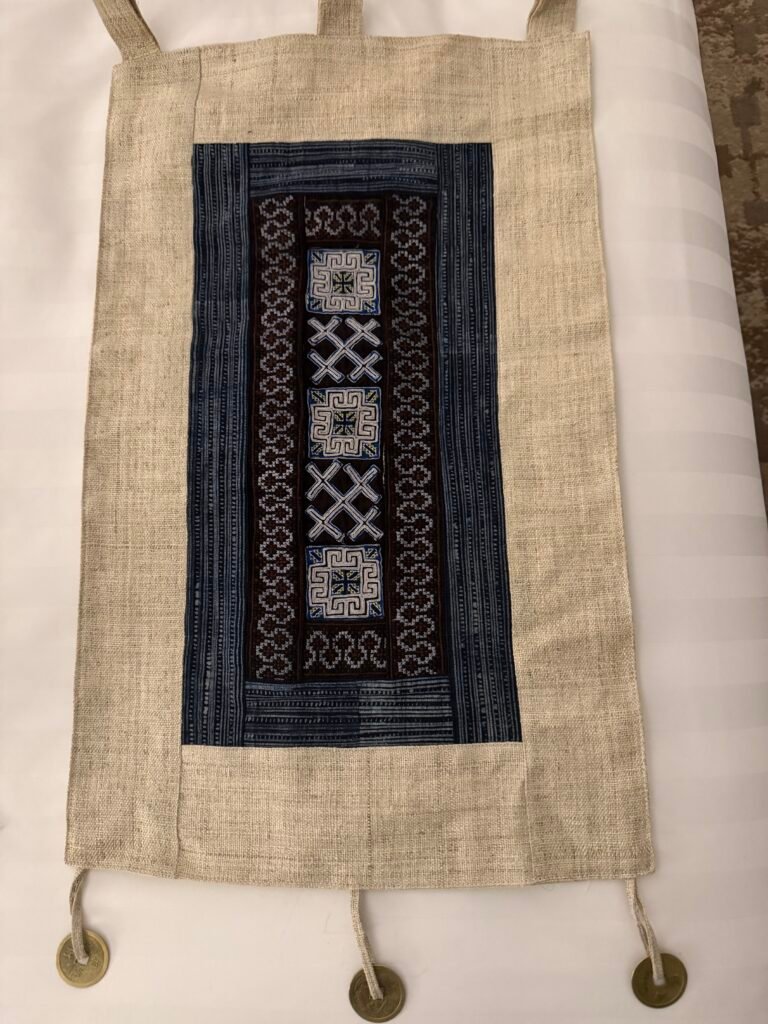
The piece I purchased. The camera doesn’t do the blue colors justice. It is truly lovely and vivid.
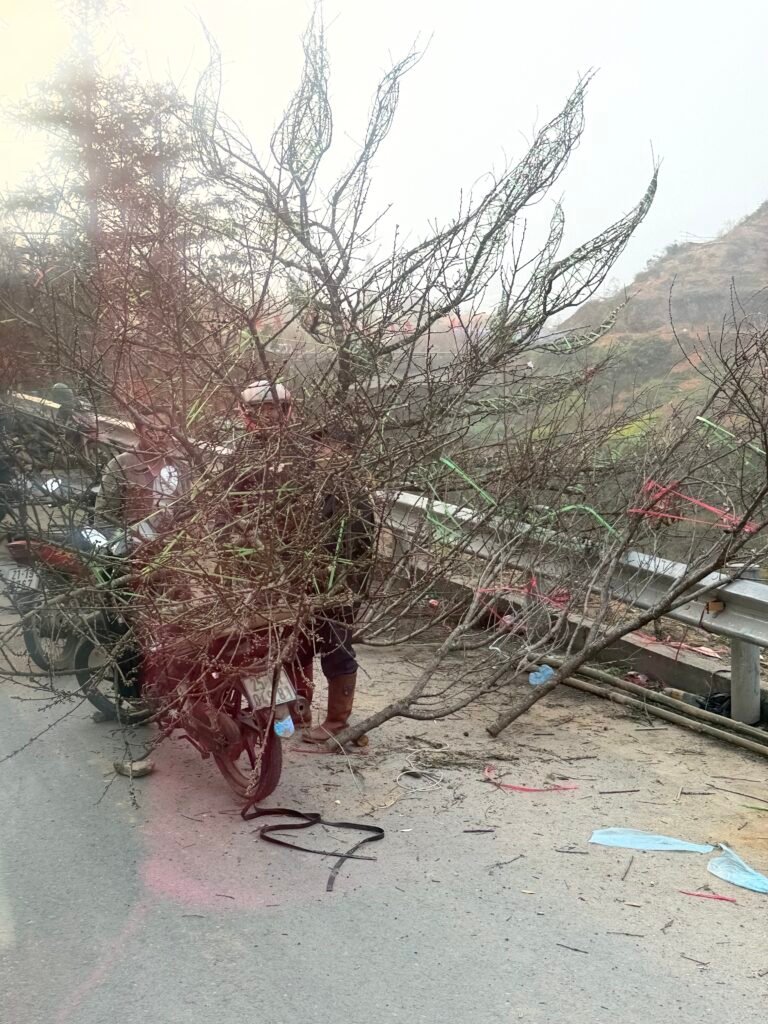
People cut the cherry trees and take them back home on their motorbikes for the Tet celebration. They plant them in big planters and they will bloom. After the new year, they burn the bottom of the branch where it was cut and either plant it in the ground or just throw it away. We saw hundreds of people with trees on their motorbikes.
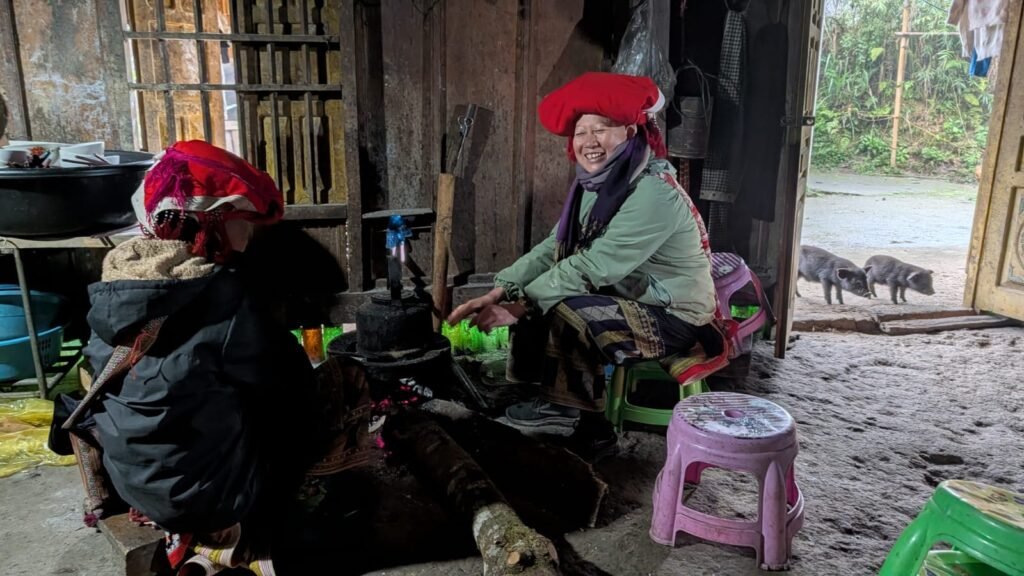
Little pigs at the door at May Linh’s childhood home
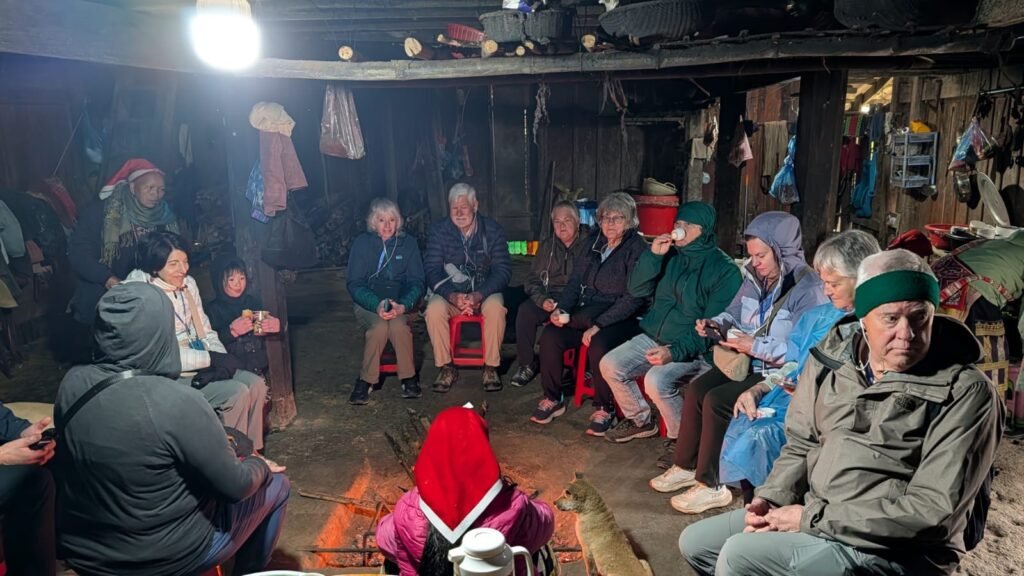
Sitting around the fire
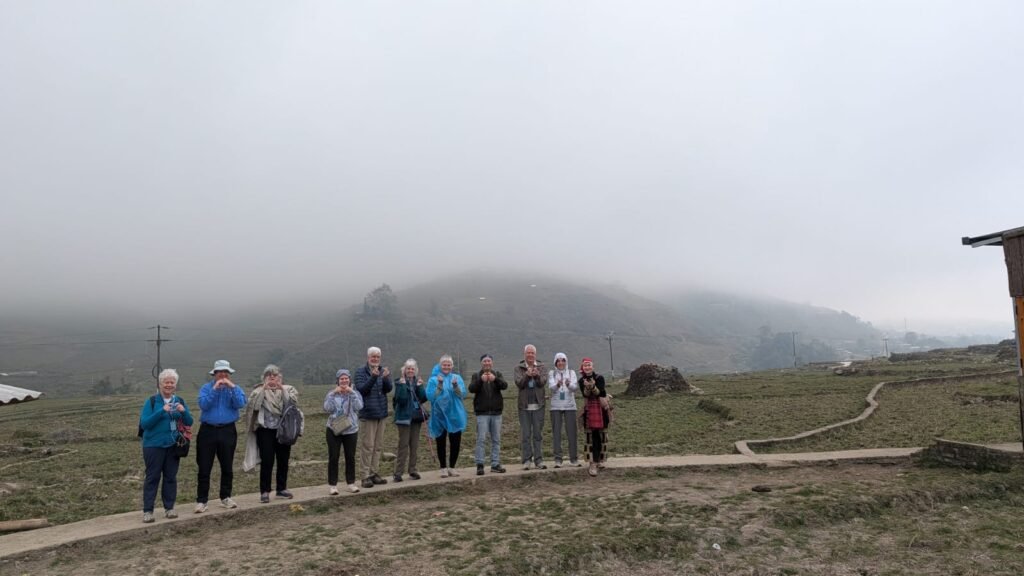
All of us making our fingers into little hearts. Notice the fog in the background.