
Destination: Sapa – Accommodations: Sapa Charm Hotel or similar
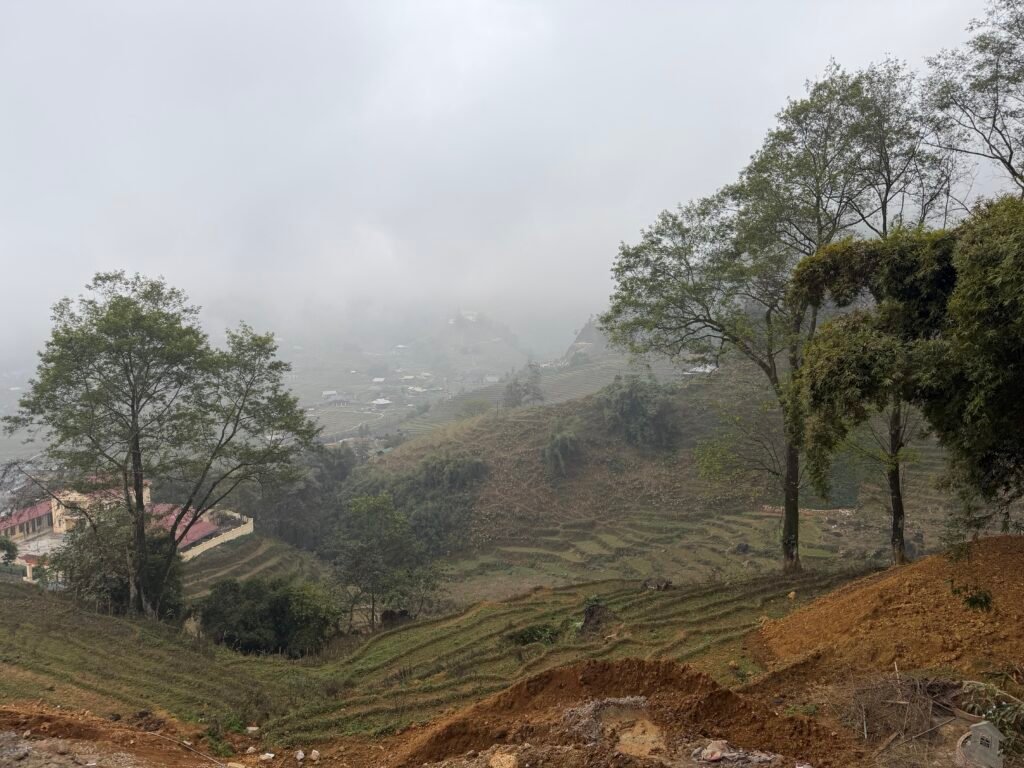
This morning after breakfast, we met our local guide May Linh and we set out for a trek on a nearby mountain slope in Lao Chai. The village below was shrouded in the fog, so we couldn’t see much in the distance. There was a little mist and the roads we walked on at times were muddy and slippery.
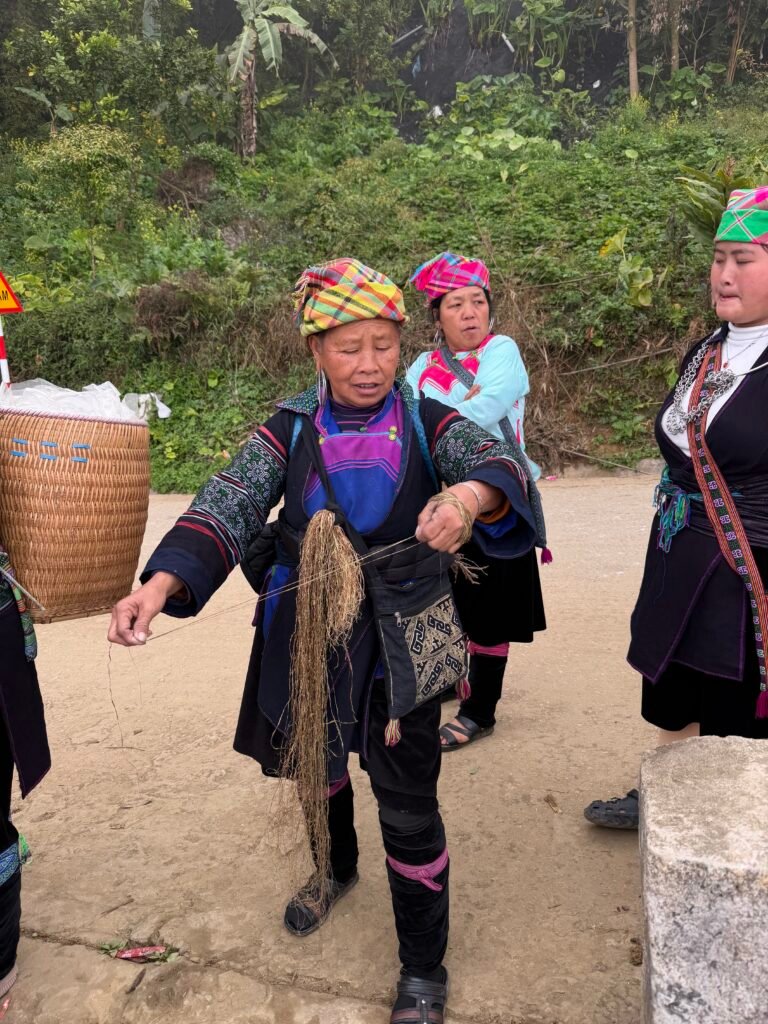
Ladies from the black H’Mong tribe walked with us and were trying to be friendly. They knew phrases like “What is your name?” or “How are you?”. May Linh said we could purchase handmade items from these ladies, but not to give money to children since the adults don’t want the kids to get used to money, but rather they hope that the kids stay in school.
May Linh told us that single boys in the village will sometimes “kidnap” a girl that they want to marry. He takes her to his mother’s home and she stays there for three days and nights. Then, if the girl likes him, a marriage might be arranged. The girl can choose not to marry the man if she doesn’t like him. If she decides to marry him, after the ceremony, she will leave her family and live with her in-laws.
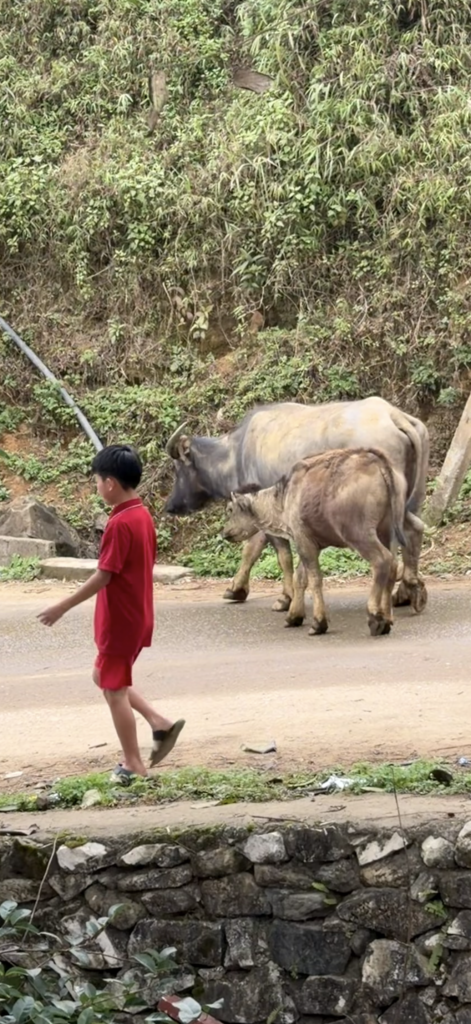
Villagers can tell how rich their neighbors are by the number of buffalo they have. Three buffalo… you are considered poor. Fifteen buffalo, you are rich. The people make their living primarily in agriculture (rice and corn) as well as tourism.
Alcoholism is a big problem. The women do most of the work planting the rice and corn. The men sit around playing cards and drinking. Come harvest time, however, men and women both work hard together. Because of the drinking, women are many times abused by their drunk husbands.
May Linh married a man from another village and her in-laws did not approve. The father-in-law never spoke to her, but rather communicated with her via his wife or through his son. Her husband is understanding and they have been married for 13 years and have two girls. Having girls is not as beneficial as having boys because boys will inherit the land, but girls will not.
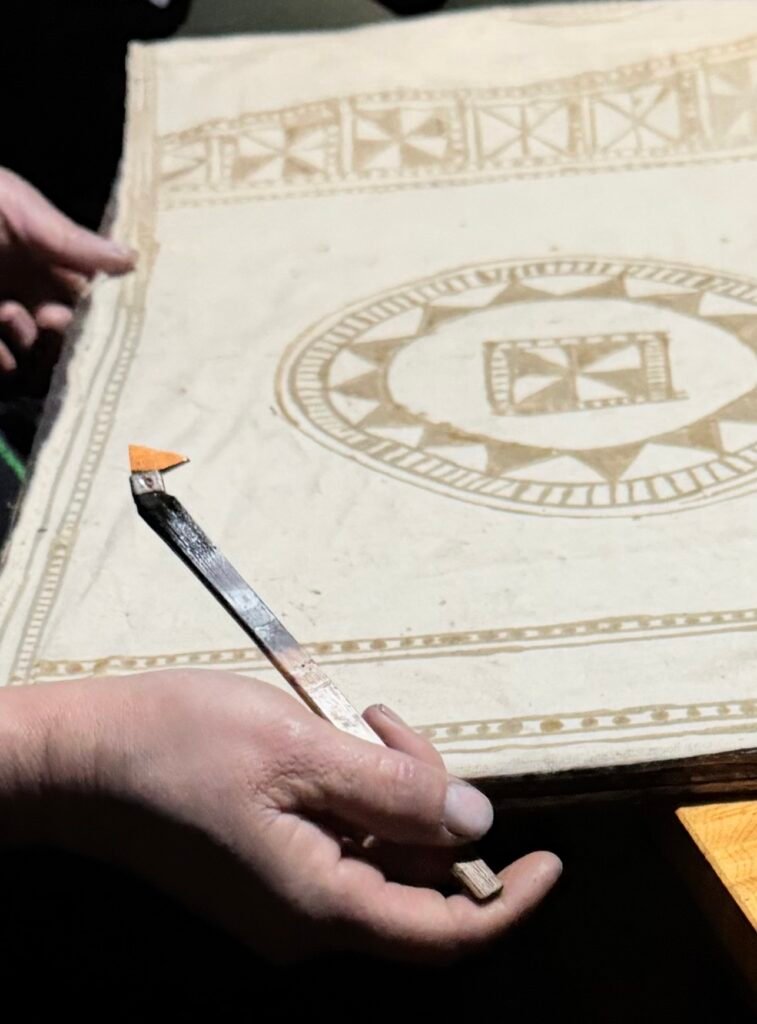
We stopped at a home and the lady there gave us a lesson on batik. Many types of natural fabrics can be used in Batik. But the tightest weave and highest thread count such as linen, hand-loomed hemp, or cotton work better because these fabrics can absorb the wax the most.
Several types of wax can be used for making batiks but this lady used natural beeswax. She uses indigo extracted from the indigo plant. She soaks the leaves in water for several days and let them ferment to convert the indican in the plant to yield a natural blue dye. Then the material that she painted the wax on goes in the dye vat for three days and then it is put in boiling water to remove the wax.
We were all given a square of hemp and we tried our hand at batiking. It’s not that easy to do and we appreciated the beautiful batik work that the lady does.
It started to rain (the first rain we’ve experienced in all the weeks we’ve been in Southeast Asia), and it is much colder than Hanoi. The walk that we took today was pretty strenuous…up very, very steep hills and back down again all throughout. There were no handrails. The mud made things a little slippery as well. All in all…we did very well. I was a little worried about navigating the steep hills given my foot, but it seemed to be ok. I took a walking stick to take the pressure off the foot going down the steep hills.
We had lunch at a local restaurant and then Allan and I went back to the hotel, sat in front of the fireplace with a glass of wine, and read our books.
Dinner tonight was hot pot. We had chicken, salmon, sturgeon, vegetables, tofu, and noodles in the hot pot. I wasn’t a fan of the fish, but I did enjoy the tofu, the vegetables, the noodles, and the chicken. The broth was really good.
We tour a bit tomorrow morning and then back to Hanoi. It’s very cold here so we were glad we brought our Patagonia jackets and our REI raincoats that we could wear over our jackets.
It will probably be raining tomorrow as well.
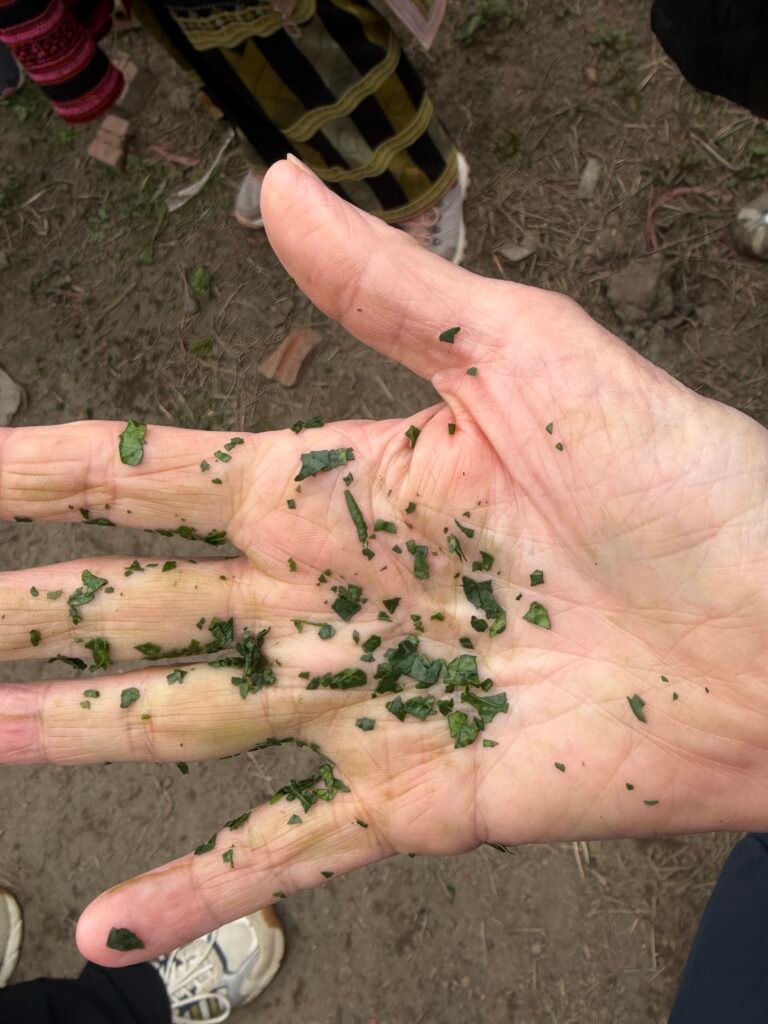
Indigo leaves rubbed on our hands. Then May Linh poured water to rinse the leaves off. The dye from the leaves left our hands a light shade of blue.
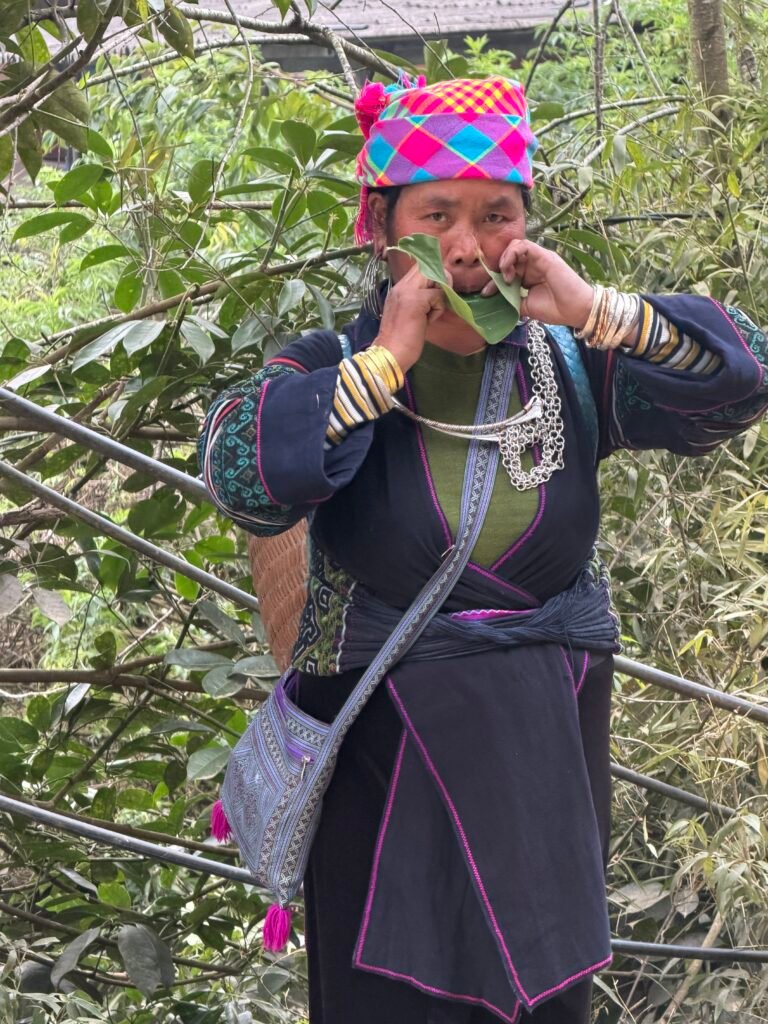
They call to friends with the leaf. It makes quite a loud noise. I tried doing it and I got a little sound, but I couldn’t make the different sounds that she made.

Hot wax to do the batik. They make the patterns on hemp or cotton.
Below is a close up of the tool. The blade at the end is dipped into the beeswax and you draw with it.
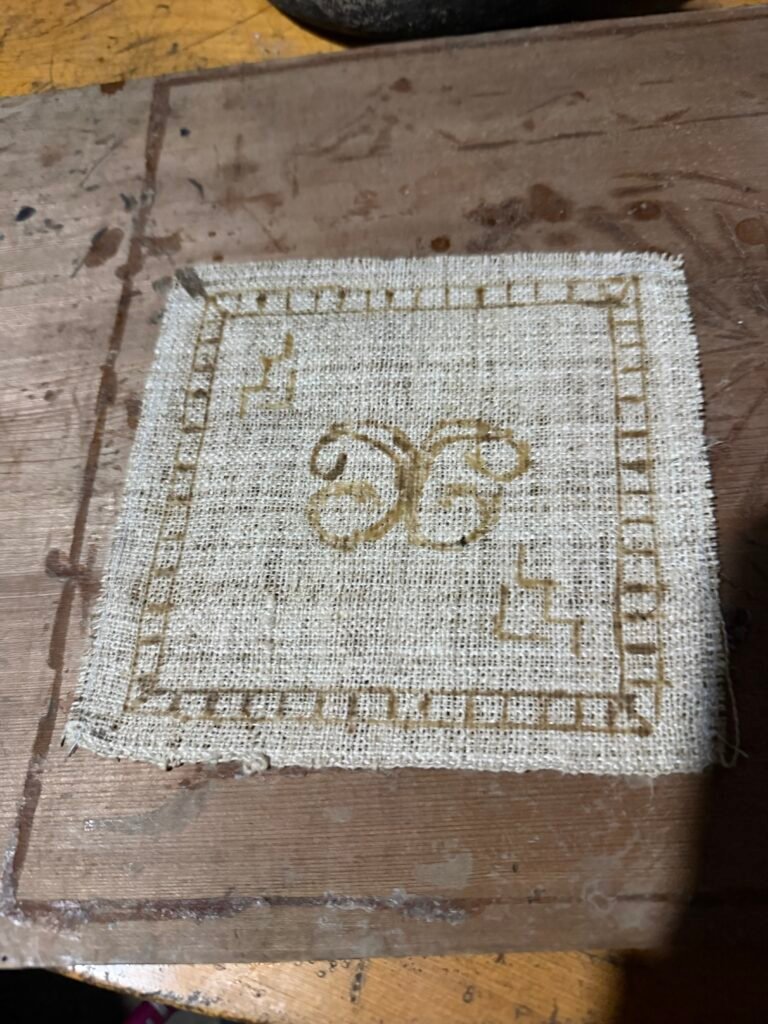
My batik pattern.
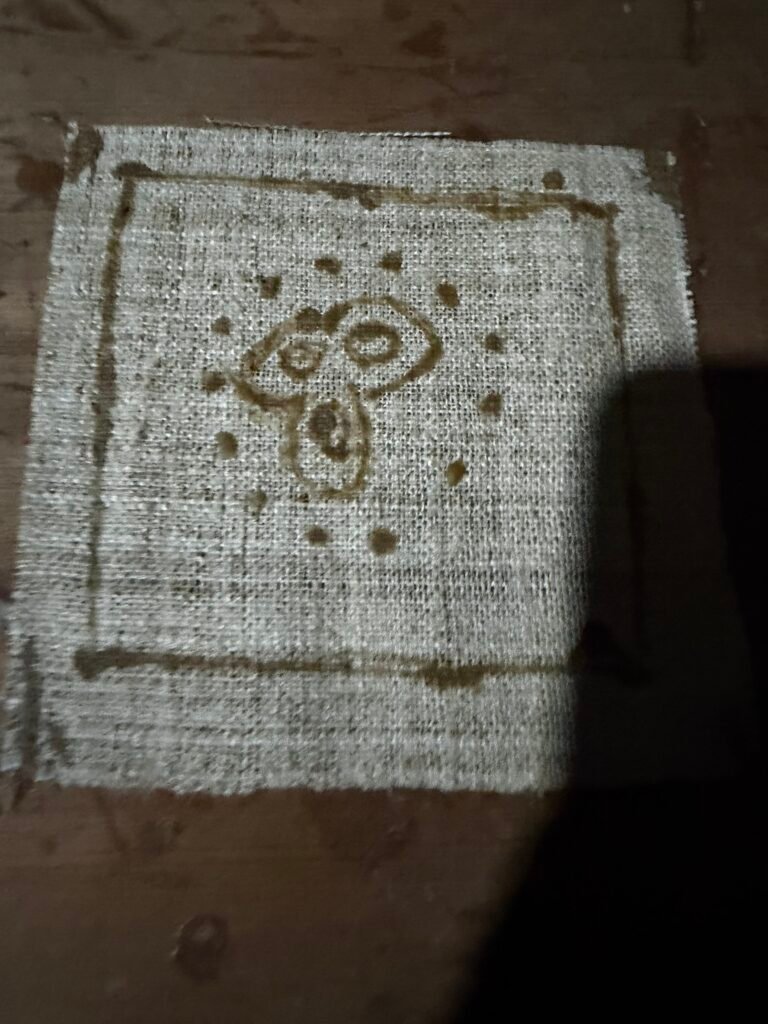
Allan’s batik.
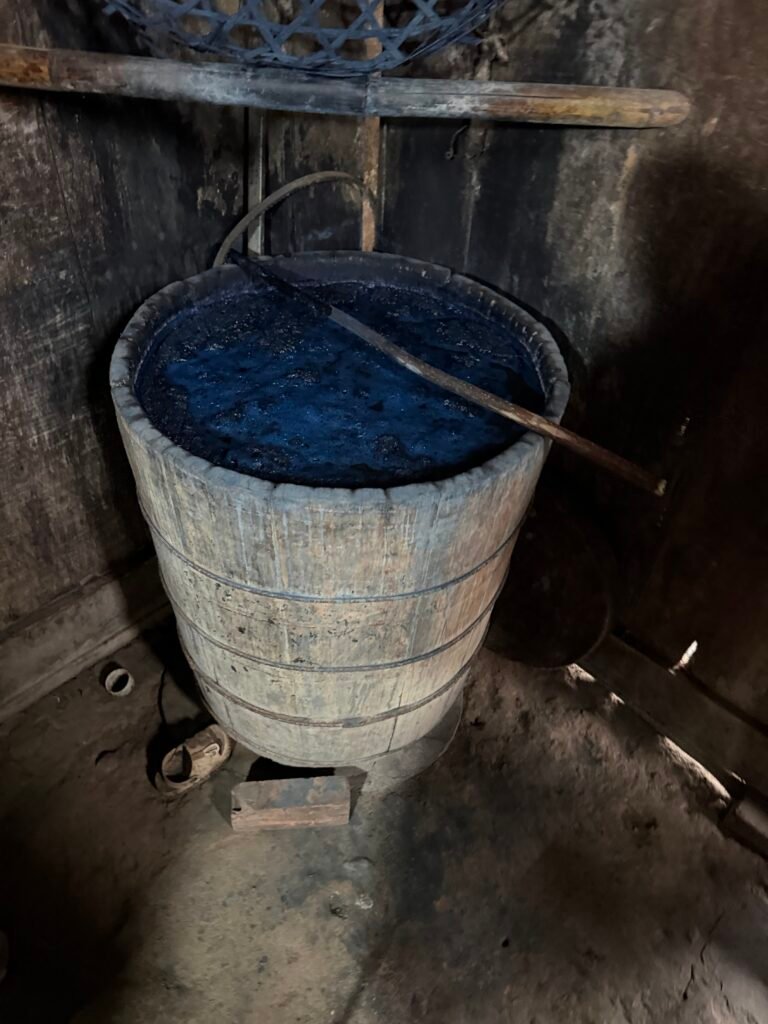
After the wax goes on, the material gets soaked in this indigo. After 3 days, they put in boiling water to take off the wax.
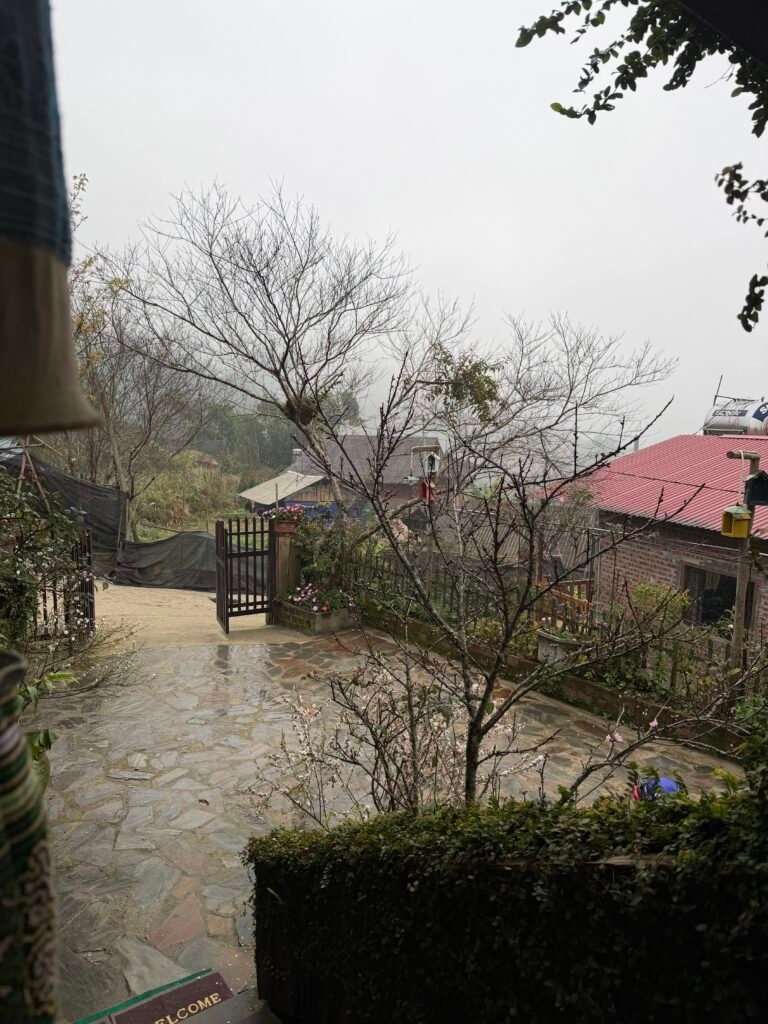
The scenery is beautiful but with the fog we couldn’t see very much far away.
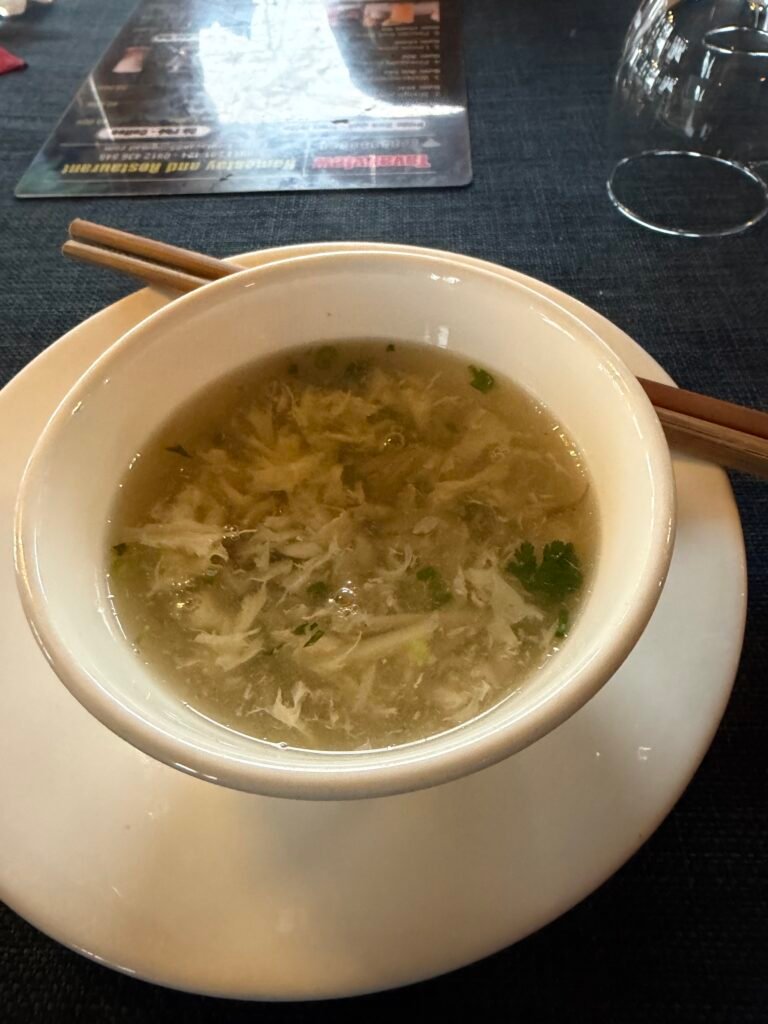
Luncheon soup
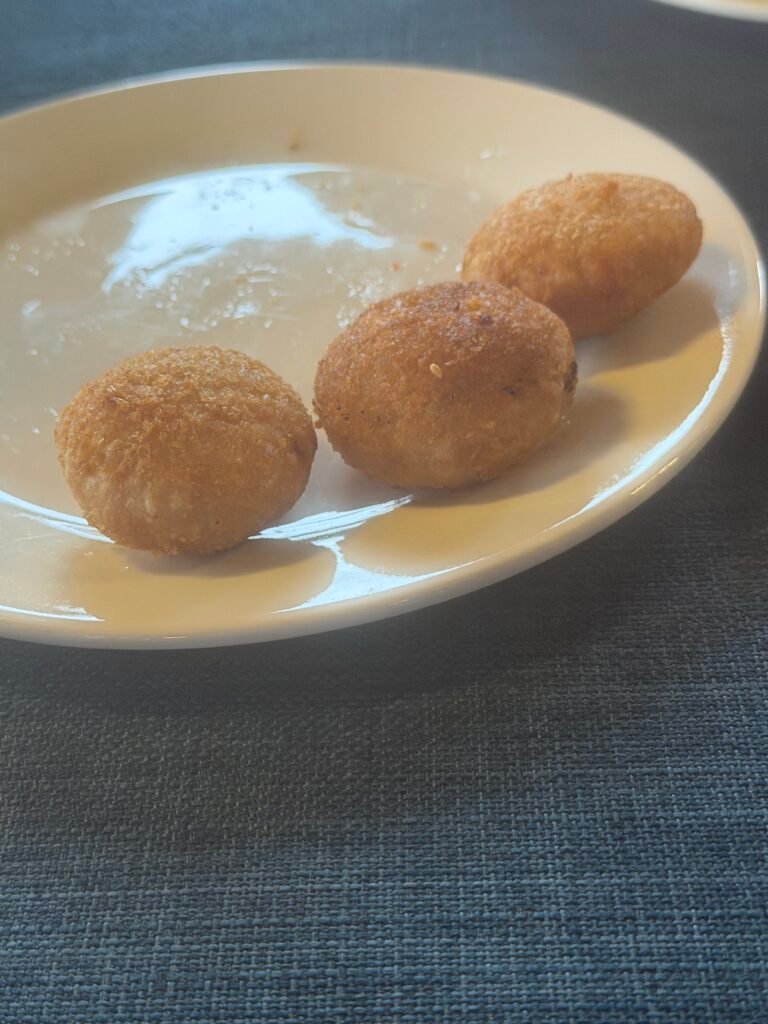
taro with bean paste
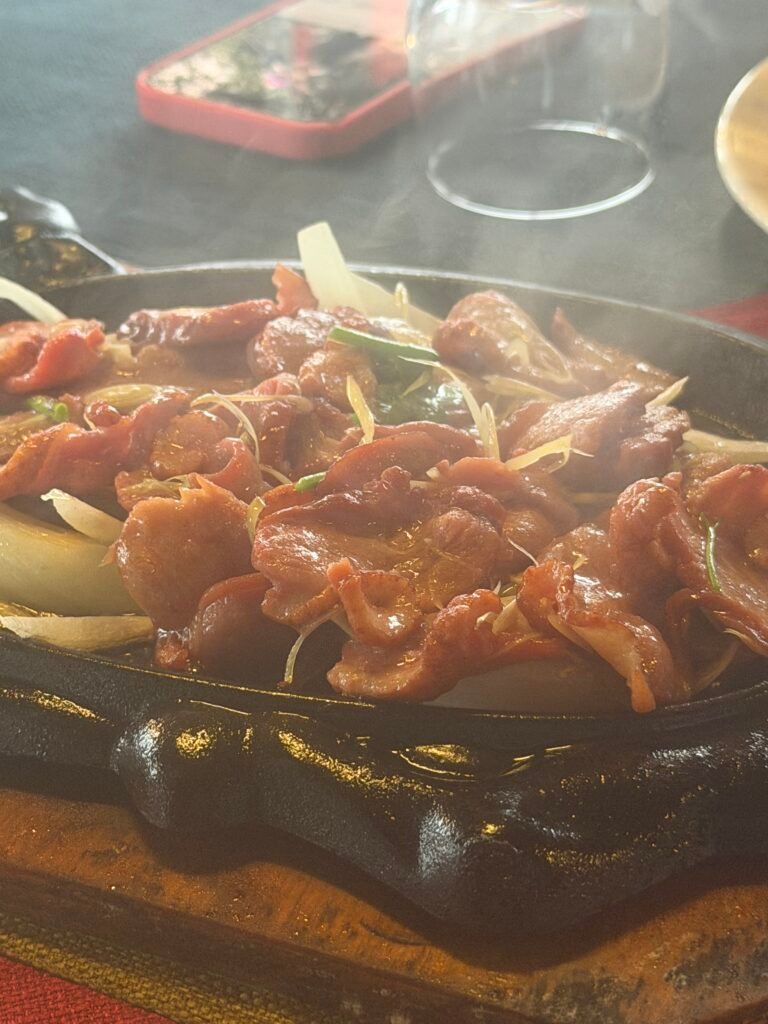
Duck
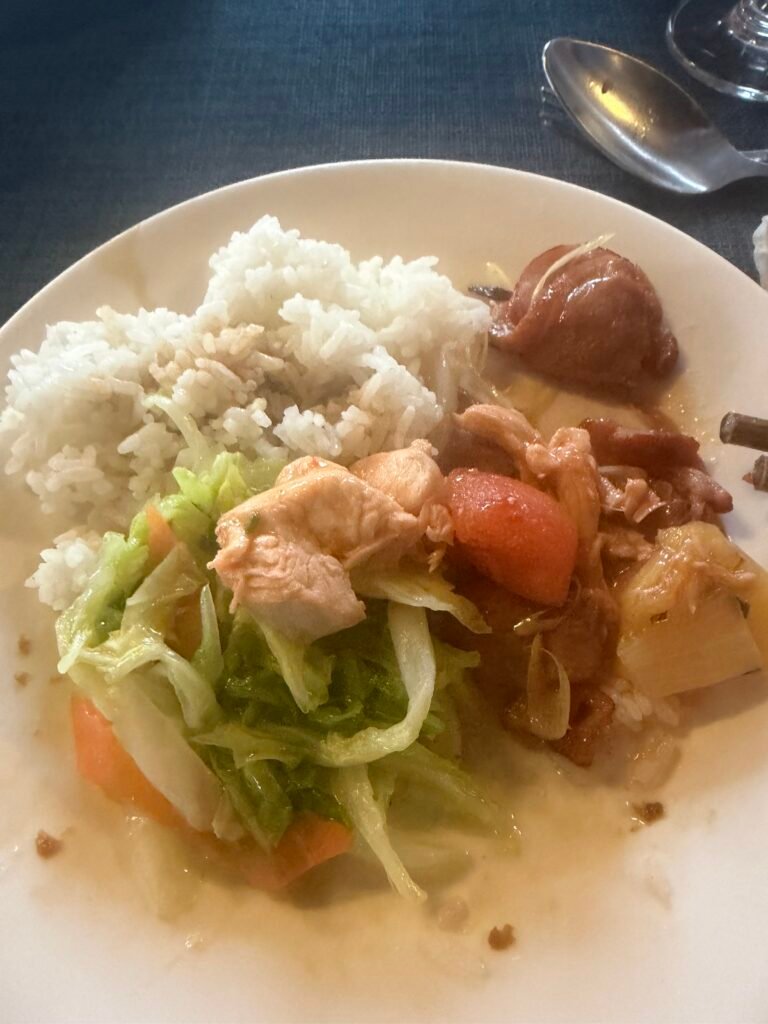
Chicken and cabbage. Everything was delicious
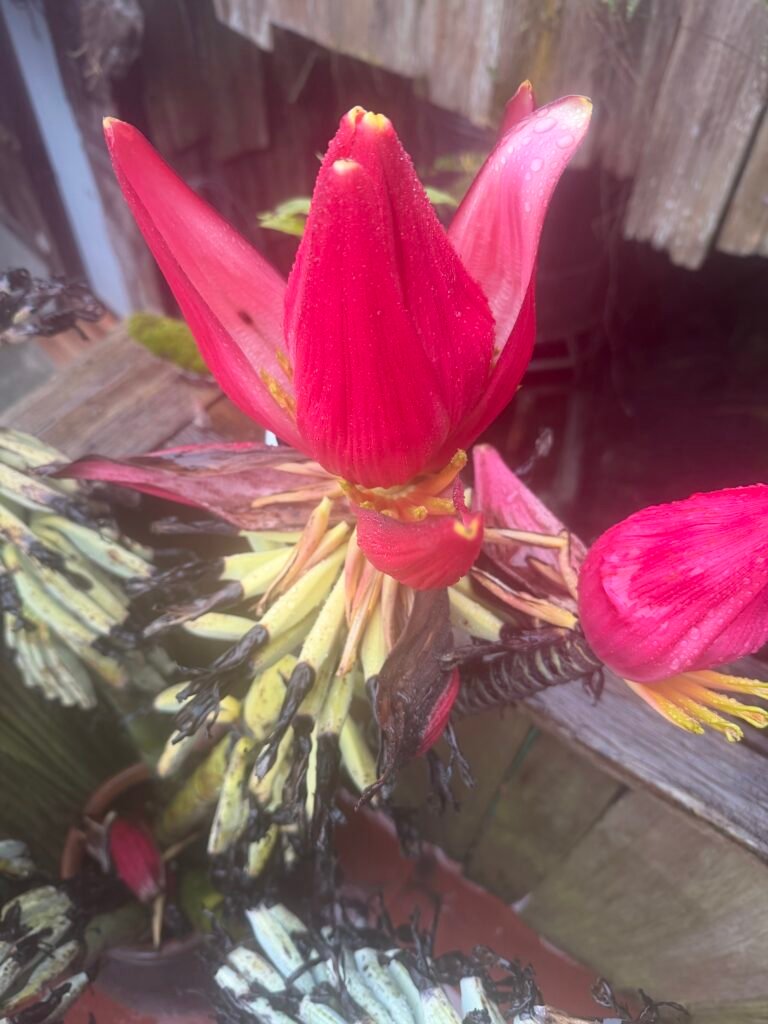
Banana flower. Not the banana that we eat, however.
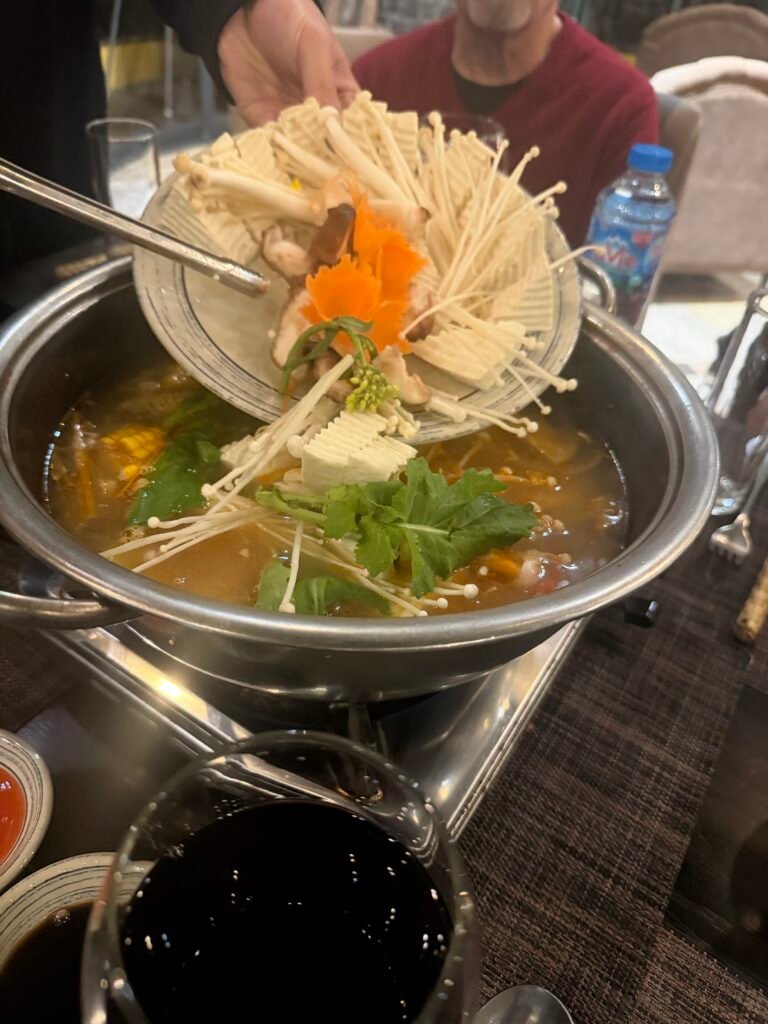
Hot pot Mushrooms and tofu going in
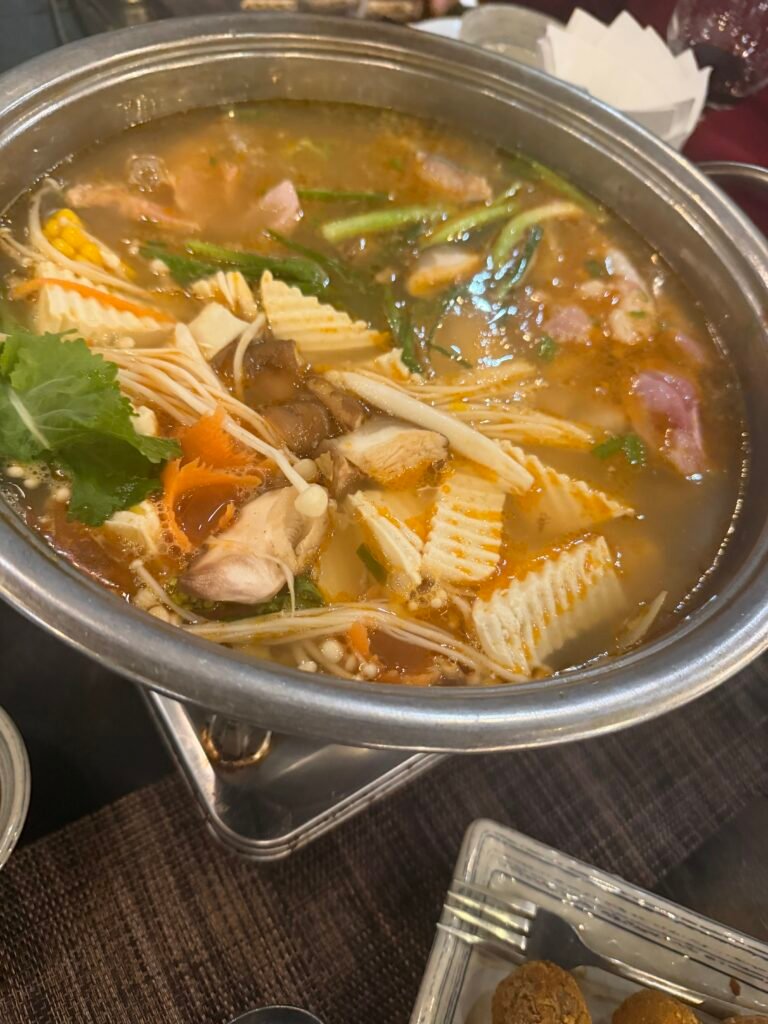
Everything in the pot
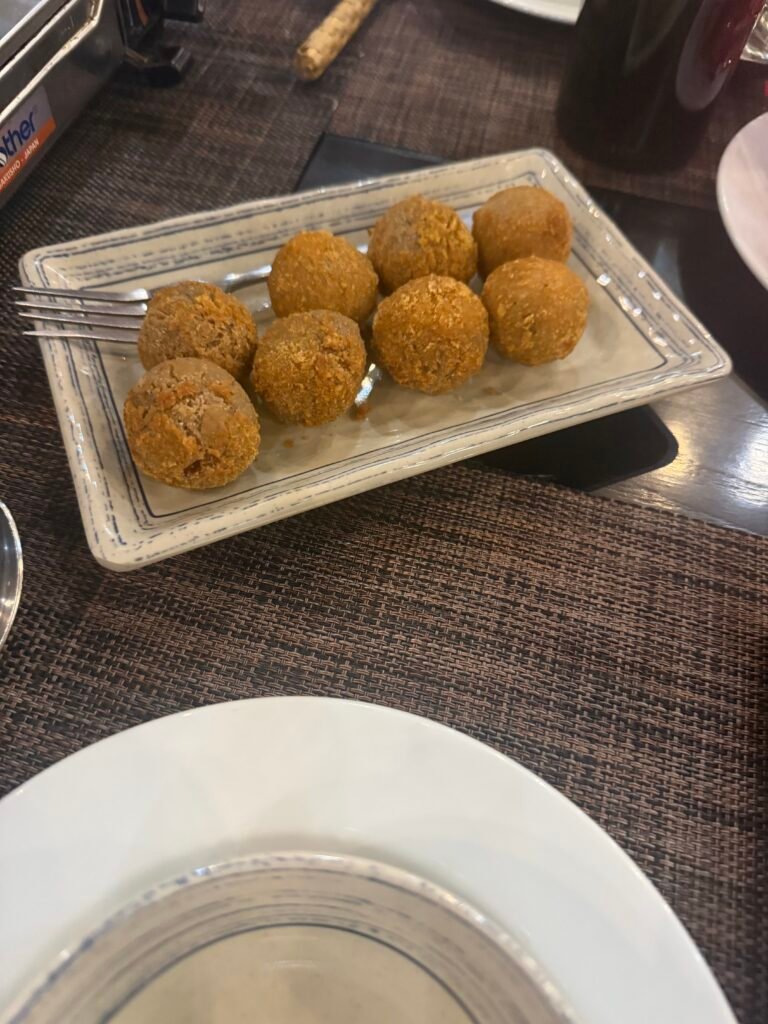
Have no clue what these were but they were tasty.
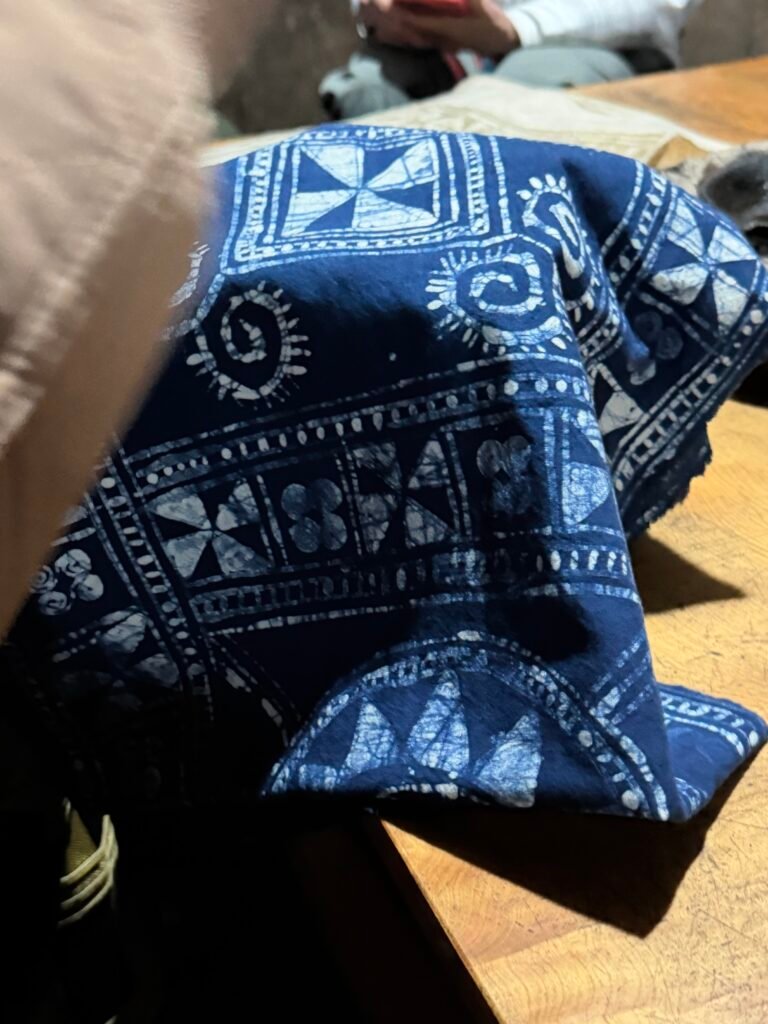
The batik cloth after it has been dyed with the indigo.
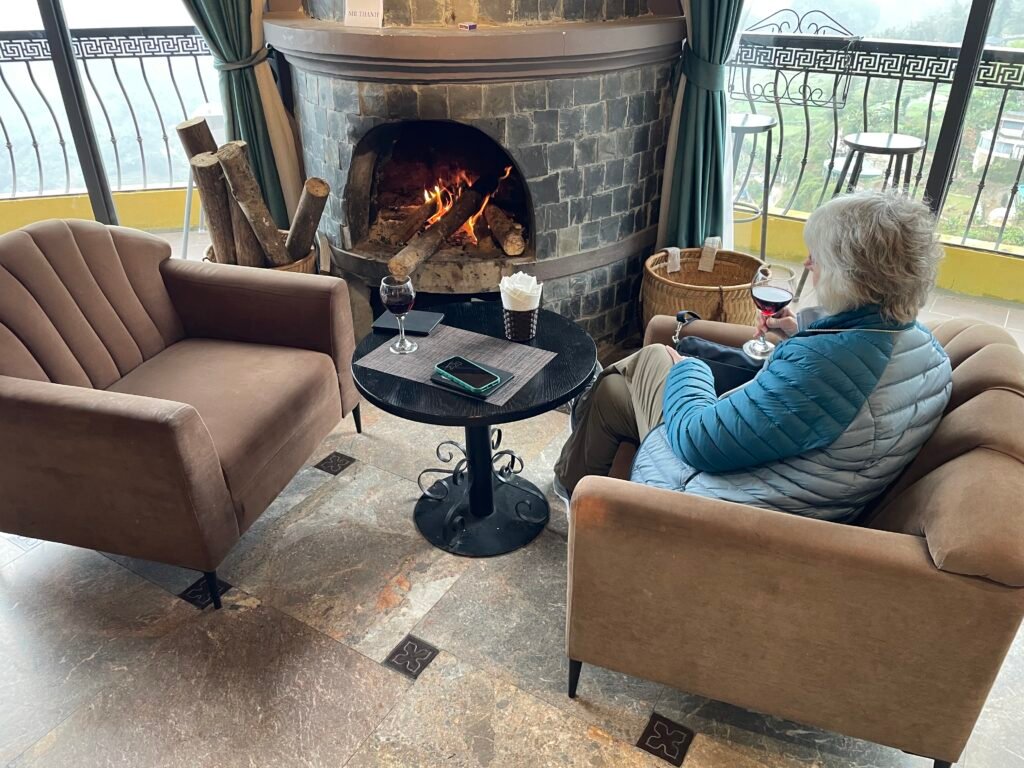
Enjoying the fireplace at the hotel.
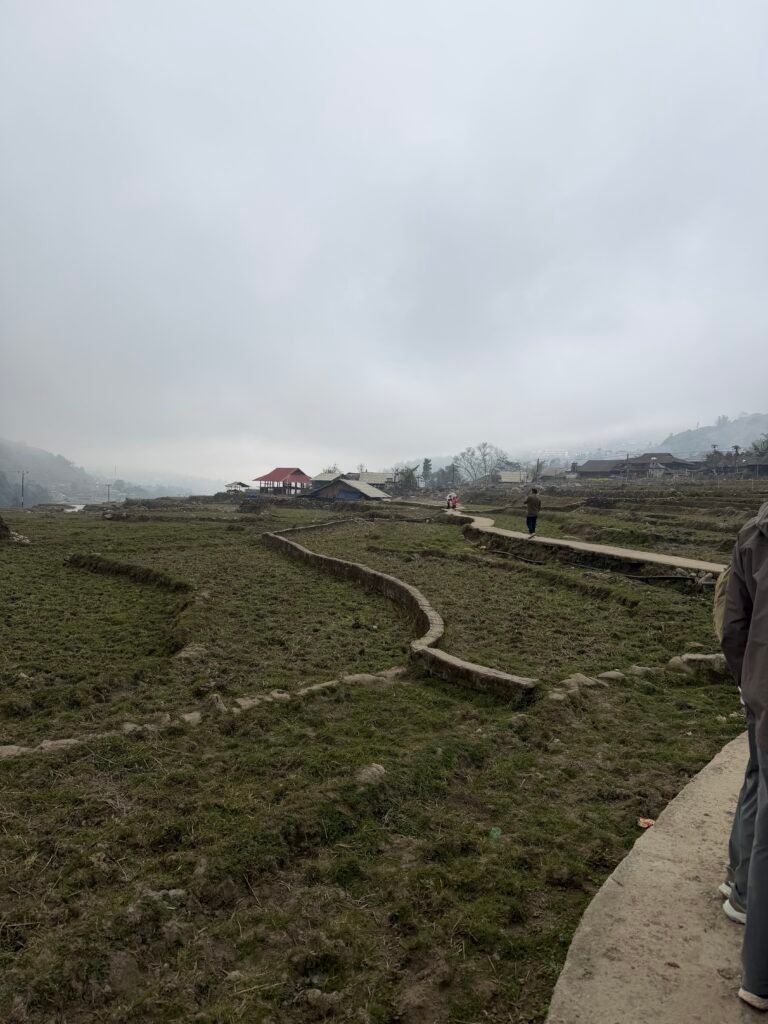
Rice terraces
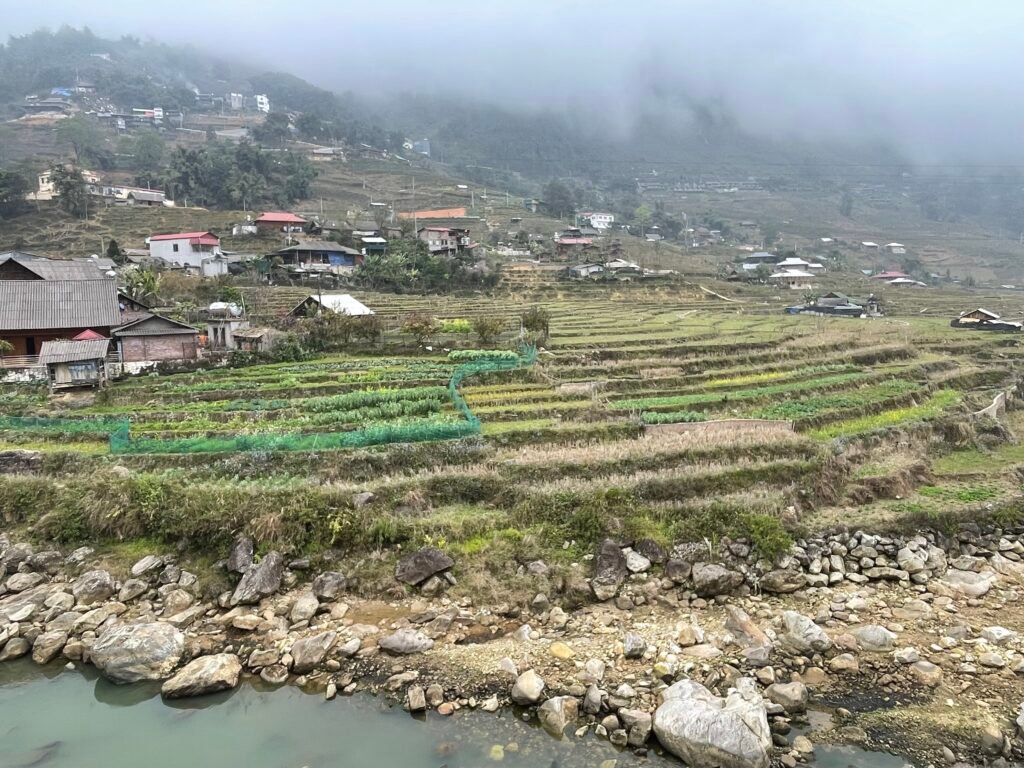
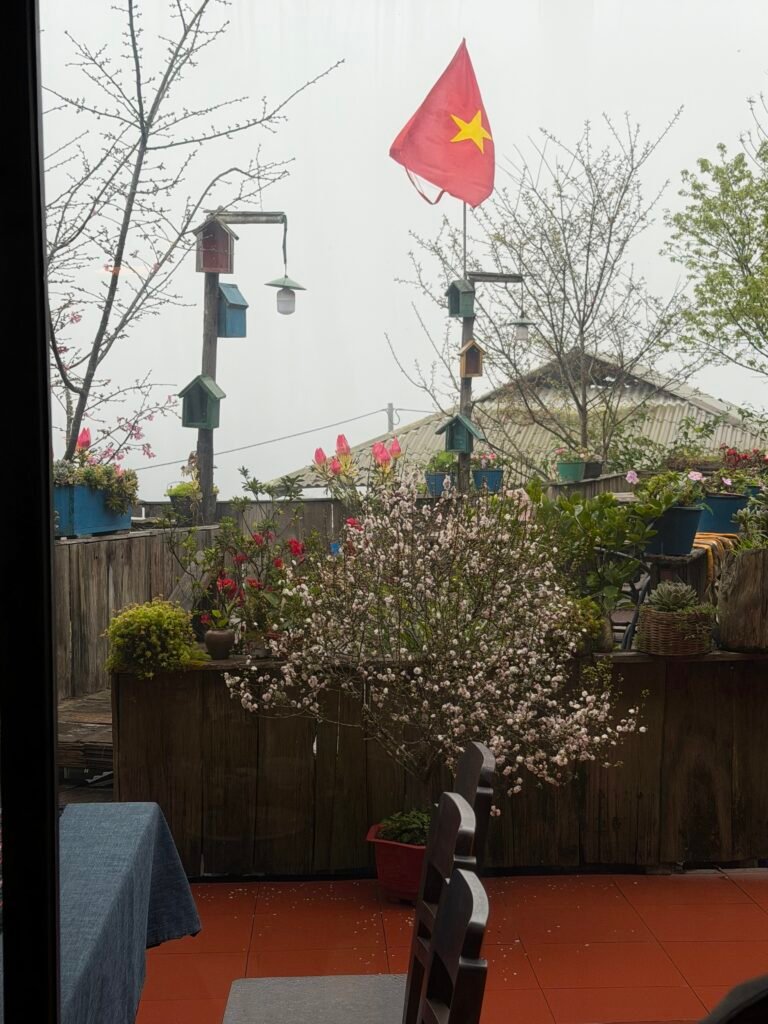
At the restaurant