
Destination: Siem Reap – Accommodations: Angkor Paradise Hotel
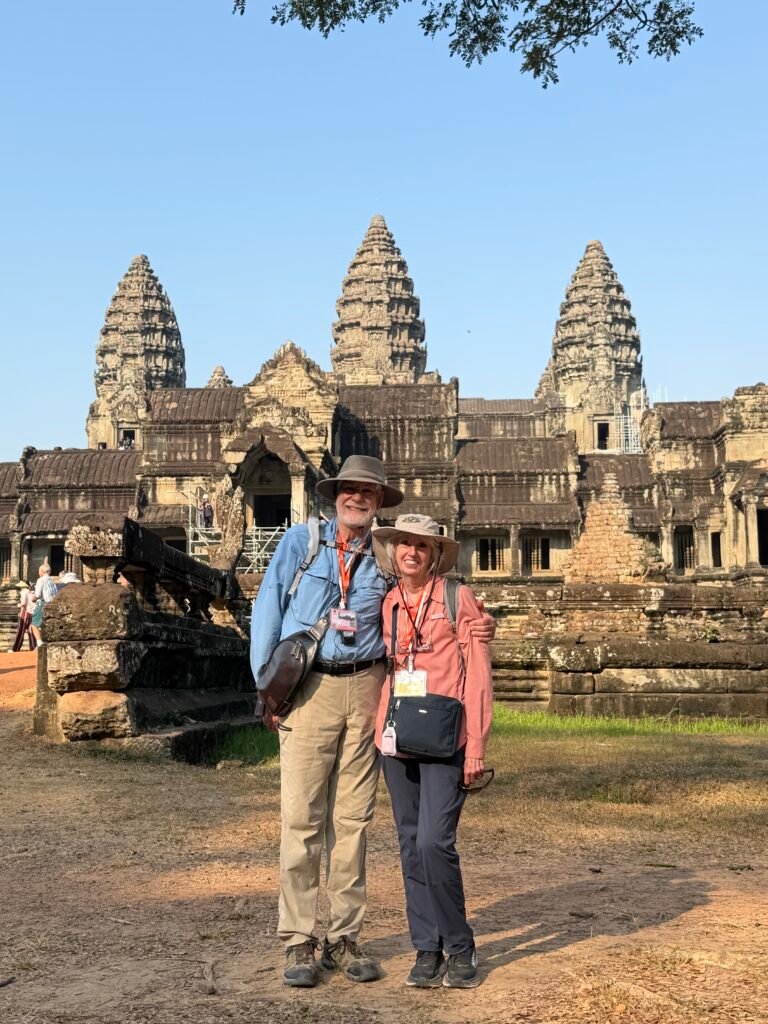
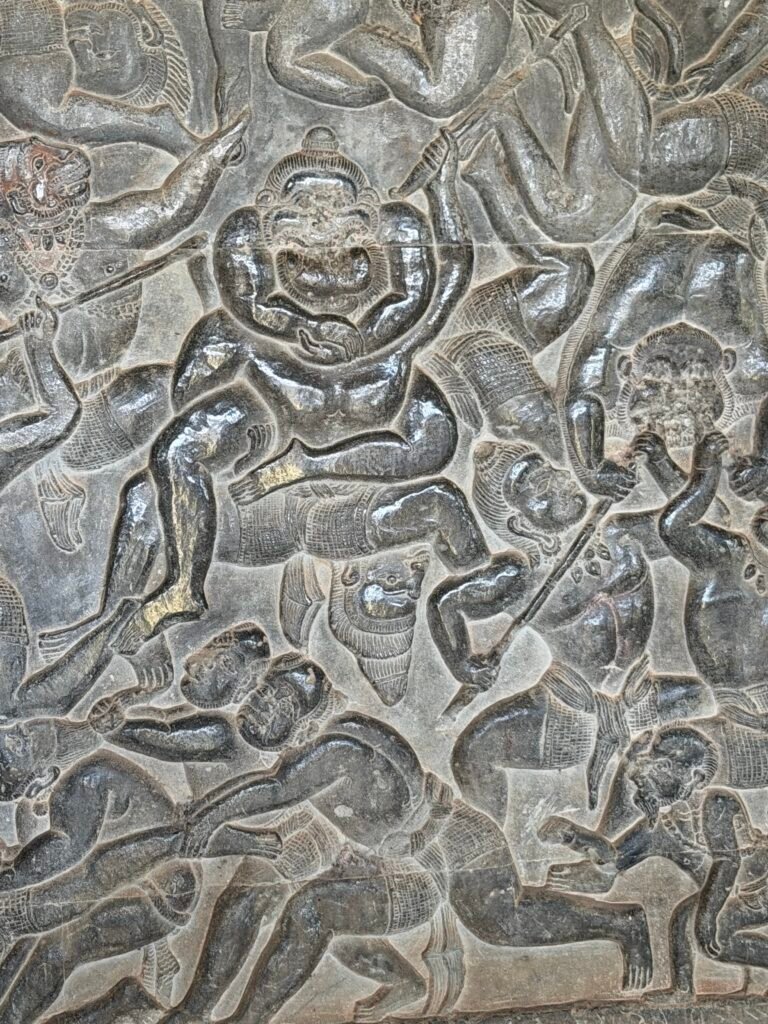
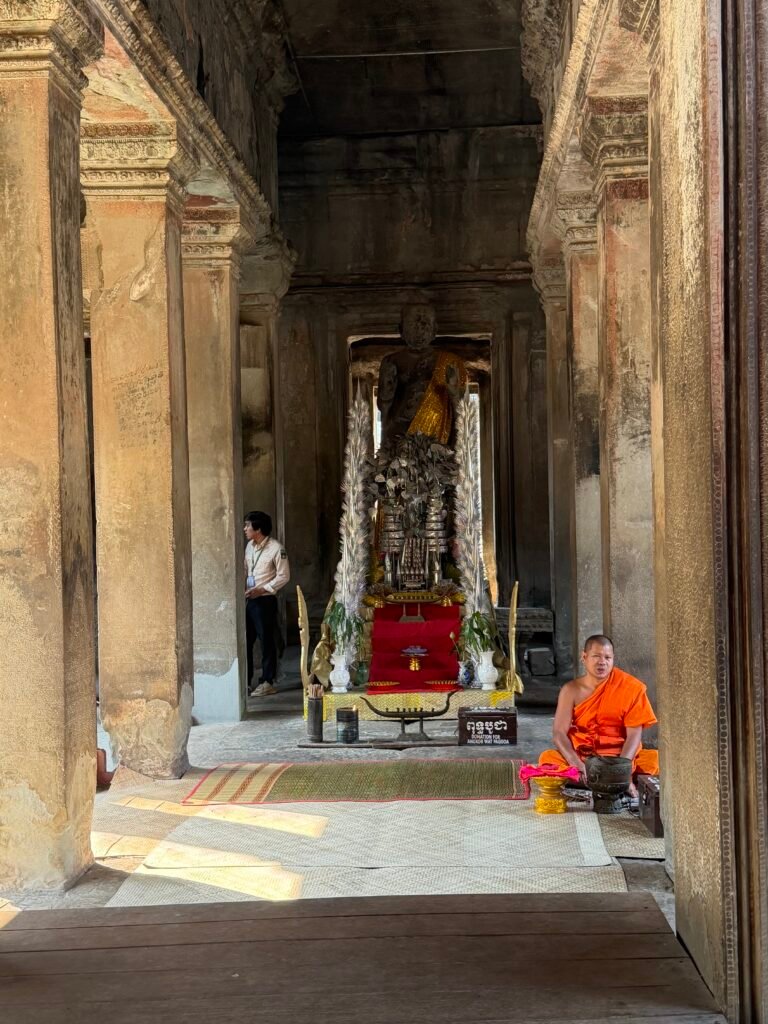
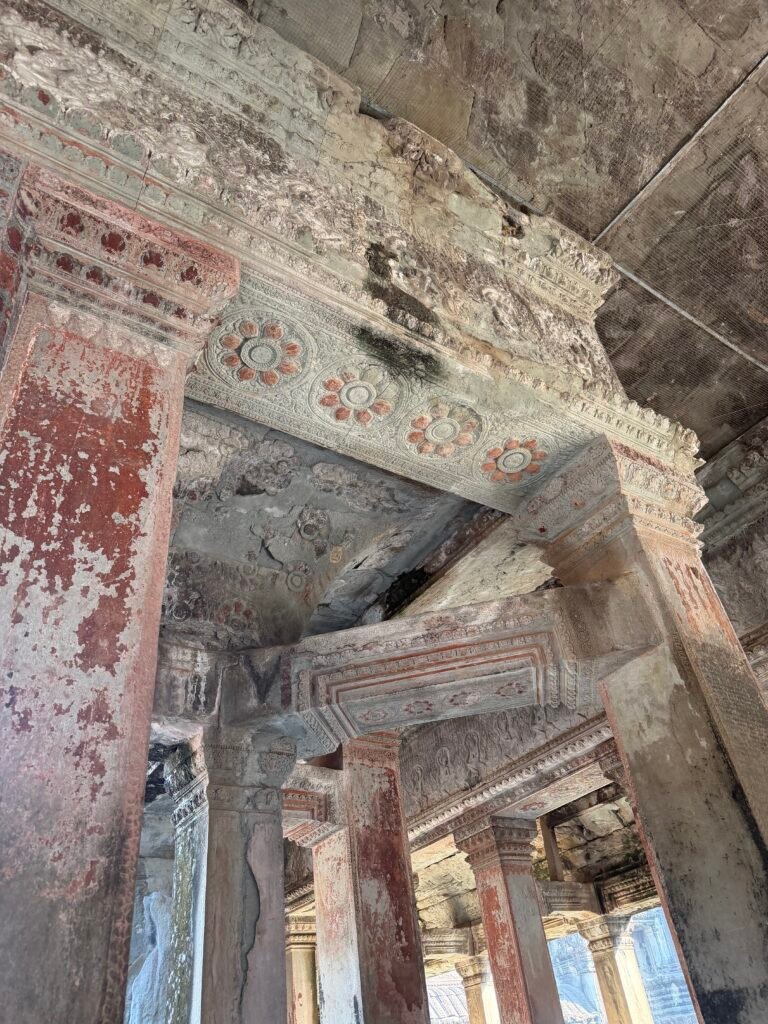
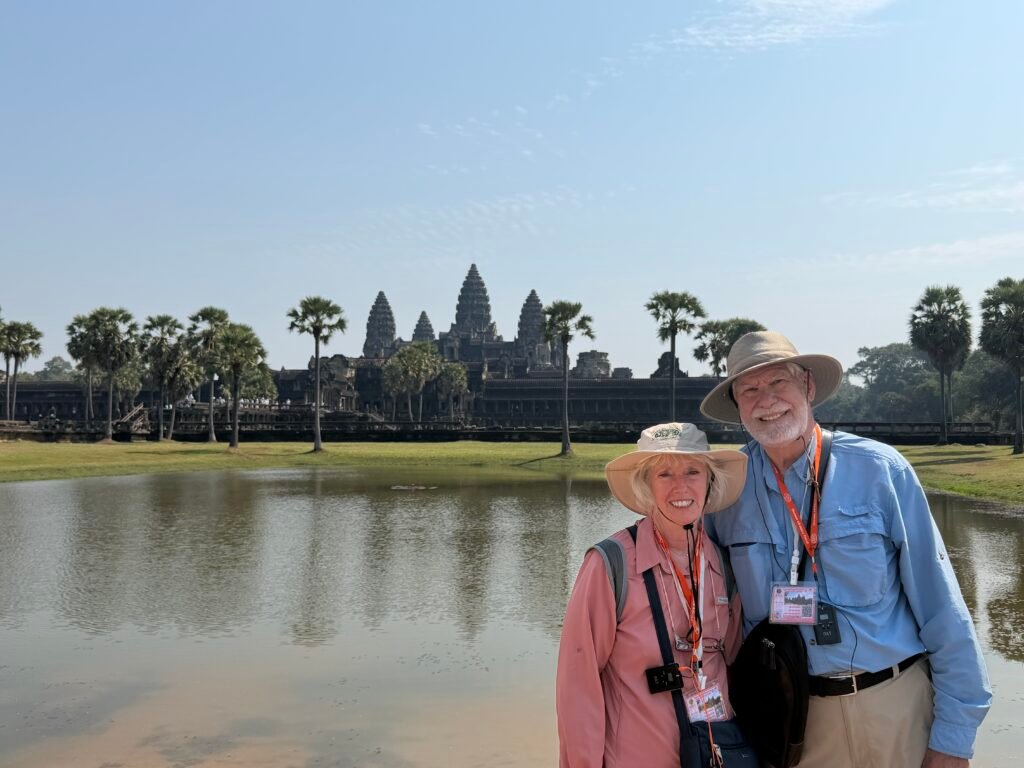
This morning after breakfast we left early to explore Angkor Wat. Angkor Wat is a historically Hindu turned Buddhist temple and is the largest religious complex in the world. Angkor Wat was commissioned by the Khmer King Suryavarman II In the early 12th century. It has remained a place of Buddhist worship for centuries. It was built as the state temple for the Khmer Empire and dedicated to the Hindu god Vishnu, rather than a king, which was uncommon for the era. It is a national symbol of Cambodia and appears on the Cambodian national flag. The structure combines Hinduism with Buddhism, making it a uniquely blended heritage site.
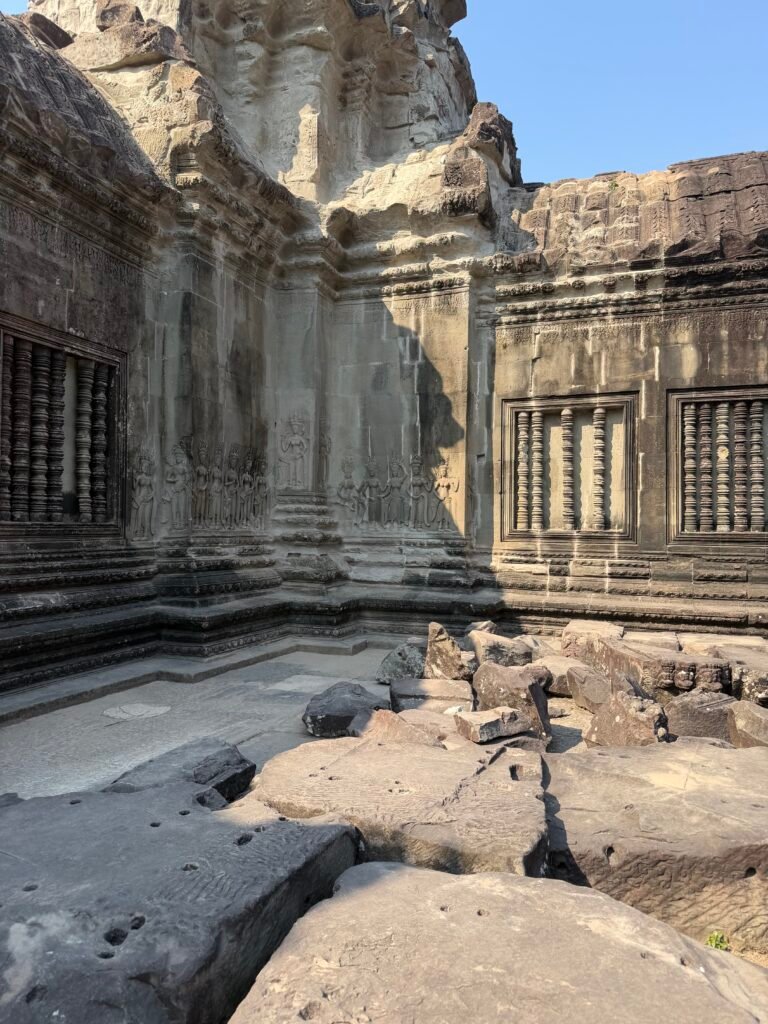
There was a lot of walking and climbing of steps in very hot weather as we toured the massive complex. There were 3 levels to navigate, some without handrails, but for the most part, we did okay. I opted out of touring the third level as the stairs were extremely steep and the height was something I knew I could never do. The surfaces to walk on were at times unpaved and uneven and there were a lot of stairs to climb every time you turned around it seemed. Angkor Wat is surrounded by a moat 570 feet wide and it was beautiful to walk around the grounds and see the trees and the fish in the moat.
The photos below will show you how amazing this place was to visit.
After visiting Angkor Wat, we had another delicious Cambodian lunch and then it was off to visit an incredible place with…. rats!!
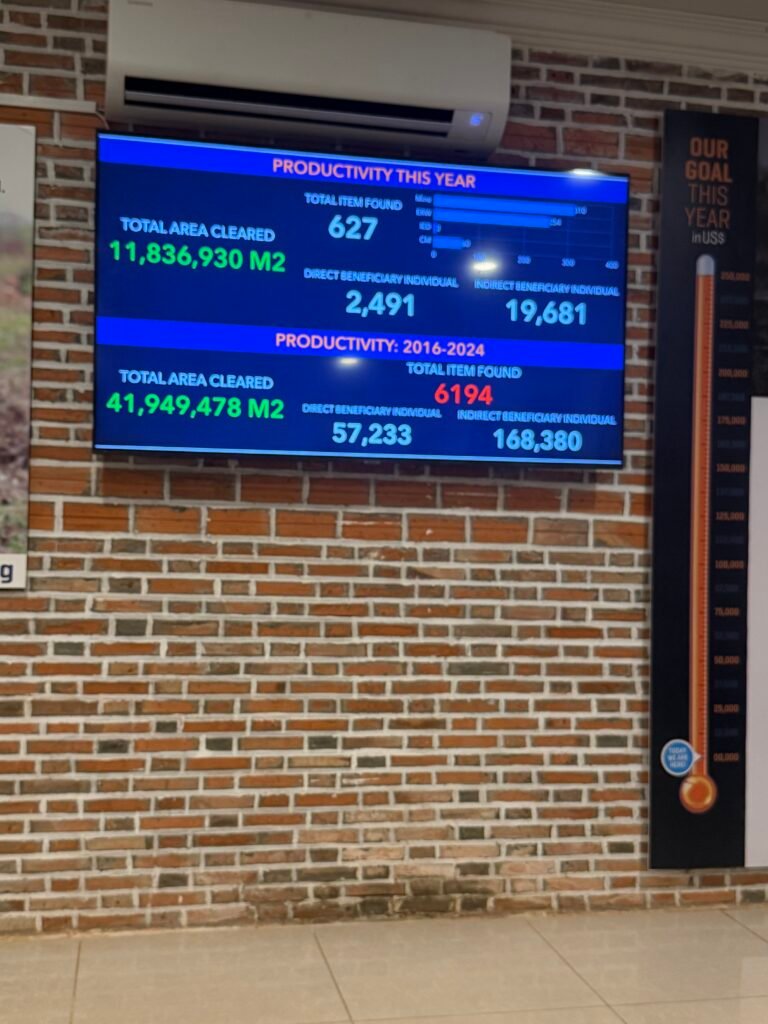
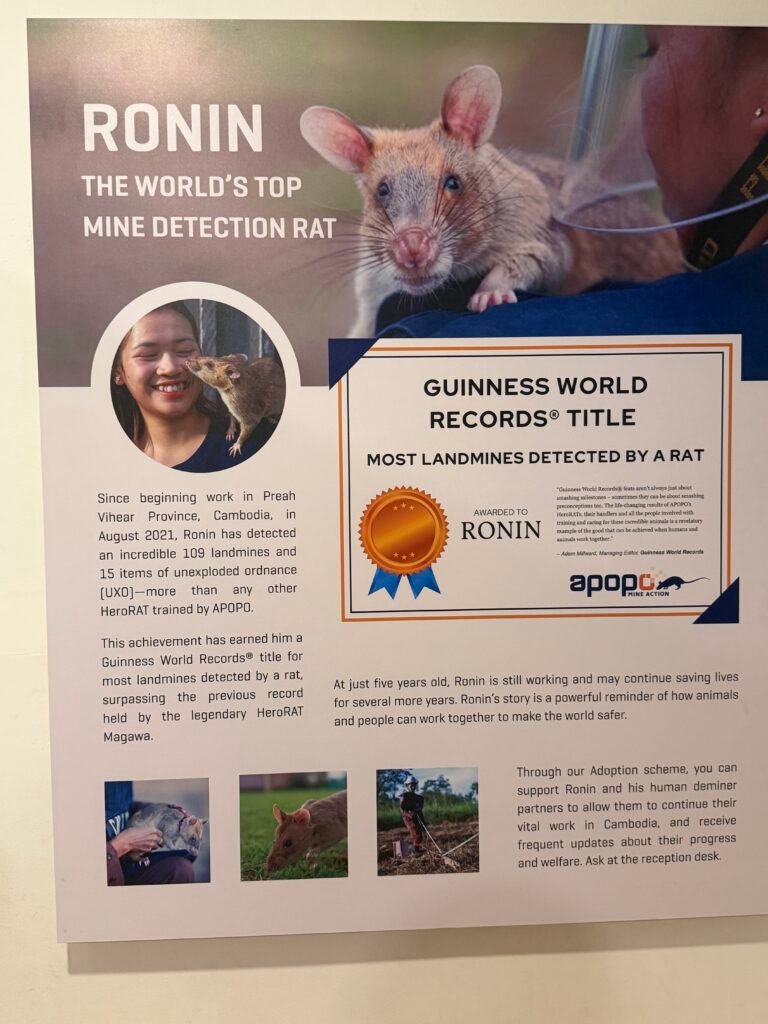
We visited APOPO’s Landmine Rats – also known as HeroRATs – where we learned how they train African Giant Pouched Rats to detect landmines and unexploded ordnance in Cambodia, playing a vital role in clearing these dangers.
We were able to watch a rat in action as he went about tracking down a “land mine” that was really just TNT. The rats are trained to sniff out the TNT in the bombs and when they find one, they scratch the surface. Then the bomb detonator group can come in and blow it up.
Rats are light enough that they don’t set off the bombs and they can clear a much larger area of farmland than a human using a metal detector. The rats are much more accurate in scouting out the bombs since metal detectors will pick up anything metal and not necessarily a bomb.
Cambodia is one of the most land mine affected countries in the world, but APOPO has worked for many years clearing the bombs so farmers can go back to tilling their land without worrying about hitting a bomb.
We all got a chance to hold one of the rats. My little guy cuddled right into my arms and promptly fell asleep. I started rocking him, but then I had to turn him over to the next person who wanted a chance to hold him. I was the only one he fell asleep on. Too funny!
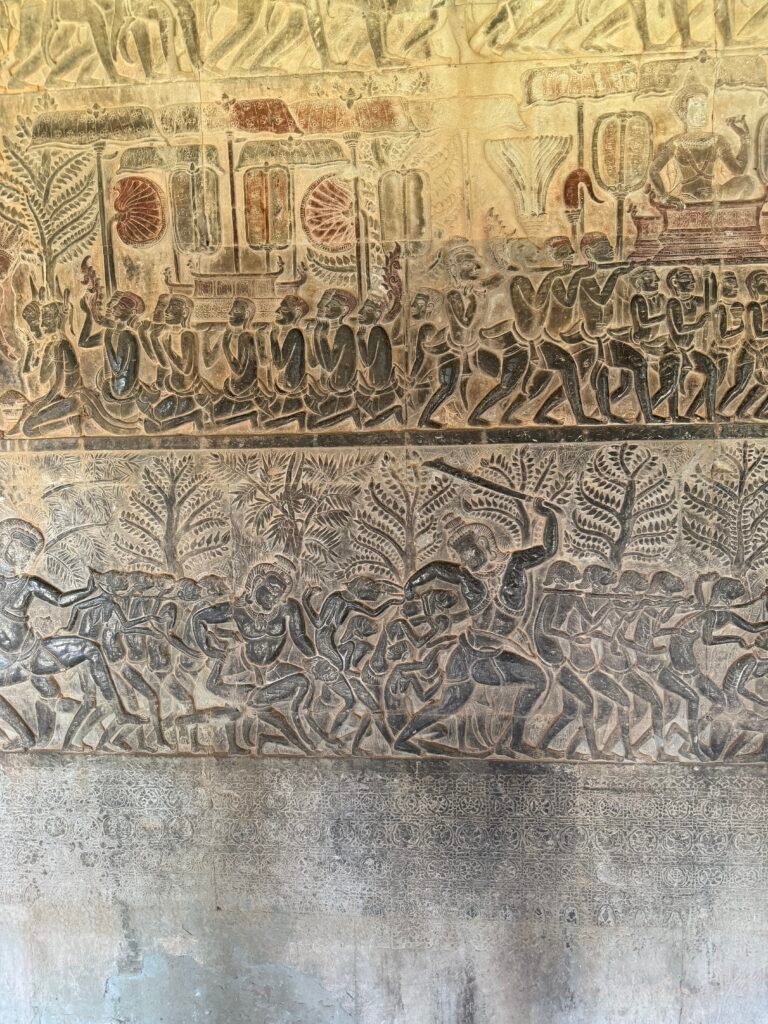
Then we toured the final destination of the day…Bayon Temple. The Bayon is a beautifully decorated Buddhist temple built in the late 12th century. The temple is best known for its many towers adorned with smiling stone faces carved on all sides. The Bayon also features extensive bas-reliefs depicting historical events, religious themes, and scenes of everyday life in the Khmer Empire. It was amazing to see the carvings and how they portrayed everyday life in that society.
We were all pretty tired after a very full day, but we ended the day back at Angkor Wat to see the temple at sunset. We all had some soda (UNESCO Doesn’t allow alcohol on the premises) and we toasted the temples that we saw, our new friendships, and safe travels for the future. We also had crocodile, water buffalo, and snake jerky which was pretty tasty.
We went back to the hotel and had drinks with our friends and a light dinner and then it was to bed since we will be up very early in the morning.
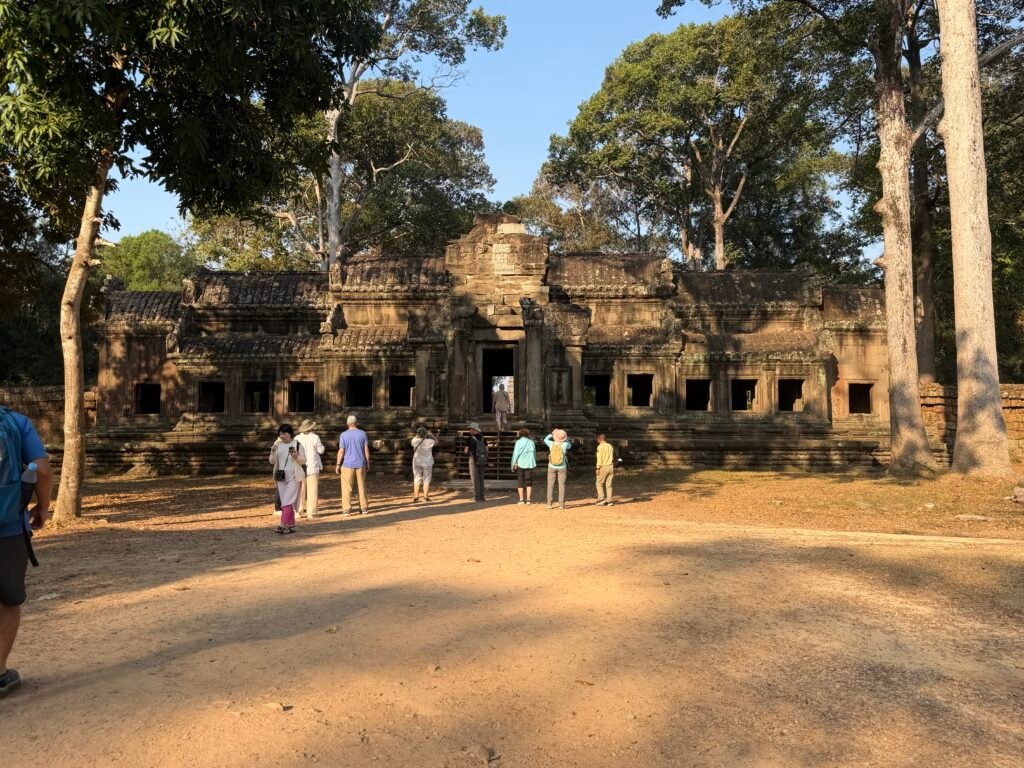
Starting our tour of Angkor Wat
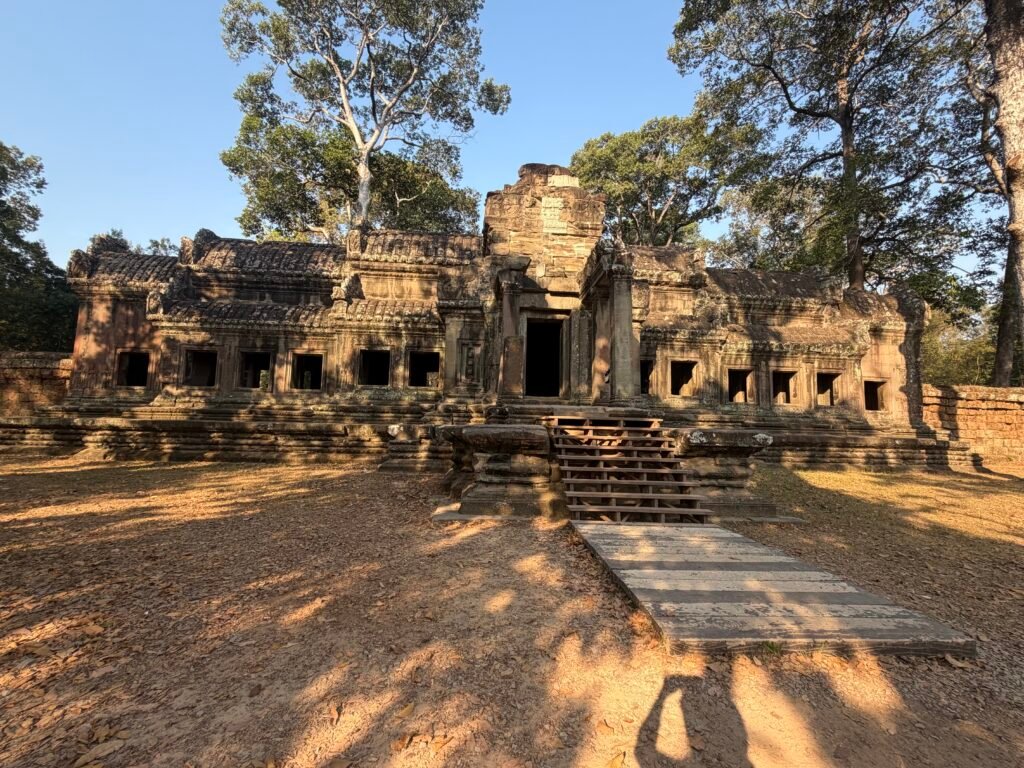
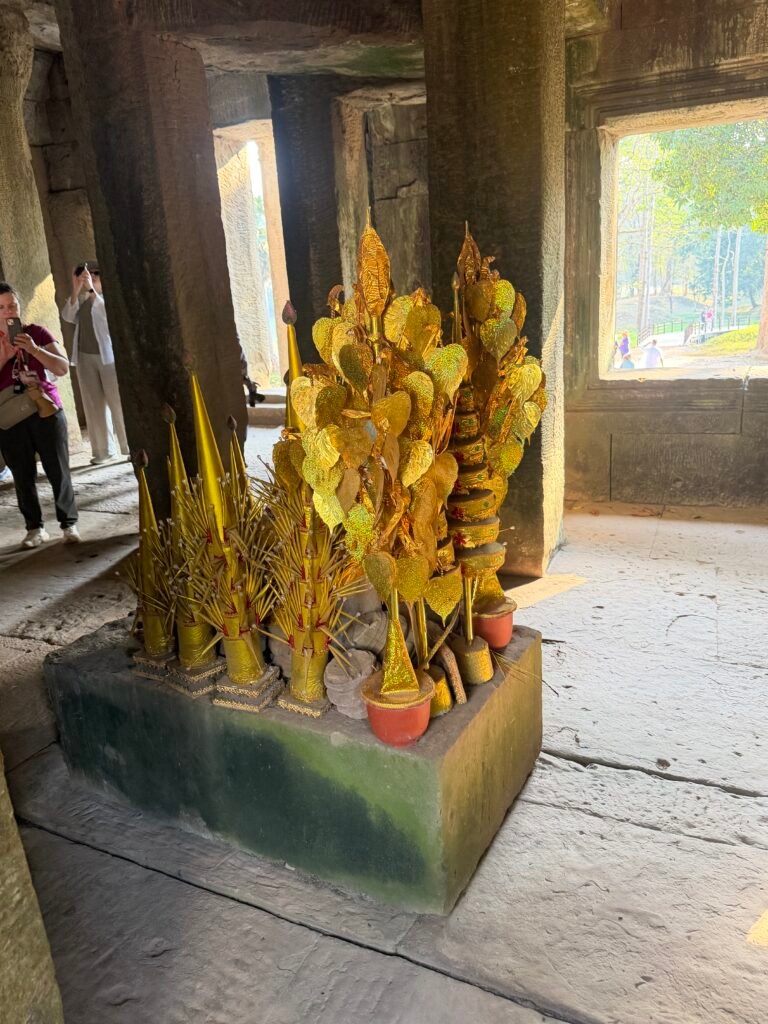
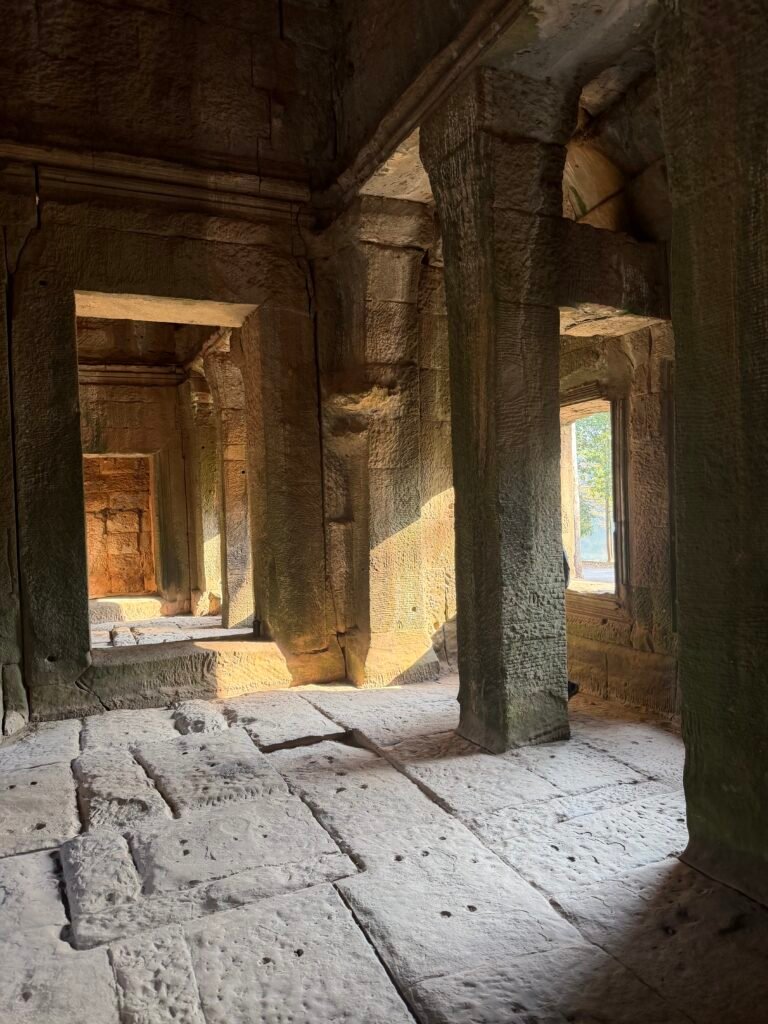
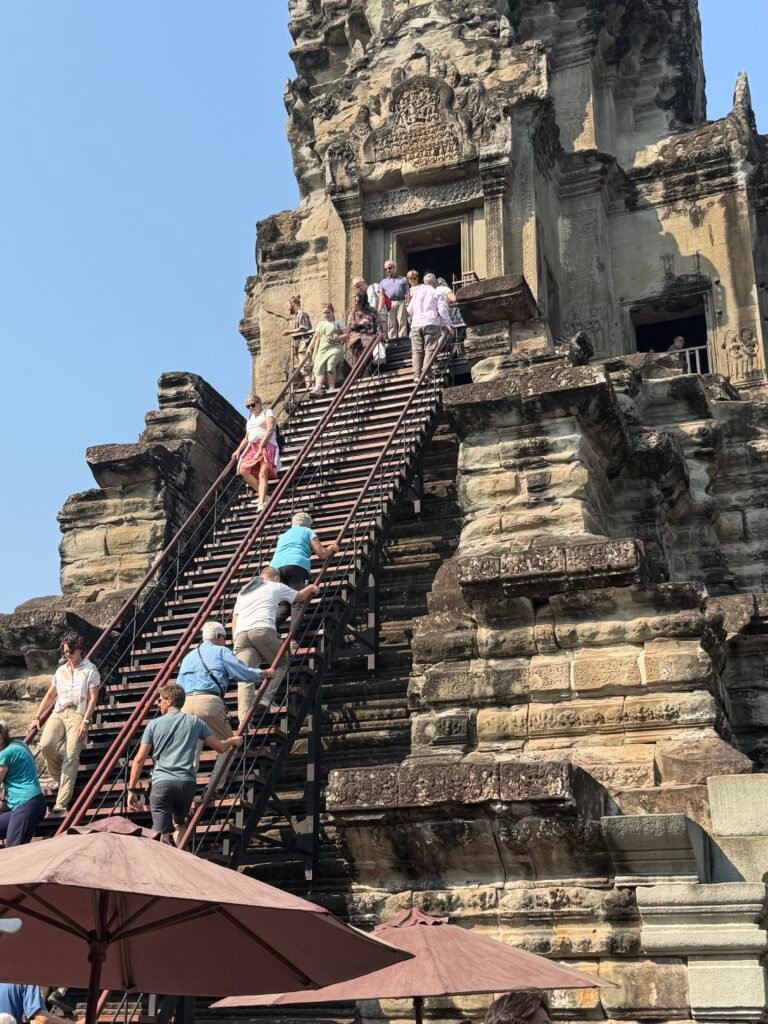
Allan bravely climbed to the third level, but he said coming down was a bit scary, so I’m glad I opted out.
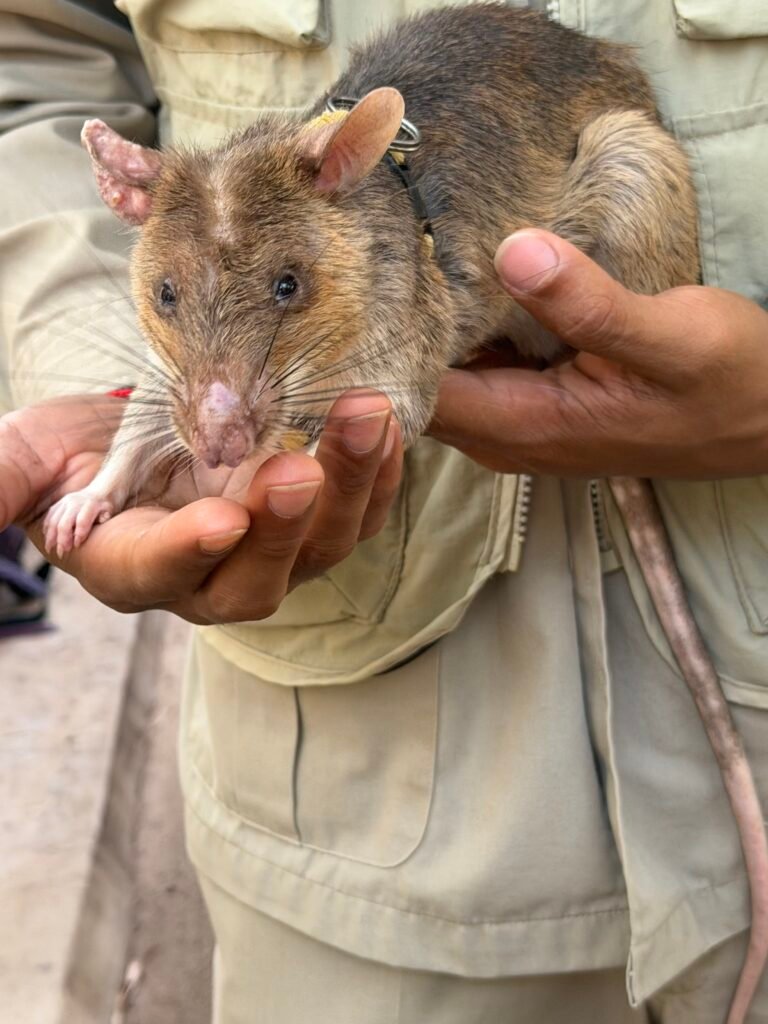
At APOPO
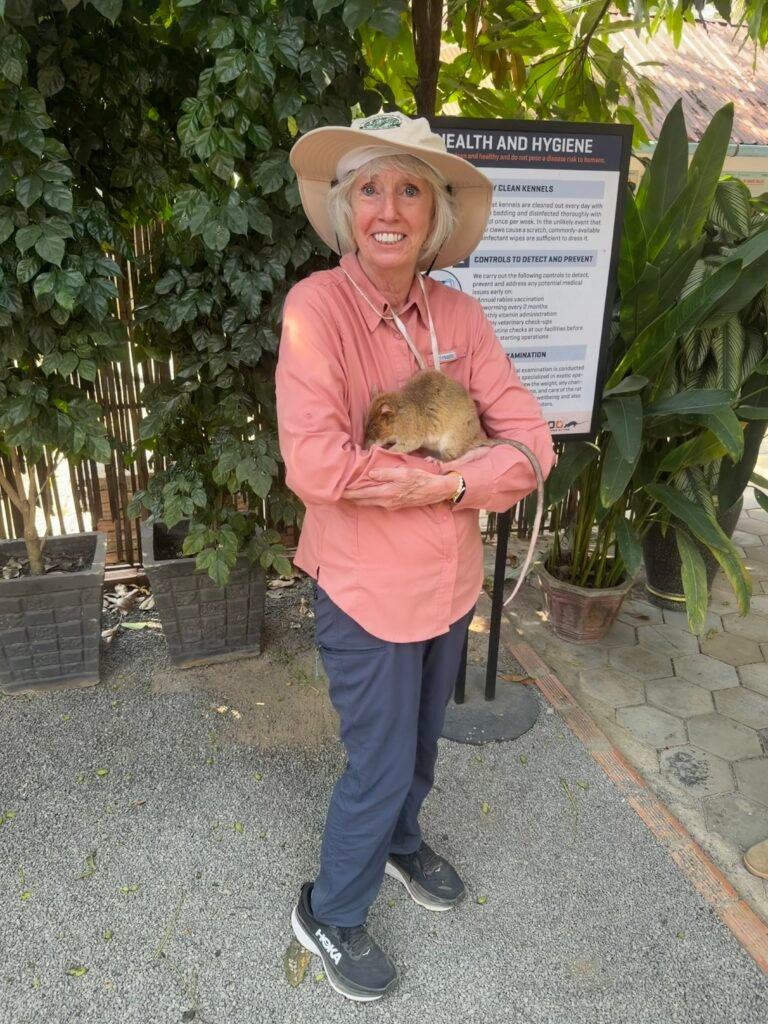
My little guy fell asleep in my arms. After having four kids and six grandkids, I guess I still have the touch.
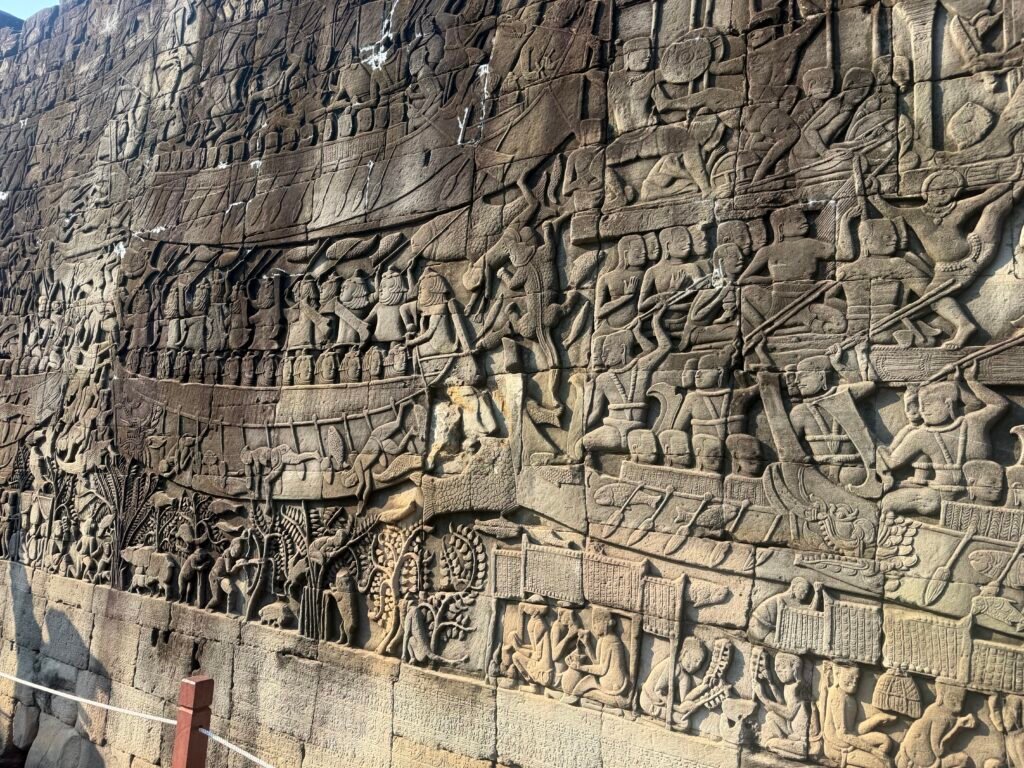
At Bayon Temple. The bas-relief depiction of everyday life was amazing. Some parts, however, have been restored
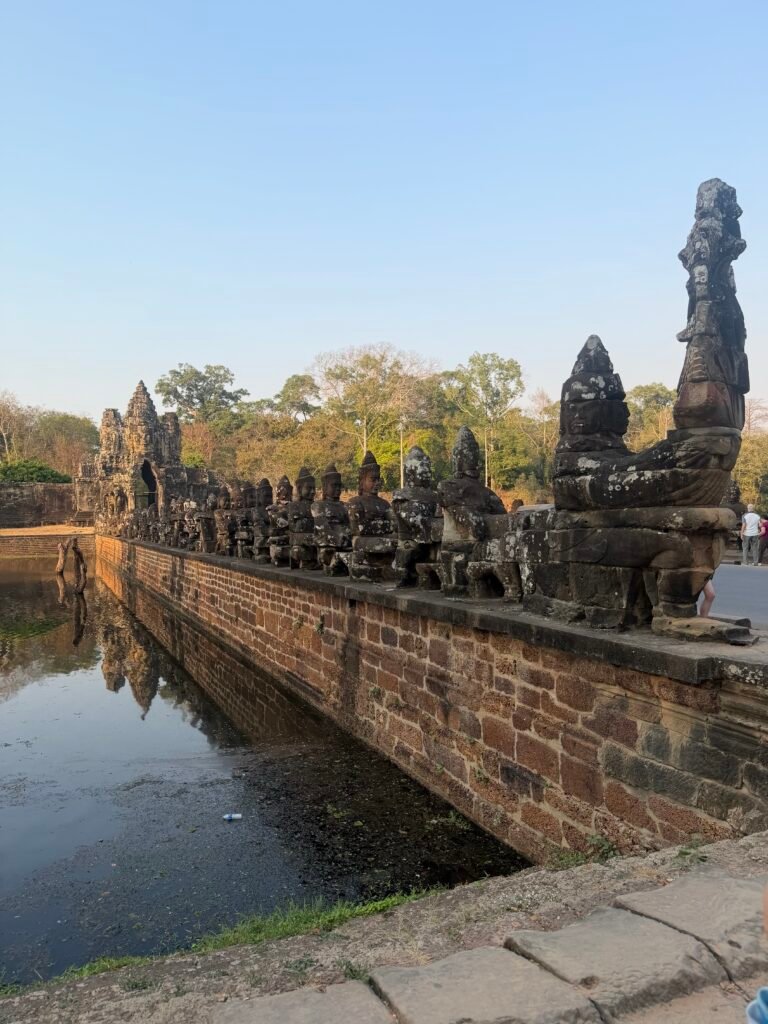
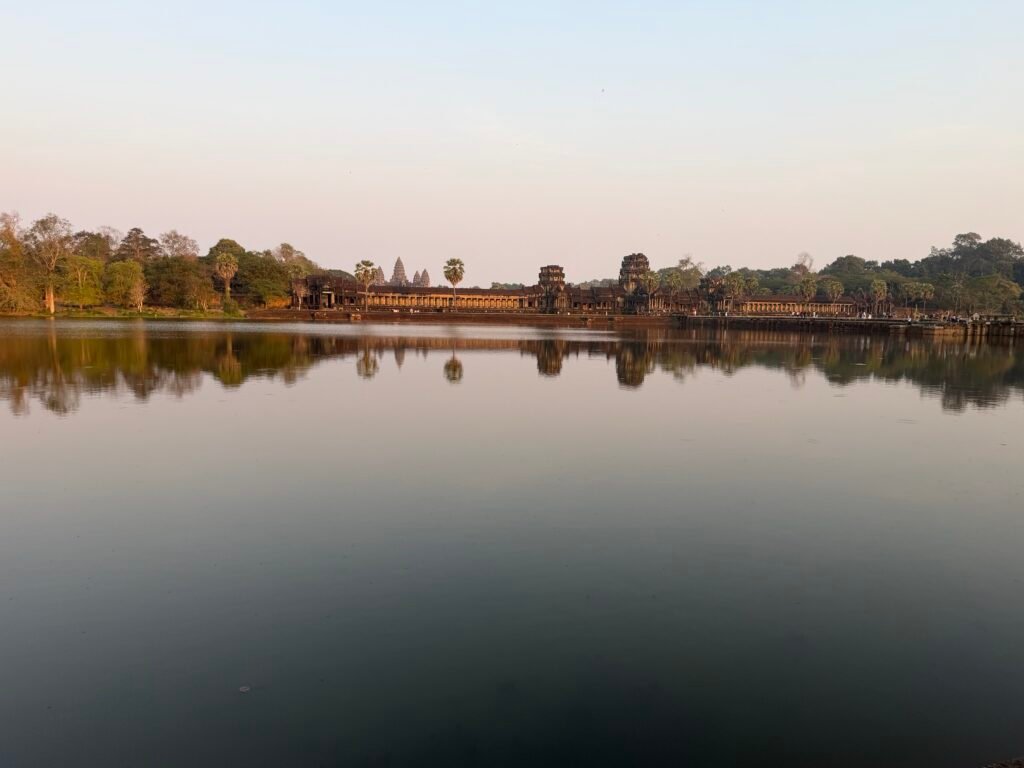
Angkor Wat at sunset