
After breakfast, we boarded our bus and drove to the Karen Long Neck Village, where we were able to chat with a resident of the village. When we arrived in the village, we transferred to a pickup truck which took us to the resident’s home. The ride was bumpy and steep and we had to hang on for dear life. The resident spoke Thai and Are was able to speak with her and relate the answers to our queries back to us.
The name of the lady we spoke to is Mabai and her daughter’s name is Macao. Macao is four years old.
Mabai originally came from Myanmar, but she fled because of the conflict in that area and then settled in Northern Thailand. She is a member of the Padong people. The Padong women are known for the brass neck rings they wear around their necks.
The Padong have their own language, although some Padong are able to speak Thai. They rent their land from landowners (which is about $100 for the year), and then they build homes with bamboo and they use mulberry leaves and elephant poop for the roof. They follow the law in Thailand that children must attend school beginning at age five.
They earn money by selling handicrafts like hand woven goods, jewelry, and souvenirs. They live in designated tourist villages and they get some income from the tourist entrance fees.
The Padong women wear very heavy rings around their necks made of brass that weigh over 4 lbs. The rings are usually put on the girl around the age of four and they are remade as the child grows. When a mother has a young infant, she usually does not wear the rings while the baby is young because it would be hard for her to bend her head to look down to nurse the baby, etc.
Only a person with skill will fashion the rings for the women and children, as the rings have to be wrapped around the neck carefully. The brass is very cold against the skin so some women tuck a cloth inside so the rings aren’t next to the skin.
Most young girls are not forced to wear the rings by their parents, but some choose to do so to continue the culture. Others choose not to wear the rings when they go to school because sometimes, if they wear the rings, they are bullied and made fun of by their fellow students. Mabai told us that when she goes into town she usually wraps a scarf around her neck so that she doesn’t become the main attraction for ridicule and to avoid having people stare at her.
There are many theories as to why the Padong women wear the rings. Some say that the tradition started to prevent the women from the advances of men from another tribe. Another theory is they wore them years ago to appear intimidating if another tribe attacked them while their men folk were out hunting. And yet another theory is that originally the rings were made of pure gold and by wearing the gold next to their necks, it showed status as well as keeping the gold safe. Most Padongs say they do it because their mothers did it, and their mother’s, mother wore them, as did their mother’s, mother’s, mother, and so on.
If anyone gets sick, they can go to the local hospital which is about 30 minutes away by scooter. They grow their own vegetables and Mabai said that her husband works at the elephant center.
Mabai said her day starts around 5 am when she prepares breakfast. She gets her husband off to work and then takes care of the children and straightens the house. Then she makes souvenirs and does some weaving. She also has to bring water from the well for cooking. Lunch time rolls around and she prepares the food for her husband and children. Then it’s back to making trinkets, tending the garden, and then starting dinner. It’s a full day.
We said goodbye and then walked over to the elephant center, where we met a mahout – a local – who takes care of the elephants.
The elephants are truly gentle giants. These animals are fed, bathed, and socialized at the center and some of the elephants have been there for quite some time. We met Tata, an elephant who has never been in the wild. Her mahout has been with her for a few years and she listens to him very well. We were able to get close to her, pet her, and have our pictures taken with her. The guide answered questions that we had about “a day in the life of an elephant” at the center and it was very interesting.
After meeting Tata, we visited the museum on the premises, which enlightened us even more about the Asian elephants.
After the museum visit, we went to where they make paper out of elephant poop. The poop is cleaned throughly with water, pounded and mixed with grasses, and put into a huge vat of water. There’s a screened form that they gently scoop the poop mixture up on and they let it dry. It becomes a hard piece of paper that they make into stationery to sell at the gift store.
Our day of discovery continued as we watched our local guide put vegetables, fruit, raw rice, and cooked rice, etc into a big wooden container and some of the folks took turns pumping a large wooden mallet to mash everything together. Then we all got our hands nice and gooey as we formed the food into baseball sized balls. Then the fun began!
We walked over to the yard where the elephants were and as soon as they saw us coming, they all lumbered over to the fence. They knew it was feeding time. We all took turns feeding whole bananas, including the skin, and the balls of food we had just made to these gentle giants. The elephants took the food with their trunks right out of our hands and sometimes there would be three or more trunks coming at you wanting to be fed. It was so much fun and we had a great time. It seemed like they were overeating, but actually, elephants consume about 300 lbs of food a day so we just kept shoving the food into their hungry mouths and trunks.
After that, the people who had donned their bathing suits already, went to the water area and waded in to bathe the elephants. I was so disappointed because I would have loved to have taken part in that activity, but I couldn’t take a chance walking barefoot so soon after healing from my broken foot.
The elephants loved their spa time and then everyone who had participated showered and changed clothes and we all set down to a delicious lunch. Allan and I had the chicken Pad Thai.
We said goodbye to all the folks at the elephant sanctuary, and took the bus back to our hotel. We had a few hours until dinner, so most of us just rested in our rooms.
Then, since Are had made reservations for us a few days ago at The House by Ginger, we all walked over to the restaurant for dinner.
The House by Ginger has been recognized for the last few years by the Michelin Guide receiving the Bib Gourmand award. Most of us ordered the restaurant’s signature dish – Khao Soi – a coconut curry soup, and everyone enjoyed it. Everyone but me! I hardly ate it. I had asked for little to no spice, but it was pretty spicy hot. I didn’t like the chicken or the broth, and Are suggested I add more coconut milk, which I did, but it wasn’t any better.
Allan and I then ordered a tapioca dessert called Sago, which came out hot and had things in it we had no idea what they were. Are didn’t know either as they weren’t mentioned in the description. I wasn’t a fan of that either, so I was glad I had enjoyed a lunch at the elephant sanctuary and could pass up dinner. I should have gone with what I originally had wanted – Tom Yum soup – which I love, but everyone was ordering the signature dish so I changed my mind. Oh well.
Except for my dinner, it was an amazing day of discoveries!!
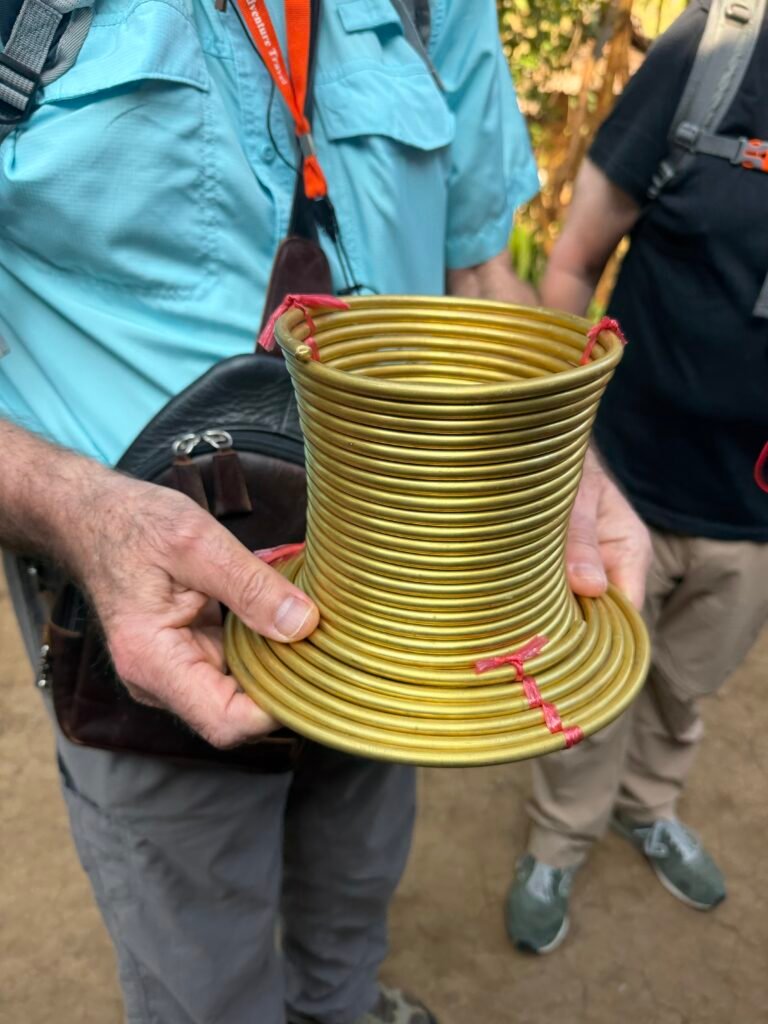
The necklace that the Padong women wear. It is very heavy and cold.
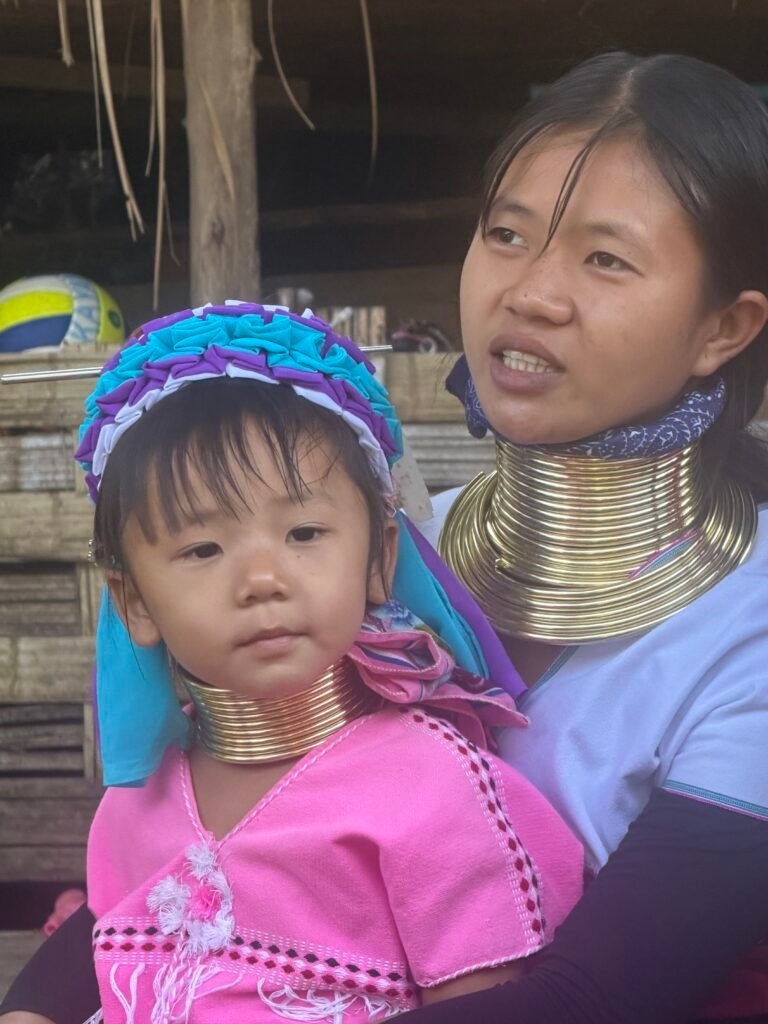
Mabai and her daughter.
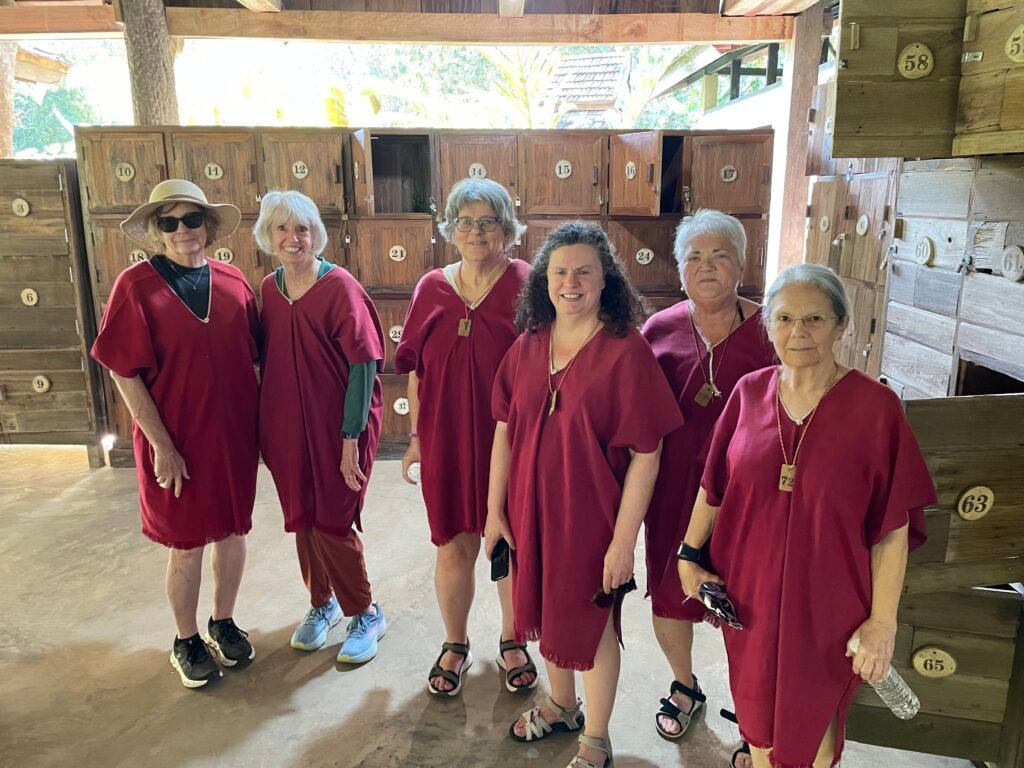
All the ladies wearing a covering so we didn’t get slimed by the elephants. Everyone except me had also worn the covering to bathe the elephants.
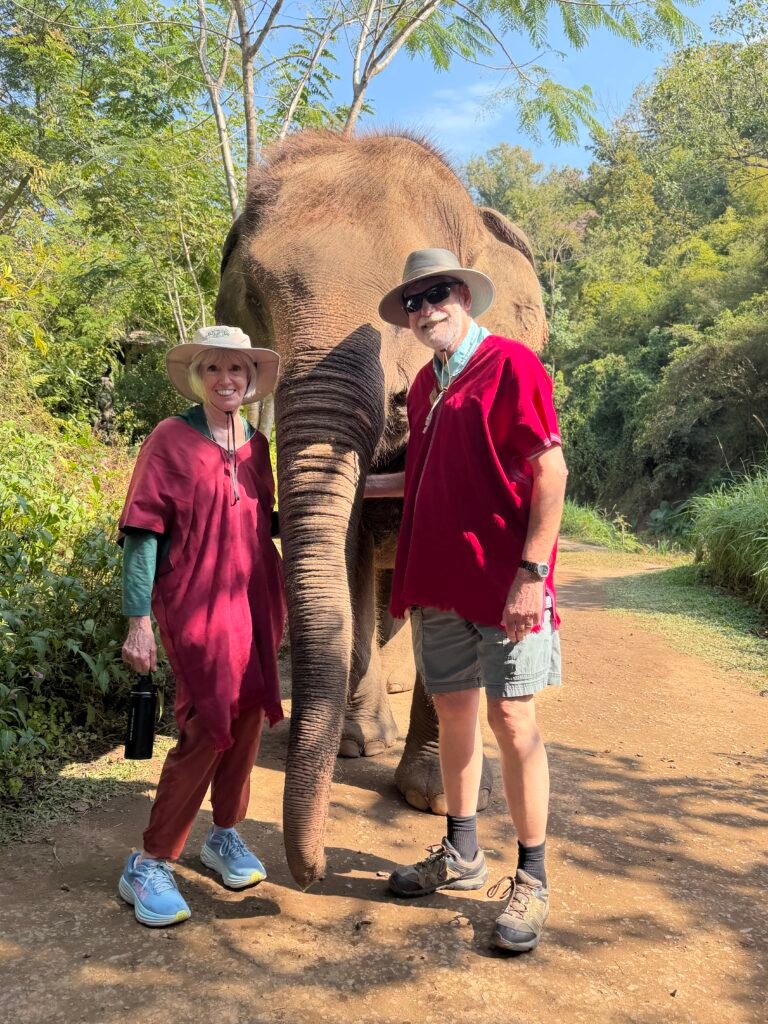
Spending time with Tata. The local guide told us that if you take a rope and measure the circumference of an elephants foot close to their toenails and then double that measurement, you will be able to determine the elephants height. He showed us. Amazing!
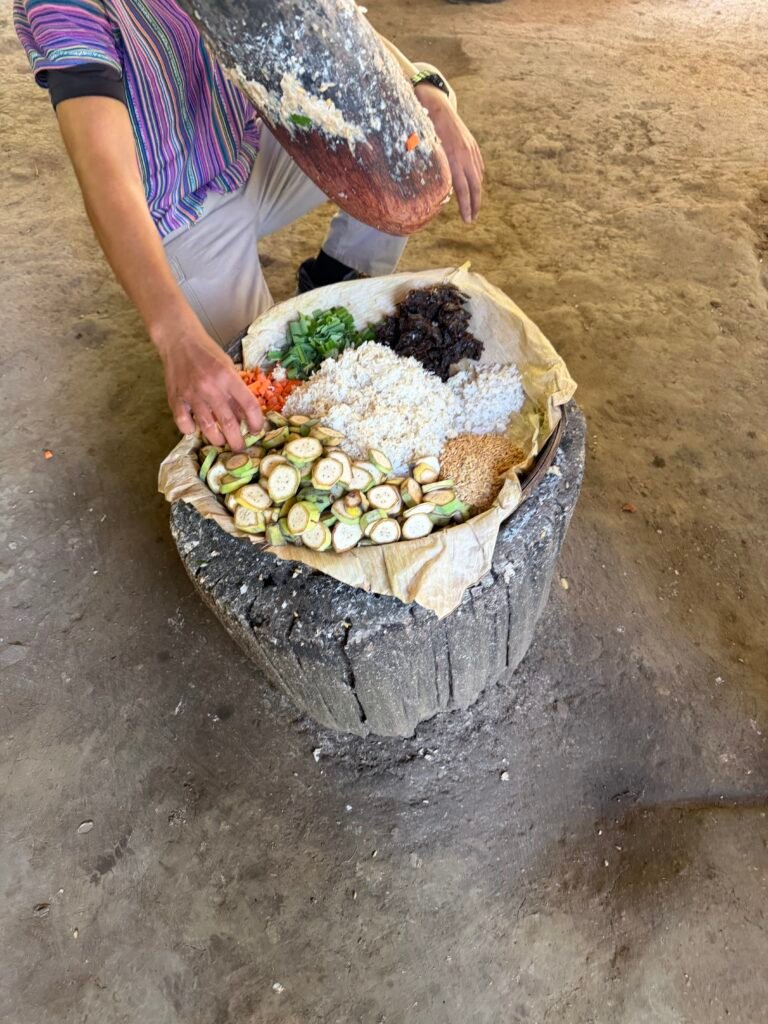
The food that we made the feeding balls with
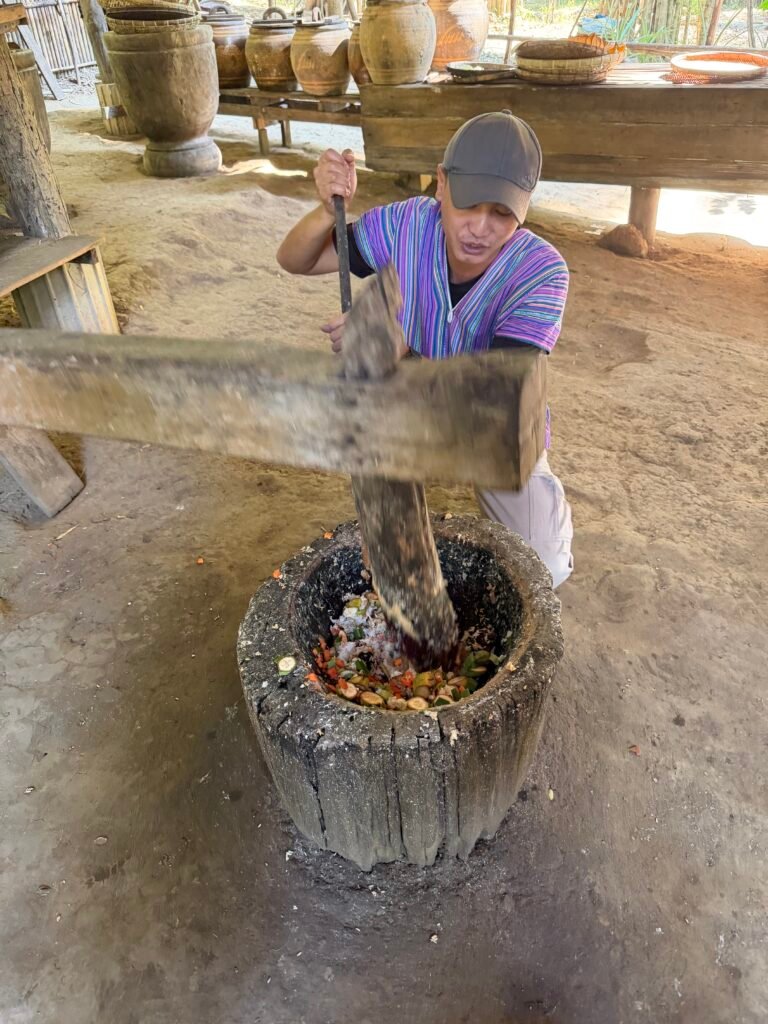
Mashing the food
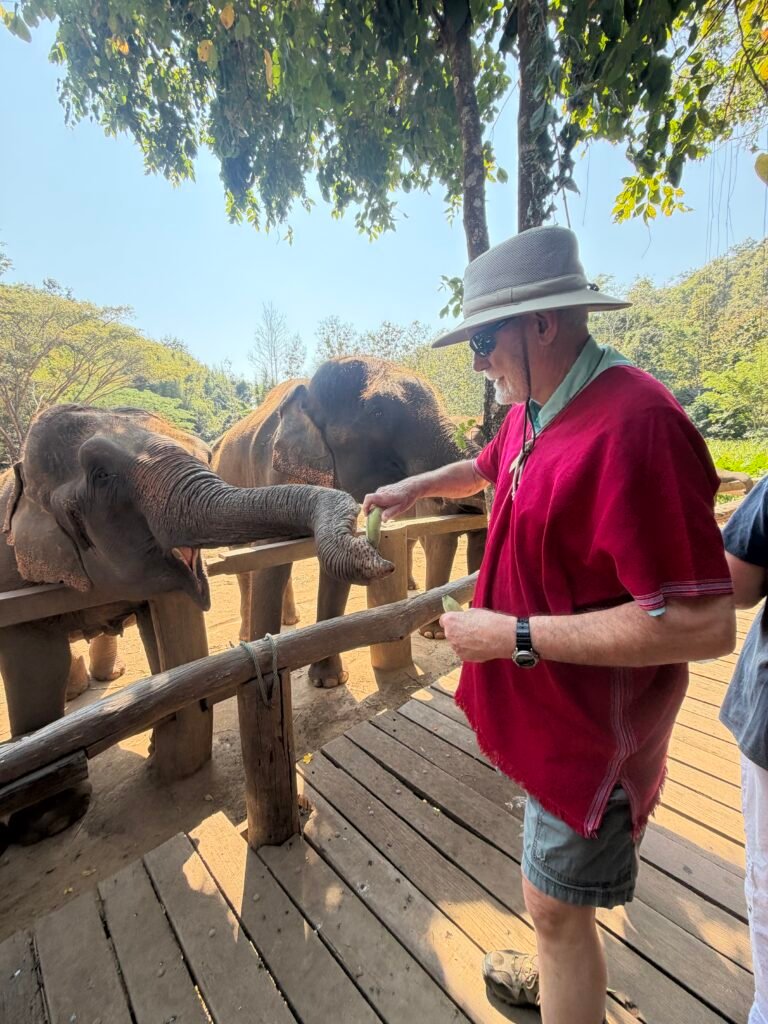
Allan feeding bananas
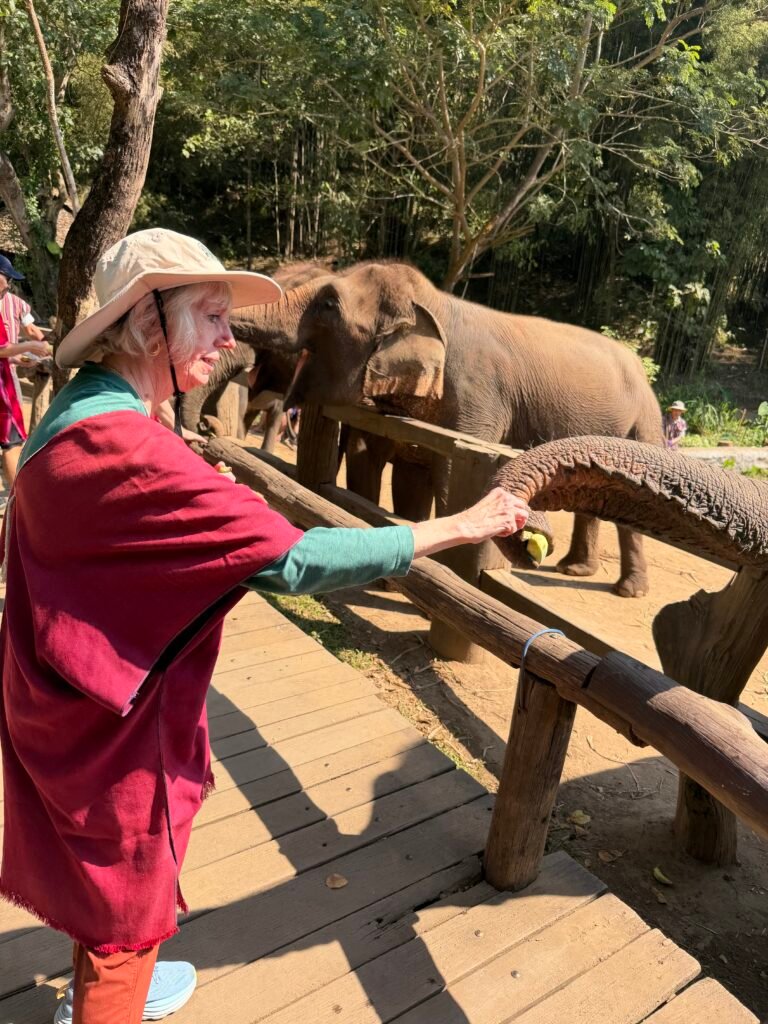
The elephant was so gentle taking the food from my hand.
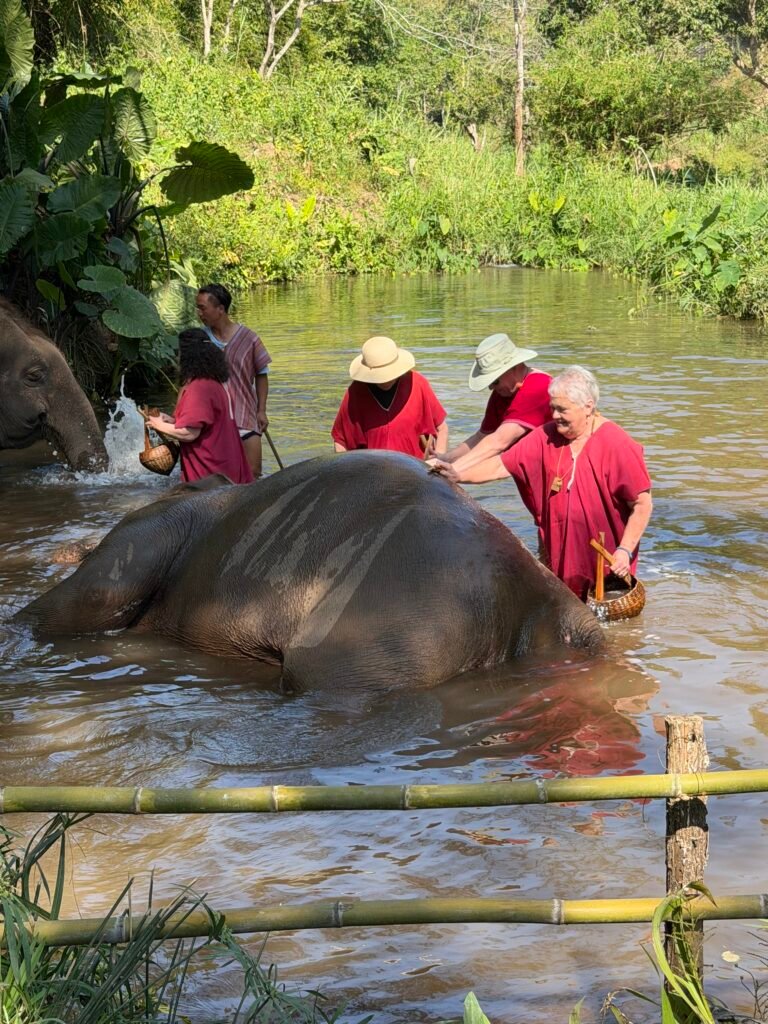
The elephant spa
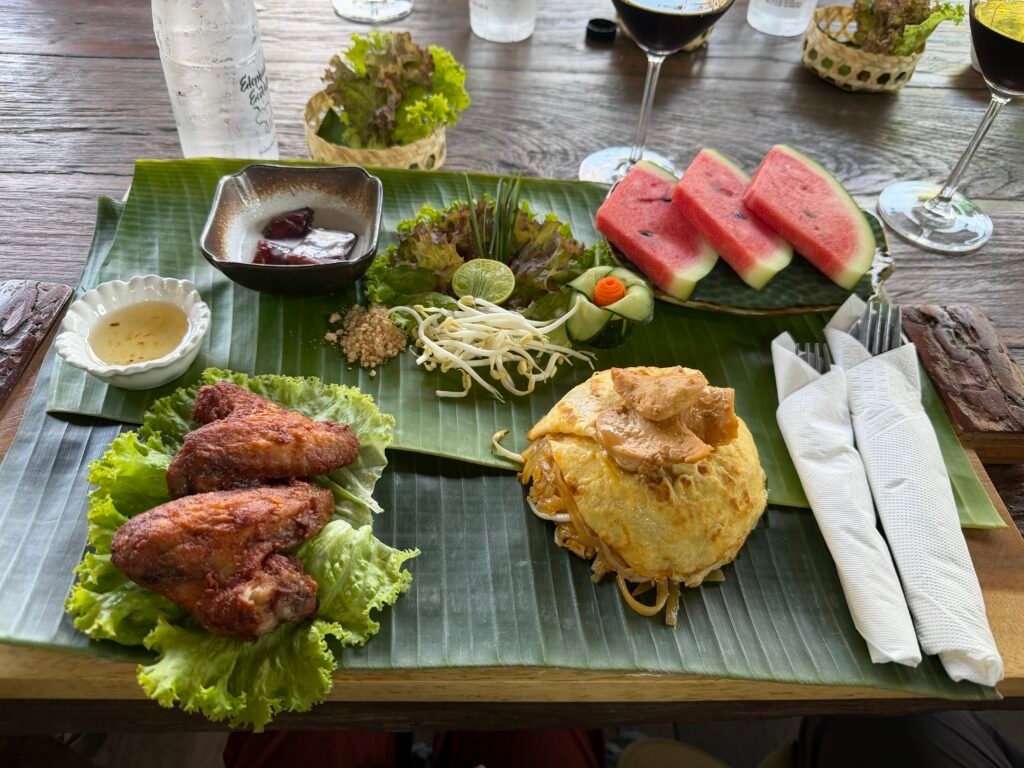
Our lunch at the elephant sanctuary. Delicious!
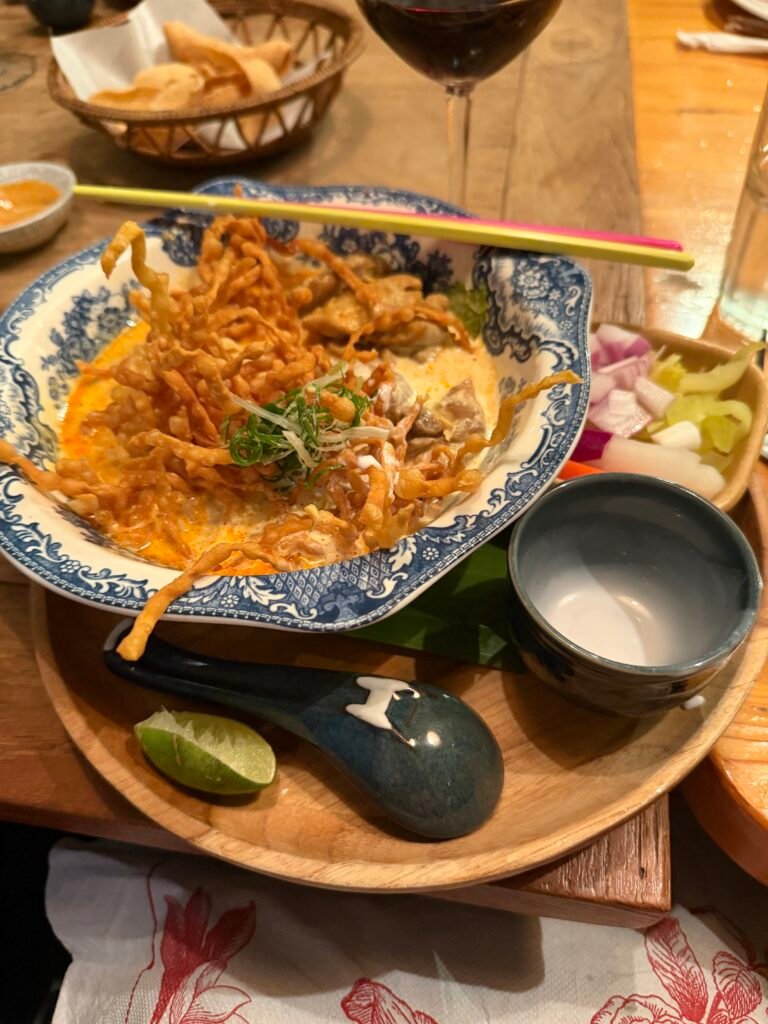
My dinner at House by Ginger
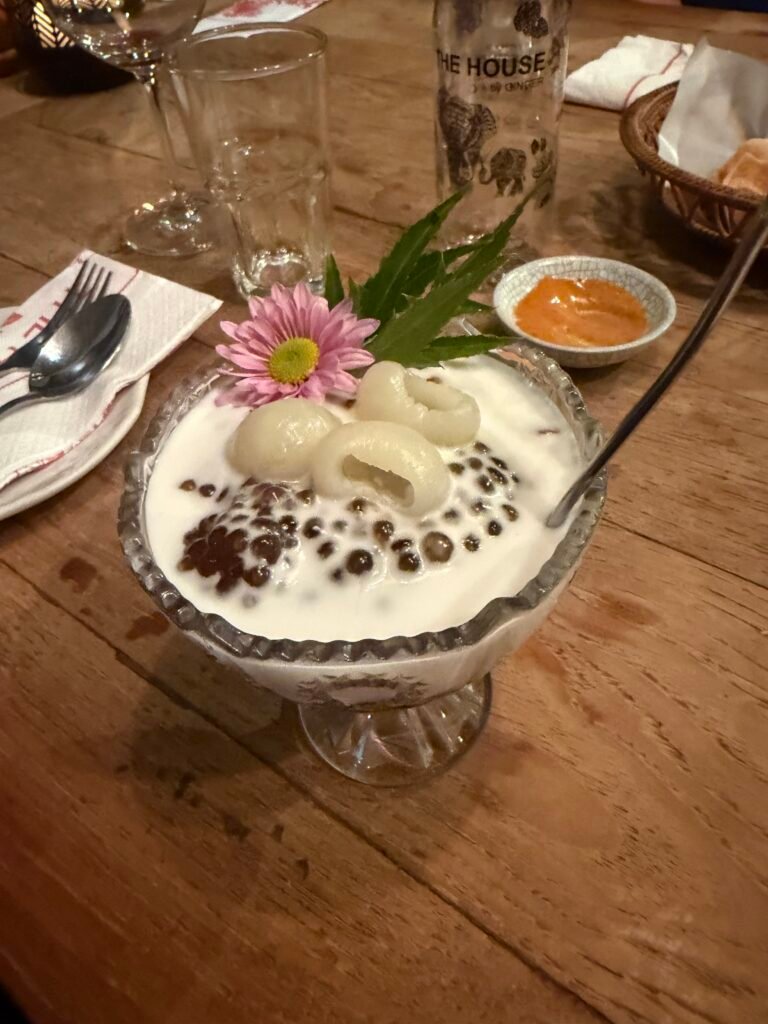
Our Dessert called Sago. Meh.